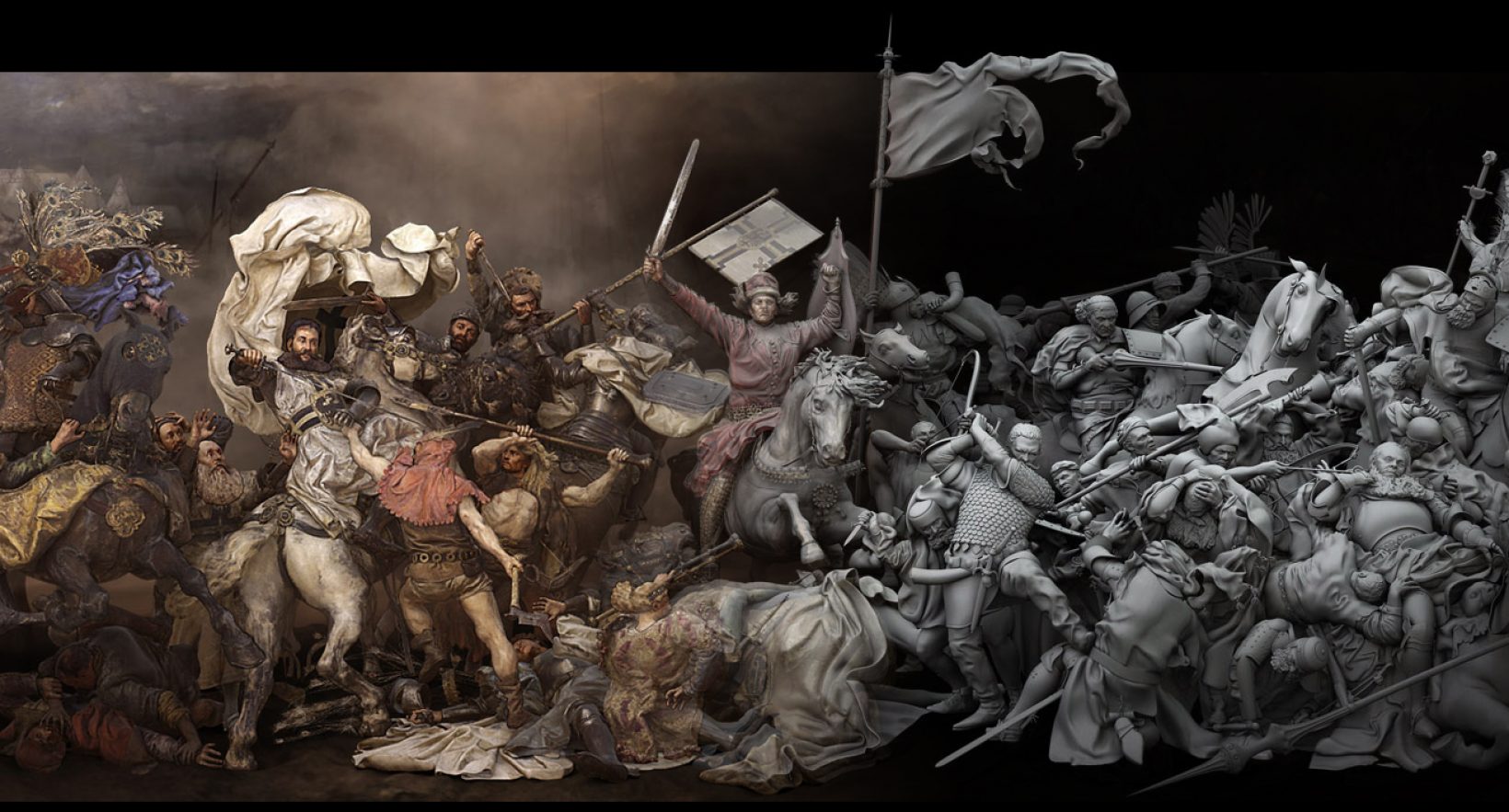
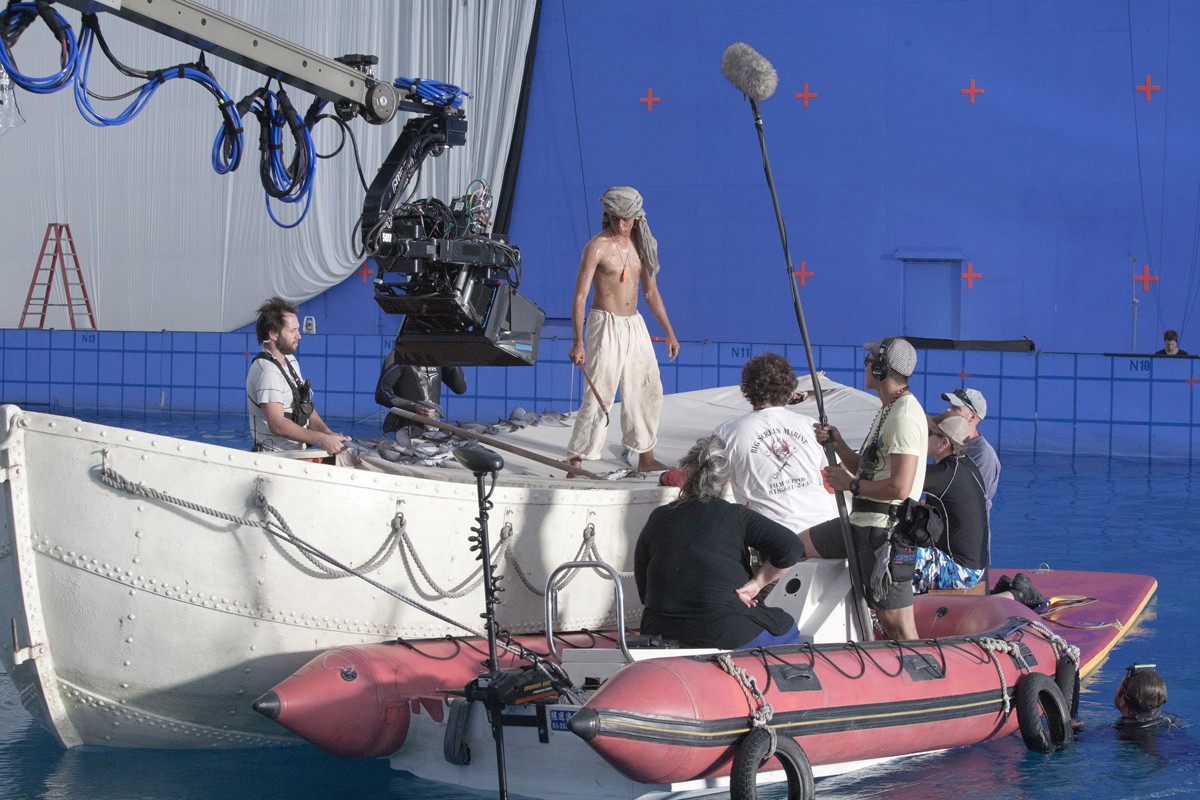
Well, here is the basic idea of Wētā FX.
A director in New Zealand wanted to make movies that were too large for New Zealand. He wanted murder fantasies, ghosts, hobbits, cave trolls, armies, giant apes, blue aliens, intelligent whales, oceans, muscles, skin, hair, rain, mud, water, grief, eyes, and sometimes all of those things in the same shot. Hollywood had some of the tools. New Zealand had some of the landscape. Peter Jackson had the problem.

So Wētā built the tools.
That is the short version. It is also the wrong version, or at least the incomplete one. The story is not just that Wētā FX, formerly Weta Digital, became one of the most important visual effects studios in the world. It did. The story is not just that it helped make The Lord of the Rings, King Kong, Avatar, Planet of the Apes, The Hobbit, Alita: Battle Angel, and a large part of modern effects cinema look emotionally plausible. It did that too.
The more interesting story is that Wētā became a machine for turning impossible artistic problems into software. And then, much later, the market looked at the software and said: wait, is this a studio or an asset class?
In 2021, Unity bought Weta Digital’s tools, pipeline, technology, and engineering talent for US$1.625 billion. The artists and production business stayed behind as Wētā FX, majority-owned by Peter Jackson. The name Weta Digital and the software side went one way; the artists and production culture went another way.
Legally, this was a transaction.
Economically, it was an experiment.
Technically, it asked whether you can separate a studio’s tools from the studio’s hands.
That is a funny thing to ask of tools.
Because the thing about Wētā is that its tools were never just tools. They were the accumulated memory of difficult shots. Gollum’s face. Kong’s weight. Caesar’s eyes. Pandora’s skin. Water droplets catching on tiny hairs. Digital armies that know enough to run away. The software was doing work. So were the artists. So was the geography. So was Peter Jackson’s very inconvenient habit of wanting things that did not yet exist.
This is the story of Wētā FX. It starts with one computer.
Heavenly Creatures: One Computer, Fourteen Shots
The official beginning is Heavenly Creatures, Peter Jackson’s 1994 psychological drama about the Parker–Hulme murder case. This is already a strange origin story for one of the great visual effects companies, because Heavenly Creatures is not the obvious beginning for a blockbuster effects house. It is not a space opera. It is not a superhero movie. It is not a toy commercial with better lighting. It is a dark, intimate New Zealand film about obsession, fantasy, class, adolescence, and murder.
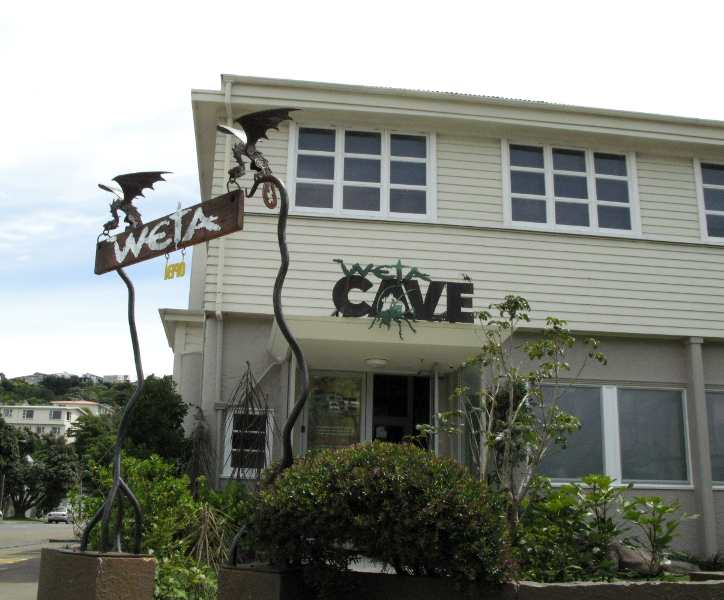
Naturally, this is where you start a digital effects revolution.
Wētā FX traces its first foray into visual effects to Heavenly Creatures. The studio leased its first computer to make fourteen visual effects shots: balcony manipulations, morphing landscapes, and the imaginary visions of paradise that let the girls’ fantasy life invade the real world.
Fourteen shots. One leased computer. A future global VFX company hiding inside a local art film.
Weird, but useful.
The human version of this story is George Port. Port was the digital specialist at the center of the work, and by later accounts he spent months essentially alone trying to make the equipment, the software, and the movie speak the same language. Modern VFX histories tend to talk about pipelines, platforms, workflows, supervisors, global teams, and strategic partnerships. The origin here is less polished: one person, one set of tools, one director who thought digital film was coming, and fourteen shots that needed to work.
The Jurassic Park moment matters. Port saw Jurassic Park in 1993 and understood what a lot of people understood at the same time: the dinosaurs were not just dinosaurs. They were a market signal. ILM had shown that digital creatures could exist in photographed cinema with a new kind of authority. Port called Jackson. Jackson had already been interested in effects. Now the future looked more specific.
One way to think about this is that Jurassic Park proved the concept and Wētā spent the next thirty years asking what else could be made to live. Dinosaurs first. Then a ruined hobbit. Then a giant ape. Then blue aliens. Then Caesar. Then water.
The basic mechanism was simple: Jackson did not yet need a giant digital effects company to make Heavenly Creatures, but he used Heavenly Creatures to begin learning how a digital effects company might exist. A small film created a small technical excuse. The small technical excuse created institutional permission. Institutional permission created the next, larger problem.
This is how a company starts if the company is lucky. Also if it is slightly reckless.
Why New Zealand Matters
The obvious story is that Wētā was far from Hollywood. The better way to think about it is that Wētā was protected, and punished, by distance.

If you are in Los Angeles, London, or Vancouver, you can borrow people, habits, vendors, assumptions, and infrastructure from the industry around you. If you are in Wellington in the 1990s, your problem is different. You can borrow ideas. You can hire people, eventually. You can look at what other studios are doing. But the default answer is not “call the place down the street that does this.” There is no place down the street. The place down the street is you.
This is not romantic, exactly. It is inconvenient. But inconvenience is often where technology comes from.
Wētā Workshop, the physical-effects and design sibling in this ecosystem, predates Weta Digital. Founded in Wellington by Richard Taylor and Tania Rodger, Workshop made the creatures, armor, weapons, props, prosthetics, miniatures, and physical imagination. Weta Digital, later Wētā FX, became the digital counterpart. These were separate companies, but culturally they belonged to the same Miramar phenomenon: a local production ecosystem built around making large imaginary worlds very practical.
The geography matters because Wētā was not just a vendor receiving a brief at the end of the production chain. It grew inside the problem. Peter Jackson’s filmmaking world also included Park Road Post Production and Stone Street Studios. The director, the workshop, the post house, the stages, the digital artists, the software engineers, the miniatures, the props, the creatures, the sound mix: all of these things were close enough to argue with each other.
That is a business advantage, though not the sort that looks clean in a slide deck.
A normal VFX vendor receives a problem. Wētā grew up in a production culture where the problem was often being invented in the same neighborhood. Gollum was not merely a character brief. He was a writing problem, an acting problem, a design problem, a software problem, a lighting problem, a skin problem, an eye problem, a pipeline problem, and eventually a cultural problem about who gets credit for a digital performance.
That is a lot for one little creature to carry.
He did okay.
The New Zealand setting also gave Wētā its founding contradiction. It was local and global at the same time. It could be based in a suburban corner of Wellington and still become essential to Hollywood’s biggest franchises. It could have the mythology of a remote craft operation and the workload of an industrial VFX powerhouse. It could be geographically peripheral and technically central.
This is not the standard innovation story. There is no Silicon Valley campus myth here. There is no Hollywood glamour myth either. The better image is a studio at the edge of the world, learning how to make its distance useful.
The Frighteners and the First Scale Problem
After Heavenly Creatures, the next big step was The Frighteners, Jackson’s 1996 horror-comedy starring Michael J. Fox. It is not remembered the way The Lord of the Rings is remembered, because very few things are. But for Weta Digital, The Frighteners was the first real scaling problem.

One computer is charming.
Thirty computers are a company.
Hundreds of visual effects shots are a pipeline problem.
A visual effect is not just a visual effect. It is a deadline. It is a review process. It is a file-management problem. It is an artist waiting for a render. It is a director changing his mind. It is a machine crashing at night. It is a shot that works by itself but not next to the other shot. It is the discovery that the ghost looks good until it moves, or moves well until it is lit, or is lit well until it is composited.
The shot is the visible part. The invisible part is the system that makes the shot repeatable.
The Frighteners was a rehearsal for repeatability.
This is where the Wētā pattern starts to become clear. Jackson creates a problem. The problem is larger than the available infrastructure. The studio builds infrastructure. The infrastructure then makes the next, larger problem possible. Heavenly Creatures leads to The Frighteners. The Frighteners leads to the confidence that Middle-earth can be made in New Zealand. Middle-earth leads to Gollum, Massive, performance capture, and global credibility.
This is not linear growth. It is story-backed infrastructure.
The story says: we need ghosts.
The infrastructure says: actually, we need a studio.
The Lord of the Rings: Middle-earth as Infrastructure
The Lord of the Rings was not just a film trilogy. For Weta Digital, it was a forced industrialization program with swords.
The studio had to produce landscapes, creatures, digital doubles, miniature extensions, compositing, armies, battles, magic, scale illusions, cave trolls, Balrogs, Ents, and Gollum. It had to combine physical effects from Wētā Workshop with digital effects from Weta Digital, live action with miniatures, forced perspective with compositing, motion capture with animation, and Tolkien’s mythology with whatever the render farm could tolerate that week.
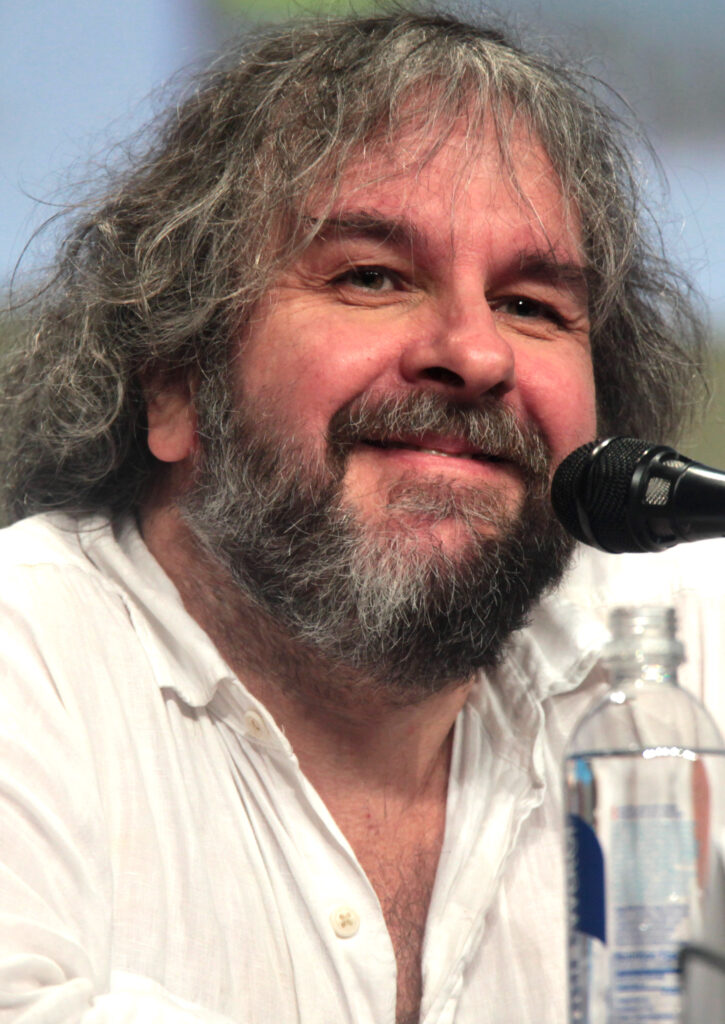
The official numbers for The Two Towers are useful because they turn myth into workload: Weta Digital produced 73 minutes of visual effects over 799 shots, including the full introduction of Gollum and the battle work. That is not a trivia point. It is the moment where Wētā becomes an industrial machine.
The thing about The Lord of the Rings is that it required two kinds of scale at the same time.
There was big scale: armies, cities, landscapes, battles, and history.
And there was small scale: skin, eyes, fingers, pain, hesitation, and a ruined creature whispering to himself on a rock.
Weta had to learn both. Big scale without small scale is spectacle. Small scale without big scale is theater. Middle-earth needed both.
The big-scale problem produced Massive.
The small-scale problem produced Gollum.
The company produced itself in the process.
Massive: Digital Armies That Could Think
Massive is one of the great Wētā stories because it sounds like a technical footnote and then turns into a theory of realism.
The problem was simple: Middle-earth needed armies. Not a few dozen extras repeated in the background. Armies. Thousands of combatants. Large-scale battles where the audience could feel the weight of history, geography, fear, and violence. You can copy-paste soldiers, sure. You can duplicate elements. You can fill the frame. But duplication is not life. The audience may not consciously count repeated movements, but it will feel them. The army will look like wallpaper with weapons.
Stephen Regelous’s Massive software approached the problem differently. It created autonomous agents with individual behaviors, perceptions, and choices. The digital soldiers were not just pixels arranged in battle-shaped patterns. They were tiny simulated decision-makers.
The funny thing about digital armies is that the audience wants them to look like an army, but not too much like an army. If every soldier behaves identically, it looks fake. If every soldier behaves randomly, it looks fake. If a few soldiers do something unexpected, it starts to look real.
In one of the best Massive anecdotes, early test warriors did not merely fight. Some appeared to flee.
Of course the software became convincing when it learned cowardice.
This is not a joke, or not only a joke. It reveals the mechanism. Realism in a crowd is not achieved by multiplying the same body. It is achieved by creating the impression that each body has a reason to be doing what it is doing. The crowd becomes convincing when it contains local motives.
That idea runs through the rest of Wētā’s history. Armies need choices. Creatures need muscles. Faces need memory. Water needs physical logic. Digital things become persuasive when they seem to have internal systems.
Massive also foreshadows the business story. It began as a tool for a specific film problem and then became something more general. A production necessity became a software asset. This would happen again and again, until eventually the software-asset layer became valuable enough to sell.
Of course, the first version of this grand asset strategy was: Peter Jackson wanted too many orcs.
Gollum and the Problem of Digital Acting
Gollum is the center of the Wētā story because Gollum is where the categories break.
Was Gollum animated? Yes.
Was Gollum performed by Andy Serkis? Yes.
Was Gollum motion capture? Yes, but not only that.
Was Gollum a visual effect? Obviously.
Was Gollum acting?
This is where everyone starts billing hours.
The easy version is that Andy Serkis performed Gollum and Weta Digital turned him into a digital character. The better version is that Gollum was a negotiated object: actor, animator, software, director, design, muscle, shader, eye, skin, voice, timing, and performance data all arguing toward one result.
The original Lord of the Rings process was messy because digital acting was still being invented as a production practice. Serkis acted on set. His presence gave the other actors timing, eye lines, physical energy, and emotional opposition. Then clean plates had to be captured. Then motion capture data had to be recorded. Then animators had to translate the performance into a creature whose body was not Serkis’s body and whose face was not Serkis’s face.
This matters because the human problem is not “can we record motion?” Motion capture existed before Gollum. The problem is: can you preserve a performance when the actor’s body is not the final body? Can you keep timing, intention, weight, psychology, and eye contact after replacing the performer with a creature? Can you make the digital body feel like it has a past?
Suppose you are Weta Digital. You have an actor giving a strange, intense, physical, vocal performance. You also have a digital creature who cannot simply be a recording of that actor, because his body is wrong, his anatomy is wrong, his face is wrong, and his existence is wrong. If you copy the actor too literally, it may not fit the creature. If you ignore the actor, you lose the performance.
So the answer is not capture.
The answer is translation.
Translation is expensive. Technically and philosophically.
This is why Gollum became a credit problem. The public could see Serkis. The industry could see the animators. The software could see marker data. The director could see a character. The Academy could see confusion.
The most useful way to put it is this: Gollum did not prove that computers could replace actors. Gollum proved that a digital character could become a site where actors and animators collaborate, awkwardly and brilliantly, on one body.
That body had value. Not financial value, exactly. Narrative value. Emotional value. Awards-season value. Discourse value.
Very busy body.
From Motion Capture to Performance Capture
The phrase “motion capture” sounds mechanical. You move; the system captures motion. Fine.
“Performance capture” is more ambitious. It claims that what is being captured is not just motion, but acting: intention, hesitation, breath, rhythm, emotion, posture, silence, eyes. This is a harder claim. It is also the claim that Wētā spent the next two decades making more plausible.
The path runs through Gollum, Kong, the Na’vi, Caesar, Thanos, Alita, and later the apes of Kingdom of the Planet of the Apes and even the strange pop-star chimpanzee of Better Man. This sounds like a list of unrelated creatures. It is not. It is the same problem with different bodies.
How do you pass human psychology through non-human anatomy?
That is the Wētā problem.
With King Kong, the performance problem was scale and animality. Kong had to be a gorilla, not a man in a gorilla suit. But he also had to carry loneliness, attachment, rage, curiosity, and tragedy. If he was too animal, the audience could not follow him emotionally. If he was too human, he became wrong in a different direction. The performance lives in the gap.
With Planet of the Apes, the problem became more political. Caesar is not just an ape with better rendering. He is a leader. He remembers violence. He learns power. He carries suspicion, restraint, revenge, grief, and strategy. Fur helps. Eyes help more. Performance helps most.
This is the interesting mechanism. Wētā’s creatures got more digital, but their production got more theatrical. Actors wore suits. Cameras watched dots. Facial systems tracked expressions. Animators interpreted data. Directors staged scenes with performers who would later disappear. The actor was present so that the final image could pretend the actor had never been there.
That is cinema.
Also a little rude.
The general rule is that digital characters become interesting when they stop being demonstrations. Gollum is not interesting because he is a CG character. He is interesting because he wants the Ring, hates himself, bargains with himself, and makes the audience forget that his existence depends on a terrifying amount of file management.
Avatar: Building Pandora
If The Lord of the Rings made Weta Digital a global visual effects force, Avatar changed the scale of what the studio was expected to be.
With Avatar, Wētā was not just adding creatures to photographed reality. It was helping build Pandora: characters, forests, animals, light, skin, eyes, muscles, performance systems, virtual production, facial rigs, and a world that had to feel both alien and emotionally legible.
This is a category shift. A visual effect starts as an addition to a film. Under pressure, it becomes the film.
Pandora is not an effect in Avatar. Pandora is the operating system. The Na’vi are not decoration. They are the lead characters. The forests are not backgrounds. They are theology, ecology, lighting design, action space, and product differentiation. The audience is not being asked to accept one digital creature in a mostly photographed world. It is being asked to live inside a digitally mediated ecology for most of the movie.
That is a lot to ask of blue people.
But Wētā’s earlier history prepared it for exactly this sort of absurd request. It had already learned from Gollum that digital faces need internal life. It had learned from Massive that crowds need individual behavior. It had learned from Kong that scale and emotion must be solved together. It had learned from Middle-earth that worldbuilding is not one department. It is the place where all departments collide.
Avatar made that collision the business.
The basic model was: James Cameron wants a world. Wētā has tools. The tools are not enough. So Wētā builds more tools. Then the world becomes more plausible. Then the tools become more valuable.
This is cinema.
Also research and development with better posters.
Avatar: The Way of Water and the Problem of Water
Then came Avatar: The Way of Water, and the problem changed again.
The first Avatar asked Wētā to make a forest moon feel emotionally and physically real. The sequel asked Wētā to make water – not symbolic water, not background water, but interacting, splashing, refracting, sticking, flowing, performance-sensitive water – behave in a world full of digital and live-action bodies.
Wētā FX has described The Way of Water as its largest-ever VFX undertaking: 3,240 shots, 98% of the total shots in the film, with 2,225 featuring water. In another breakdown, the studio said the final film had 3,289 shots, Wētā worked on 3,240 VFX shots, and only two shots in the entire movie contained no visual effects at all.
There are two ways to think about this.
One way is scale: thousands of shots, thousands involving water, almost the entire movie touched by visual effects.
Another way is intimacy: the hardest thing might be a raindrop.
Joe Letteri has described how difficult water droplets on skin can be because water catches on tiny hairs and changes direction in subtle ways. This is the whole Wētā story in miniature. The biggest digital movie in the world turns on the smallest physical detail.
Water was the new Gollum because it forced a new level of translation. Gollum asked: can a digital body carry a human performance? Water asked: can a digital environment respond to bodies, light, gravity, surface tension, skin, hair, cloth, splashes, bubbles, underwater motion, and emotion without constantly reminding the audience that water is a simulation?
The answer was yes, but not easily.
Obviously.
The underwater performance-capture process produced some of the best practical absurdity in modern VFX. The team used separate capture volumes above and below the water. Underwater capture used blue light because red light falls away quickly below the surface. White ping-pong balls covered the surface to reduce reflections that would confuse the cameras.
This is a perfect Wētā sentence: to create one of the most advanced digital oceans in cinema history, the team needed blue light and ping-pong balls.
Digital cinema is funny that way. The more advanced the image becomes, the stranger the physical contraptions around it become. Head rigs. Marker suits. Water tanks. Gimbals. Ping-pong balls. Boats tested for data. Actors holding their breath. Cameras watching dots. A director watching a virtual world through a production system that exists because the real world is not quite cooperative enough.
The production also built and tested practical boats to gather data for the film’s water sequences. That is a useful corrective to the lazy idea that digital effects are purely synthetic. The computer is not replacing reality. It is laundering reality into a form that can survive impossible filmmaking.
Gollum worked because Serkis was physically there, giving timing and intention.
Kong worked because Serkis studied and embodied gorilla movement.
The Way of Water worked because people got in tanks, built rigs, used light tricks, tested boats, and then asked computers to remember all of that.
Pandora as Natural History, Not Decoration
Another way to misunderstand Wētā is to think of it as a company that makes images. It does, obviously. But the deeper task is behavior.
A digital creature does not become convincing because it is detailed. Detail helps. Detail also becomes noise if it does not imply a system. The creature needs to eat something, fear something, weigh something, move through something, have muscles that pull against skin, eyes that respond to light, and a body that belongs to its environment.
Pandora works best when it is designed less like a fantasy painting and more like a natural history museum. The animals, plants, reef cultures, flying creatures, and tulkun do not simply need to look designed. They need to feel as though they belong to a world with rules.
This is why fictional ecology matters. If a creature has anatomy, then it can move. If it has ecology, then it can belong. If it belongs, then the audience stops auditing it. And if the audience stops auditing it, then the story can happen.
This is also why Wētā’s internal tools matter so much. Tools are not just a way to make surfaces. They are a way to enforce behavior.
Wētā’s Hidden Machinery: Mari, Manuka, FACETS, Tissue, and Friends
Every VFX studio has artists. Every serious VFX studio has pipeline. Wētā’s special story is that the pipeline itself became one of the studio’s main characters.
Wētā’s technology history is a catalog of recurring problems: faces, muscles, rendering, hair, cities, vegetation, lighting, compositing, data, and virtual production. The names can sound like a software museum: Massive, Mari, Manuka, FACETS, Tissue, Lumberjack, Barbershop, Gazebo, CityBot, Koru, Loki, Squid. But these are not just names. They are answers to impossible scenes.
Here is the basic map.
Massive solved armies by making crowds into agents.
FACETS solved faces by tracking the nuances of an actor’s facial performance and mapping them onto virtual characters, even when the virtual characters had non-human proportions.
Tissue solved bodies from the inside out. Artists build skeletons, muscles, fascia, and fat; the system calculates how anatomy drives skin deformation.
Mari solved texture complexity by letting artists paint directly onto 3D models. This mattered enormously for Avatar, where the number and complexity of digital assets made old painting methods inefficient.
Manuka solved rendering complexity by becoming Wētā’s physically based renderer, used as the primary renderer on The Hobbit: The Battle of the Five Armies and later developed into one of the studio’s core technical foundations.
Lumberjack solved vegetation by procedurally growing and shaping plants based on research into real-world tree growth.
FDLS, Weta Digital’s Facial Deep Learning Solver, points toward the newer version of the same story: deep learning is useful, but the system must remain controllable and editable by artists. Full automation sounds attractive until it produces a performance that is almost right. Almost right is often the most expensive kind of wrong.
The important point is not that Wētā had proprietary tools. Many studios have proprietary tools. The important point is that Wētā’s tools were repeatedly proven under narrative pressure.
A renderer is not valuable in the abstract. It is valuable because it can make Smaug, apes, fire, hair, skin, battle scenes, and morning deadlines survive the same pipeline.
A facial solver is not valuable in the abstract. It is valuable because it can carry Zoe Saldana into Neytiri, Andy Serkis into Caesar, and a human actor into a creature whose face does not have the same geometry.
A texture tool is not valuable in the abstract. It is valuable because it can handle the ridiculous surface detail of a world like Pandora without turning artists into clerks.
The tool starts as a workaround. Under pressure, it becomes infrastructure. Under repeated success, it becomes value.
That is the hidden balance sheet.
Internal Tools as a Business Asset
Here is the basic business problem of a VFX studio.
You do work for clients. The client pays for shots. The shots appear in a movie. The movie makes money, or does not. The studio moves on to the next impossible deadline.
This is not always a great business. VFX houses often operate under pressure from fixed bids, changing creative demands, tax incentives, global competition, and clients who want miracles at commodity prices. The studio creates enormous value, but the value is visible mostly in someone else’s film.
Wētā had another asset: tools.
Not cash. Not exactly. Software is not cash. But software that repeatedly solves impossible shots for James Cameron and Peter Jackson is cash-ish. At least it is asset-ish. It has value because it embodies solved problems.
Suppose you have a tool that can render physically plausible worlds, another that can solve facial performances, another that can simulate anatomical deformation, another that can manage hair, another that can paint enormous assets, another that can build cities, another that can simulate water or vegetation or crowds. Suppose those tools have been tested on The Lord of the Rings, Avatar, Planet of the Apes, The Hobbit, and more. Now suppose a game-engine company wants to sell high-end creation tools to millions of users.
You can see the trade.
Unity wanted technology. Wētā had technology. Unity wanted to democratize elite content creation. Wētā had elite content creation tools. Wētā wanted its VFX production business to continue. Unity wanted the software and engineers.
The deal wrote down the split.
Unity, Weta Digital, and the $1.625 Billion Split
On December 1, 2021, Unity completed the acquisition of Weta Digital’s tools, pipeline, technology, and engineering talent for US$1.625 billion in cash and stock. The deal included 275 engineers and dozens of tools, including Manuka, Gazebo, Barbershop, Lumberjack, Loki, Squid, Koru, and more. The VFX production business remained separate and became Wētā FX.
That is the formal version.
The informal version is: Unity bought the hidden studio inside the studio.
Of course the hidden studio was not fully hidden. People in the industry knew Wētā’s tools mattered. But the acquisition made the value explicit. It put a price on the software layer. Suddenly the internal pipeline was not just a cost center, not just production infrastructure, not just “the stuff the engineers built so the artists can finish the movie.” It was the transaction.
This is where the story becomes financially interesting.
The deal split a thing that had grown together for almost thirty years. On one side: tools, pipeline, technology, engineers, brand name. On the other side: artists, supervisors, production teams, client relationships, filmmaking culture, and the ability to keep doing the shots.
Legally, clean enough.
Economically, stranger.
The surface story is that Unity bought Weta Digital’s technology.
The mechanism is that Wētā’s production knowledge had become separable enough to sell, but not necessarily separable enough to live independently without complications.
This is not a criticism. It is the interesting part.
A tool built for production is not the same as a product built for customers. A production tool can assume expert users, internal support, weird workflows, informal knowledge, direct access to engineers, and deadlines so terrifying that everyone quietly accepts the tool’s personality. A commercial product needs documentation, onboarding, support, interface consistency, pricing, market fit, and users who do not work down the hall from the people who wrote it.
That is a category shift.
The tool starts as infrastructure. Under acquisition, it becomes product. Under product pressure, it becomes a business problem.
Of course this is hard. If it were easy, every studio would sell its pipeline for $1.625 billion and go home early.
The Aftermath: Tools Are People, Unfortunately
In 2022, Weta Digital officially became Wētā FX as the production-side visual effects company. The company emphasized that it was the same artists and the same standalone company with nearly thirty years of history, while the Weta Digital name and technology side had moved to Unity.
This was tidy branding for an untidy reality.
In 2023, Unity ended the professional services piece of its agreement with Wētā FX and cut 265 jobs connected to that arrangement as part of a wider company reset. This is the third-act complication.
The original deal said, in effect: Unity gets the tools and engineers; Wētā FX keeps making films; the tools can be shared more widely. The later reset suggested that the relationship between tool ownership and tool operation was not simple. Unity could own the tools. But Wētā FX still needed production support. The tools still needed people who understood them. The people still needed a production context. The production context still needed the tools.
Circular.
Not fake. But circular.
This is the punchline of the Unity chapter: software can be sold, but production knowledge has a way of walking around inside humans.
That is not a sentimental claim. It is operational. If a tool exists because hundreds of artists and engineers used it to solve highly specific film problems under extreme pressure, then its value is not just in the code. It is in the habits, assumptions, taste, shortcuts, arguments, and institutional memory around the code. You can transfer ownership. You can transfer engineers. You can transfer documentation. But the living system is harder to transfer.
Technically, Unity bought the toolset.
Practically, tools are people.
Annoying, but true.
After Weta Digital: The Creatures Stayed
Here is the useful epilogue: after the corporate split, the work did not stop looking like Wētā work.
That matters.
A clean but shallow version of the story would say: Weta Digital sold its technology, became Wētā FX, and then continued as a VFX vendor. Fine. But the stronger version is that the post-split work confirms the deeper pattern. Wētā kept returning to digital bodies with inner lives.
Kingdom of the Planet of the Apes continued the apes lineage with Wētā FX again central to performance capture, digital characters, and photoreal creature work. This is not just franchise continuity. It is technical continuity. Caesar’s legacy is not only a story-world inheritance; it is also a production inheritance. Every new ape film carries the accumulated problem of making fur, skin, eyes, muscles, posture, breath, and intelligence feel integrated.
Then there is Better Man, which is almost too perfect as a Wētā case study. Robbie Williams is represented as a digital chimpanzee.
This is a ridiculous sentence until you remember Wētā’s history.
A human performer becomes a non-human digital body. The body must remain emotionally legible. The audience must accept the creature not as a gag, or not only as a gag, but as a lead performance. The face must carry biography. The movement must carry personality. The animal form must reveal the human subject.
Gollum, Kong, Caesar, Robbie Williams as a CGI ape.
This is not random. It is the same question wearing different fur.
And then there is Avatar: Fire and Ash. By 2026, Wētā’s awards record showed another wave of recognition tied to the Avatar universe, including major visual effects honors and technical recognition connected to Wētā’s Manuka renderer and related toolsets. The line from Heavenly Creatures to Avatar: Fire and Ash is long, but it is not hard to see: one computer becomes a studio; a studio becomes a toolmaker; the tools become an asset; the artists keep making impossible bodies behave.
The tools left, sort of.
The creatures stayed.
The VFX Business Is Not Magic
There is a risk in telling the Wētā story too beautifully. The risk is that the studio becomes a magic hut in Wellington where geniuses solve cinema. That is emotionally satisfying and structurally incomplete.
The VFX business is difficult. It is deadline pressure, tax incentives, client demands, global labor markets, fixed bids, revisions, render costs, and the strange fact that the most visible creative work in a movie can be economically invisible to the people who did it. The audience sees the dragon. The studio sees the invoice.
This matters because Wētā’s technical brilliance did not exist outside the industry’s pressures. It existed because of them. The tools were answers to artistic problems, yes, but also to production pressure: make the shot better, faster, repeatably, across hundreds or thousands of shots, without breaking the pipeline or the budget.
The movie business wanted miracles.
The software business wanted scalable tools.
The artists wanted the shots to work.
These are related desires. They are not the same desire.
That is why the Unity episode is not just a corporate footnote. It exposes the tension inside the whole Wētā story. A VFX tool can be valuable because it was forged in production. But that same production-forged quality can make it hard to turn into a general product. The tool knows too much about the place it came from.
This is also why Wētā’s continued artistic identity matters. If the company had sold the tools and then lost the creature problem, the story would be one kind of business case. But it did not. It remained a studio whose signature is still performance, digital bodies, and physically persuasive worlds.
The hidden machinery changed ownership.
The method survived.
The Wētā Method
So what is the Wētā method?
It is not simply “use technology.” Everyone uses technology.
It is not simply “make photoreal images.” Photorealism is an outcome, not a method.
It is not simply “hire great artists.” Necessary, not sufficient.
The Wētā method is closer to this:
- Start with an artistic problem that should probably be impossible.
- Refuse to shrink it.
- Build a practical workaround.
- Turn the workaround into a tool.
- Use the tool until it becomes a pipeline.
- Use the pipeline until it becomes culture.
- Watch the culture become valuable enough that someone tries to buy the tool layer.
- Discover that the tool layer was never entirely separate from the culture.
This is not the cleanest way to build a company. It is a very good way to build a legend.
You can see the method in Heavenly Creatures. The problem is small fantasy sequences inside a psychological drama. The workaround is one leased computer and George Port’s months of digital effort. The result is not just fourteen shots; it is institutional permission to keep going.
You can see it in The Frighteners. The problem is hundreds of ghost effects from a young Wellington studio. The workaround is scaling from one computer to dozens and learning how to deliver a large VFX workload.
You can see it in The Lord of the Rings. The problem is Middle-earth. The workaround is everything: miniatures, forced perspective, Massive, digital characters, motion capture, animation, compositing, and a local ecosystem large enough to make a myth.
You can see it in Gollum. The problem is a digital character who has to act. The workaround is not one technique but a hybrid authorship model: Serkis, animators, data, keyframing, redesign, voice, body, and digital anatomy.
You can see it in Avatar. The problem is a world. The workaround is virtual production, facial systems, digital ecology, performance capture, rendering, and a pipeline that treats the digital environment not as background but as the film’s operating system.
You can see it in The Way of Water. The problem is water behaving emotionally. The workaround is underwater capture, blue light, ping-pong balls, boat tests, new simulation systems, new facial animation approaches, and thousands of VFX shots.
And you can see it in the Unity deal. The problem is that internal tools have become extremely valuable. The workaround is a corporate split. The result is illuminating and awkward.
Good article material, in other words.
Why Wētā Still Matters
The general rule is that tools are never just tools when they are built inside a culture.
A hammer is just a hammer. A renderer used for a decade of impossible creature shots is not just a renderer. A facial system used to translate human performances into apes, aliens, and hobbit-adjacent tragedies is not just a facial system. A water simulation system that has to handle bodies, boats, waves, bubbles, droplets, and drama is not just a simulation system.
These tools contain decisions. They contain taste. They contain the memory of directors asking for changes. They contain the habits of artists who know when the physically correct result is emotionally wrong. They contain workarounds that became features, features that became pipelines, pipelines that became departments, and departments that became a company.
This is why Wētā is such a good case study for the history of CG and VFX. It is not only a story about better images. It is a story about how images become systems.
Pixar is often described as a studio where story and technology developed together. ILM is often described as Hollywood’s effects laboratory. Wētā’s version is more geographically eccentric and more creature-driven: a Wellington studio that kept learning how to give digital things bodies, and then discovered that bodies require inner lives.
Armies need choices.
Faces need memory.
Skin needs muscles.
Water needs hair.
Tools need people.
This is the Wētā balance sheet.
Conclusion: A Studio With Inner Life
The story of Wētā FX looks, at first, like a story of visual effects progress. One computer becomes thirty computers. Fourteen shots become hundreds. Hundreds become thousands. Gollum becomes Caesar. Pandora becomes an ocean. Internal tools become a billion-dollar acquisition. The company changes its name. The artists keep working.
But the better way to think about it is that Wētā spent more than thirty years solving the same problem in different forms: how do you make something digital behave as though it has lived?
That is what connects Heavenly Creatures to The Lord of the Rings, Gollum to Avatar, Massive to The Way of Water, and Mari, Manuka, FACETS, Tissue, and FDLS to the Unity deal. The problem is not just pixels. The problem is behavior. The problem is not just realism. The problem is belief. The problem is not just software. The problem is the culture that knows what the software is for.
Wētā became important because it made digital images feel less like images and more like systems with history. A battlefield where each soldier has a choice. A creature whose skin knows where the muscles are. A face that carries an actor through a different species. An ocean that remembers every body moving through it. A toolset valuable enough to sell, and complicated enough to prove that tools are not separate from the people who use them.
That was the trick.
Not magic. Not exactly.
A very complicated thing, made to look alive.
Sources, image credits and copyright information
Sources and further reading
- Wētā FX – Heavenly Creatures filmography page: https://www.wetafx.co.nz/films/filmography/heavenly-creatures
- Wētā FX – The Lord of the Rings: The Two Towers filmography page: https://www.wetafx.co.nz/films/filmography/the-lord-of-the-rings-the-two-towers
- Wētā FX – Gollum case study: https://www.wetafx.co.nz/films/case-studies/gollum
- Wētā FX – Avatar filmography page: https://www.wetafx.co.nz/films/filmography/avatar
- Wētā FX – Avatar: The Way of Water filmography page: https://www.wetafx.co.nz/films/filmography/avatar-sequels
- Wētā FX – Technology index: https://www.wetafx.co.nz/research-and-tech/technology
- Wētā FX – Unity x Weta Digital deal finalised: https://www.wetafx.co.nz/articles/unity-x-weta-digital-deal-finalised
- Wētā FX – Weta Digital becomes Wētā FX: https://www.wetafx.co.nz/articles/weta-digital-becomes-weta-fx
- Unity – Unity announces intent to acquire Weta Digital: https://unity.com/news/unity-announces-intent-acquire-weta-digital
- Unity Investor Relations – Unity completes acquisition of Weta Digital’s tools, pipeline, and engineering talent: https://investors.unity.com/news/news-details/2021/Unity-Completes-Acquisition-of-Weta-Digitals-Tools-Pipeline-and-Engineering-Talent/default.aspx
- Reuters – Unity Software to cut 3.8% of staff in company reset: https://www.reuters.com/technology/unity-software-cut-38-staff-company-reset-2023-11-28/
- CG Channel – Unity ends services agreement with Wētā FX: https://www.cgchannel.com/2023/11/unity-ends-services-agreement-with-weta-fx-265-staff-laid-off/
- befores & afters – A visual history of performance capture at Weta Digital: https://beforesandafters.com/2019/08/21/a-visual-history-of-performance-capture-at-weta-digital/
- WIRED – Digital Actors in Rings Can Think: https://www.wired.com/2002/12/digital-actors-in-rings-can-think/
- Vanity Fair – Inside the visual effects of Avatar: The Way of Water: https://www.vanityfair.com/hollywood/2022/12/awards-insider-avatar-the-way-of-water-visual-effects
- The Art of VFX – Avatar: The Way of Water, Eric Saindon interview: https://www.artofvfx.com/avatar-the-way-of-water-eric-saindon-vfx-supervisor-weta-fx/
- arXiv – FDLS: A Deep Learning Approach to Production Quality, Controllable, and Retargetable Facial Performances: https://arxiv.org/abs/2309.14897
- Wētā FX – Kingdom of the Planet of the Apes filmography page: https://www.wetafx.co.nz/films/filmography/kingdom-of-the-planet-of-the-apes
- Wētā FX – Better Man filmography page: https://www.wetafx.co.nz/films/filmography/better-man
- befores & afters – Mocap actor and VFX supervisor: the Better Man Q\&A: https://beforesandafters.com/2025/02/17/mocap-actor-and-vfx-supervisor-the-better-man-qa/
- Wētā FX – Awards: https://www.wetafx.co.nz/awards
- Wētā Workshop – About Us: https://www.wetaworkshop.com/about-us
Image credits and copyright information
- Peter Jackson at San Diego Comic-Con 2014
Image source: Wikimedia Commons – Peter Jackson SDCC 2014.jpg
Author: Gage Skidmore
License: Creative Commons Attribution-Share Alike 2.0 Generic – CC BY-SA 2.0
License link: https://creativecommons.org/licenses/by-sa/2.0/ - Aerial view of Miramar Peninsula, Wellington, New Zealand
Image source: Wikimedia Commons – Miramar Peninsula aerial.jpg
Author: Andrew Cooper
License: Creative Commons Attribution-Share Alike 4.0 International – CC BY-SA 4.0
License link: https://creativecommons.org/licenses/by-sa/4.0/ - Weta Workshop buildings, Wellington
Image source: Wikimedia Commons – Weta Workshop Buildings.jpg
Author: Duane Weller
License: Creative Commons Attribution 2.0 Generic – CC BY 2.0
License link: https://creativecommons.org/licenses/by/2.0/ - Weta Cave, Wellington
Image source: Wikimedia Commons – Weta Cave.jpg
Author: Eric Bréchemier
License: Creative Commons Attribution 2.0 Generic – CC BY 2.0
License link: https://creativecommons.org/licenses/by/2.0/ - Male Wellington tree wētā
Image source: Wikimedia Commons – Wellington weta male.jpg
Author: Pseudopanax
License: Public domain / released into the public domain by the copyright holder - Gollum at Wellington Airport
Image source: Wikimedia Commons – Gollum at Wellington Airport.jpg
Photograph author: Schwede66
Photograph license: Creative Commons Attribution-Share Alike 3.0 Unported – CC BY-SA 3.0
License link: https://creativecommons.org/licenses/by-sa/3.0/
Object note: the photographed sculpture is treated on Wikimedia Commons under New Zealand freedom of panorama provisions. - Gollum with fishes sculpture, Wellington Airport terminal
Image source: Wikimedia Commons – Gollum with fishes sculpture, in Wellington Airport terminal.jpg
Photograph author: Avenue
Photograph license: Public domain / CC0 1.0 Universal Public Domain Dedication
License link: https://creativecommons.org/publicdomain/zero/1.0/
Object note: the photographed sculpture is treated on Wikimedia Commons under New Zealand freedom of panorama provisions. - Gollum over Gate 21 at Wellington International Airport
Image source: Wikimedia Commons – 20041204 gollum WLG.jpg
Author: Kvasir
Licenses listed on Wikimedia Commons: CC BY-SA 3.0, CC BY 2.5, and GNU Free Documentation License
CC BY-SA 3.0 license link: https://creativecommons.org/licenses/by-sa/3.0/
CC BY 2.5 license link: https://creativecommons.org/licenses/by/2.5/ - Andy Serkis at Comic-Con 2011
Image source: Wikimedia Commons – Andy Serkis Comic-Con 2011.jpg
Author: Gerald Geronimo / G155 Multimedia
License: Creative Commons Attribution-Share Alike 2.0 Generic – CC BY-SA 2.0
License link: https://creativecommons.org/licenses/by-sa/2.0/ - Andy Serkis at Comic-Con Brussels 2024
Image source: Wikimedia Commons – 2024-05-11 Comic-Con Brussels Andy Serkis.jpg
Author: Miguel Discart & Kiri Karma
License: Creative Commons Attribution-Share Alike 2.0 Generic – CC BY-SA 2.0
License link: https://creativecommons.org/licenses/by-sa/2.0/ - Hobbit feet at the Weta Cave
Image source: Wikimedia Commons – Hobbit feet.jpg
Author: Kigsz
License: Creative Commons Attribution-Share Alike 4.0 International – CC BY-SA 4.0
License link: https://creativecommons.org/licenses/by-sa/4.0/ - Rohirric helmet and armour from The Lord of the Rings film trilogy
Image source: Wikimedia Commons – Casco de Rohirrim.jpg
Author: PKM
License: Public domain / released into the public domain by the author - Roxy Cinema, Miramar, Wellington
Image source: Wikimedia Commons – Roxy, Miramar, Wellington.jpg
Author: Gordon Haws
License: Creative Commons Attribution-Share Alike 2.0 Generic – CC BY-SA 2.0
License link: https://creativecommons.org/licenses/by-sa/2.0/ - Weta Digital logo
Image source: Wikimedia Commons – Weta Digital logo.svg
Author / source: Weta Digital / Wētā FX website
Copyright status on Wikimedia Commons: public domain as a simple text/logo image below the threshold of originality
Trademark note: the logo may still be protected as a trademark in some jurisdictions. - Wētā FX logo
Image source: Wikimedia Commons – Wētā FX logo.png
Author / source: Weta FX / Wētā FX website
Copyright status on Wikimedia Commons: public domain as a simple text/logo image below the threshold of originality
Trademark note: the logo may still be protected as a trademark in some jurisdictions. - Unity logo
Image source: Wikimedia Commons – Unity logo.svg
Author / source: Canonical / DarkSTALKER, vector version of Unity logo
Copyright status on Wikimedia Commons: public domain as a simple geometric/text logo below the threshold of originality
Trademark note: Unity marks may still be protected as trademarks.
General image and trademark note
All images are credited according to the licensing information available on their Wikimedia Commons file pages at the time of access. Creative Commons images require appropriate attribution, a link to the license, and an indication of whether changes were made. Share-alike licenses may require derivative versions to be distributed under the same or a compatible license.
Film titles, character names, studio names, company names, logos and trademarks remain the property of their respective owners. Any film-related images, sculptures, props, logos or character references are used here for editorial, critical, historical and educational commentary about Wētā FX / Weta Digital, visual effects history, and related production culture.