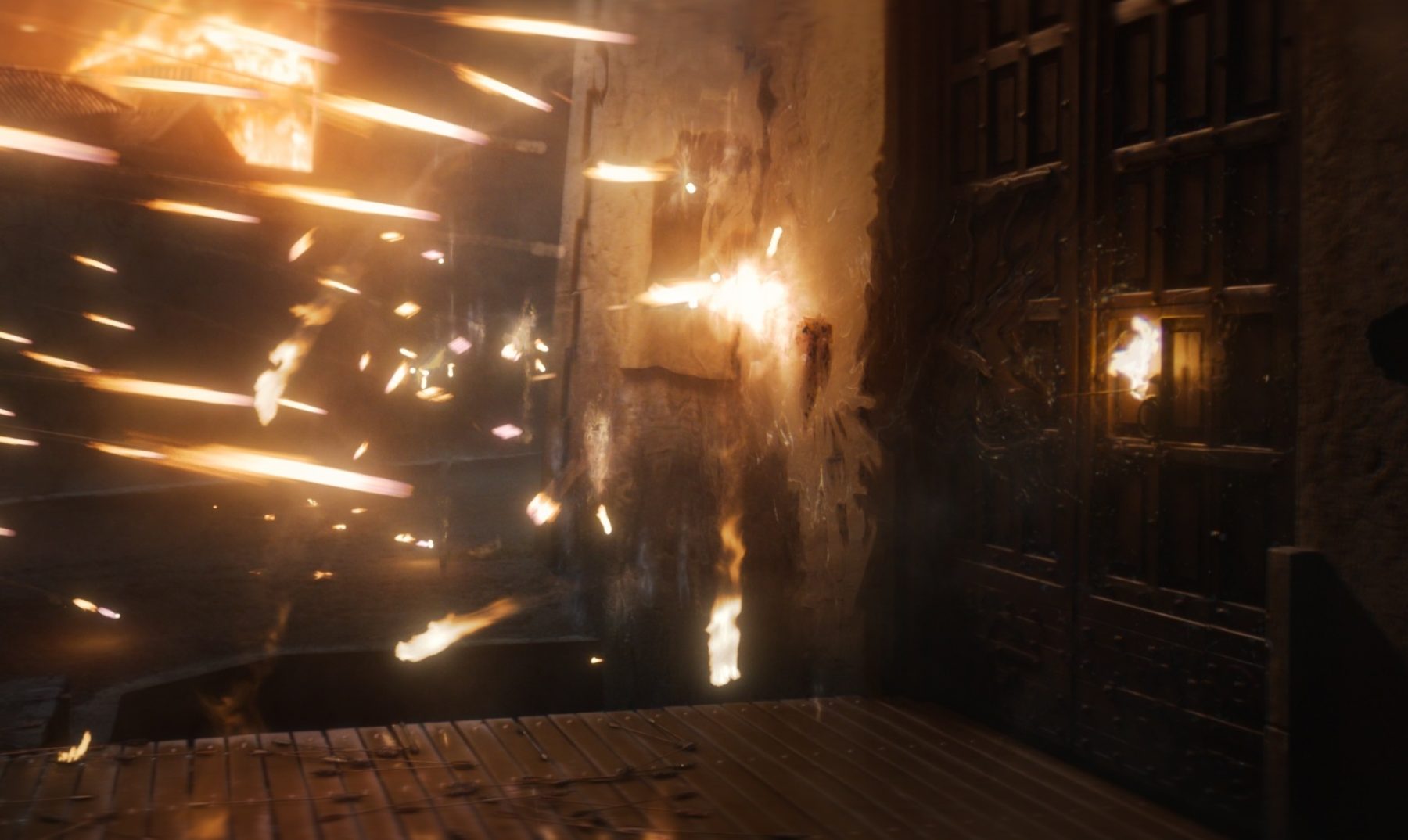
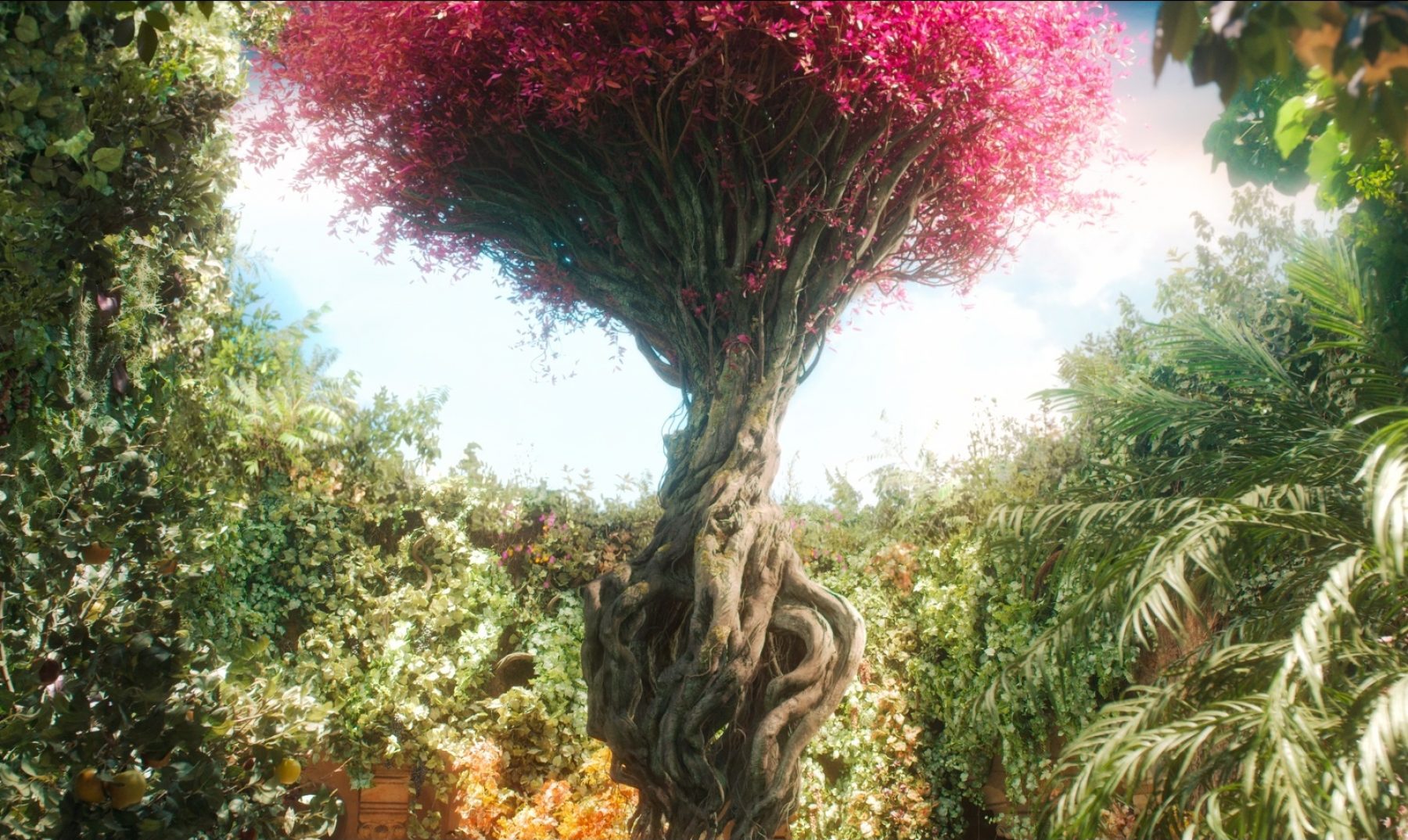
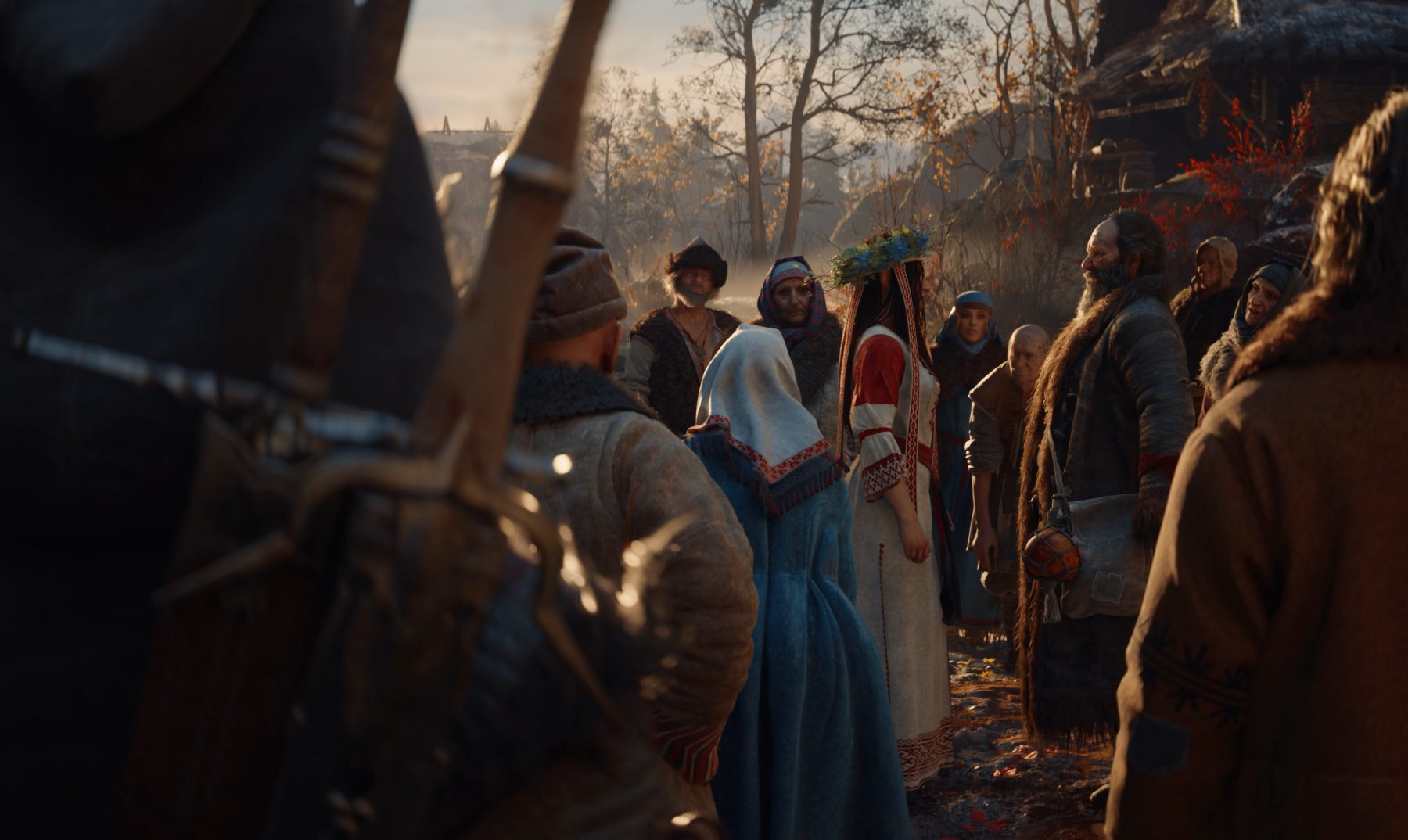
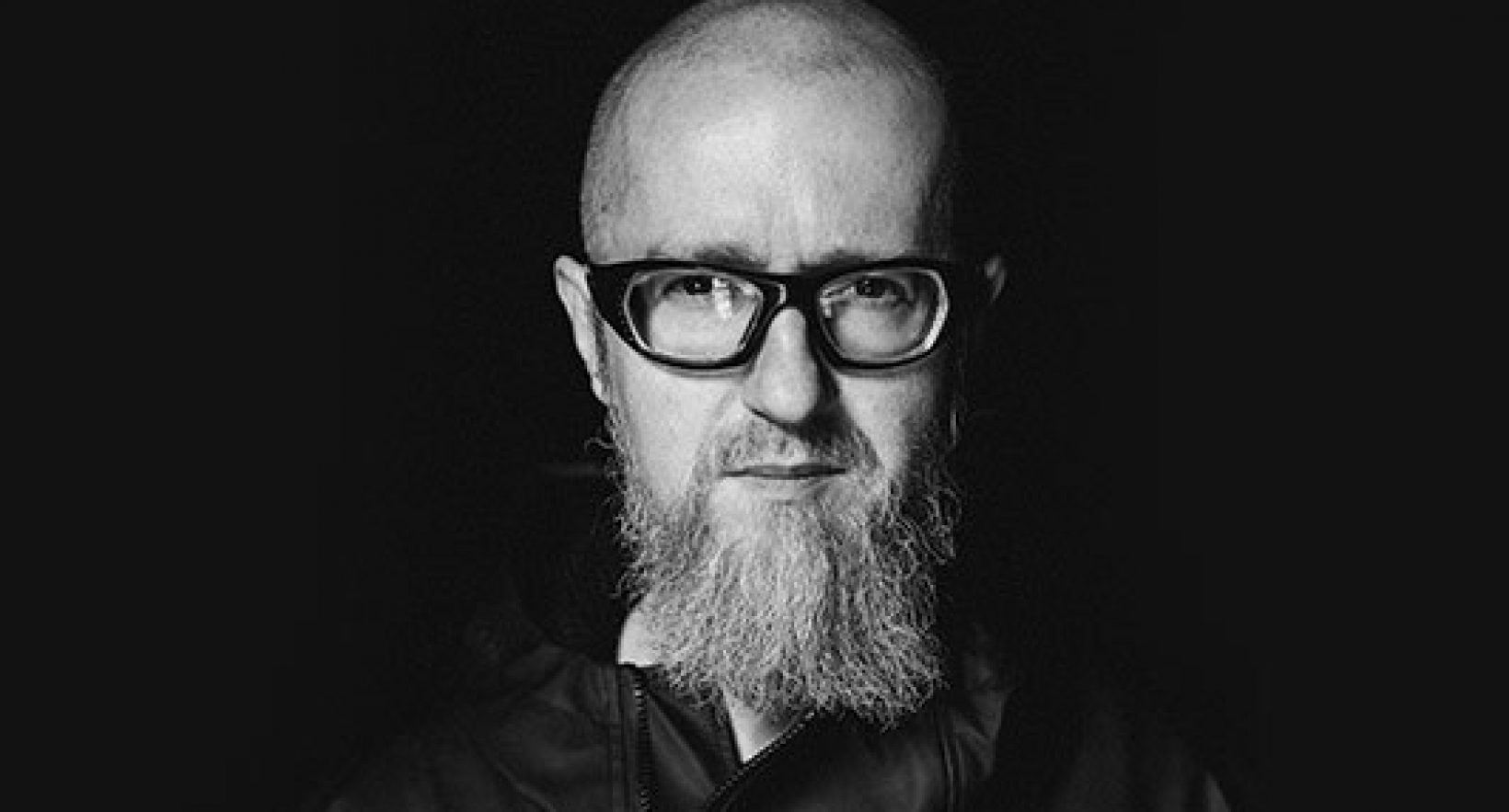
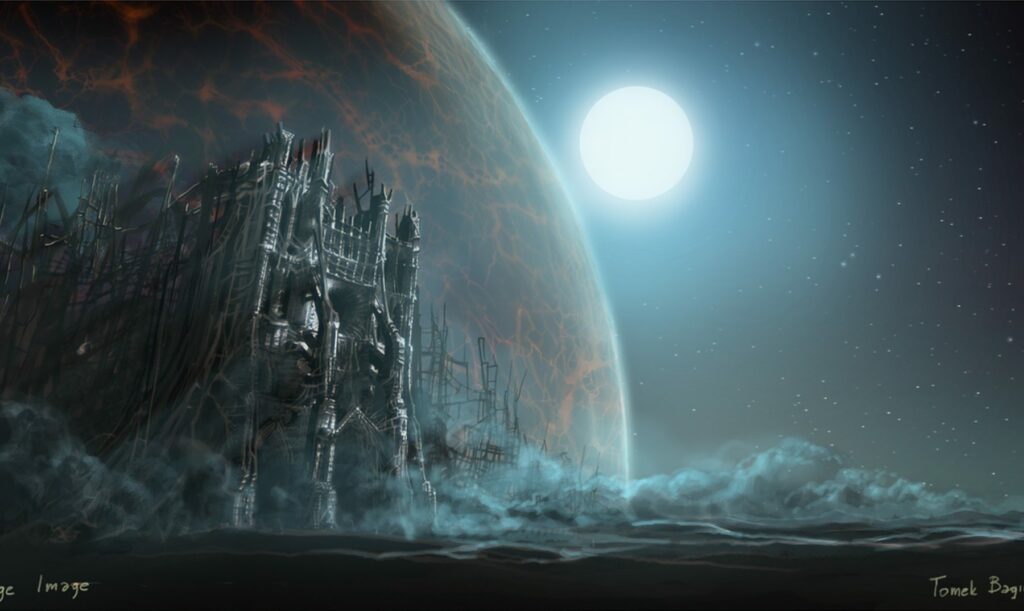
At night, after the client work was done, Tomek Bagiński went back to his computer and kept building a cathedral.
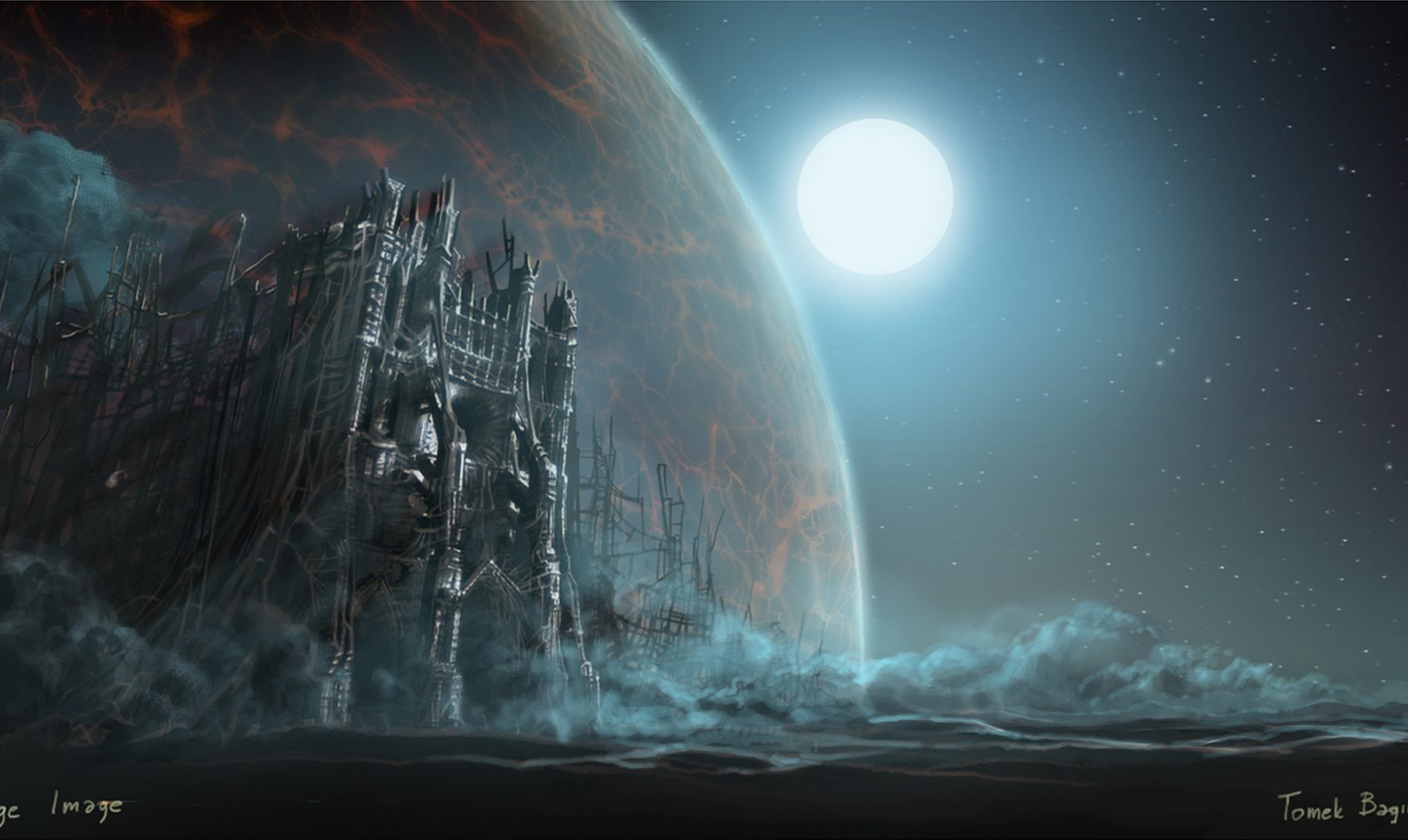
Not a normal cathedral. A living one. A cosmic one. A structure somewhere between Antoni Gaudí, Polish science fiction, medieval architecture, and a bad idea about sleeping. The computer was not impressive by today’s standards. The market around him was not Hollywood. The studio was not a feature-animation empire. It was late-1990s and early-2000s Warsaw, and the basic trade was simple: do commercial work during the day, use the tools and time left over to make something that should not really exist.
That thing became The Cathedral. It was based on a story by Jacek Dukaj, produced by Platige Image, directed by Bagiński, and nominated for an Academy Award in 2003.
That is the surface story.
The better story is that The Cathedral gave Platige Image a mechanism.
Not in the literal sense. You cannot put “Oscar-nominated metaphysical CGI short” into a cash-flow forecast and expect a bank to nod. But creatively, reputationally, and structurally, it mattered. A short film gave the studio prestige. Prestige helped attract clients. Clients paid for tools. Tools made more ambitious work possible. More ambitious work created more prestige.
Loop.
This is the basic idea of Platige Image: commercials financed capacity, capacity enabled short films, short films created reputation, reputation opened game cinematics, game cinematics opened global visibility, global visibility opened VFX and streaming, and now VFX and streaming are pushing the company toward scripted production and original stories.
But there is a useful trap here.
If you tell the story of Polish CGI only through Platige, you get a clean story and a false one. Platige became the most visible Polish 3D studio, the one with the Oscar nomination, the BAFTA, the Witcher cinematics, the Netflix credits and the Hollywood VFX work. Of course it did. That is why we are here.
But Poland did not produce only Platige.
The more interesting story is that Platige made Polish CGI legible internationally, while other Polish studios began proving the same export logic in narrower, more specialized markets. One good example is Viscato, the Wrocław-based 3D visualization studio founded by Paweł Bykowski. Viscato is not a film-and-game studio in the Platige sense. It works in architectural visualization, interior rendering, product CGI and 3D animation, helping developers, architects, design studios and brands turn unbuilt spaces and products into images that can be sold, approved, funded or understood before they exist.
This is a different branch of the same tree.
Platige made impossible worlds look cinematic. Viscato makes future rooms, offices, products and developments look already decided. One works through myth, games, film and VFX. The other works through architecture, real estate, workspace design and product communication. But the underlying Polish 3D export logic is similar: take local technical talent, aim it at international clients, and make images that reduce uncertainty.
A film producer wants a monster.
A developer wants a building that does not exist yet.
A designer wants a room to feel finished before anyone buys furniture.
The mechanism is the same: CGI turns a future thing into a present image.
That is the market Platige helped make easier to believe in.
This is not the Pixar model. Pixar’s story is cleaner: technology becomes animation, animation becomes features, features become a mythology factory. Platige’s story is messier. More Polish. More transitional. More dependent on moving between art and service work without pretending they are enemies.
Platige did not become important because it built a Polish Hollywood. It became important because it found a Central European bridge-studio model: art plus advertising plus games plus film plus broadcast plus real-time production plus local mythology.
And, perhaps more importantly, it helped make Polish high-end 3D internationally believable.
That is complicated.
Good.
Warsaw, 1997: A Studio Without a Hollywood Around It
Platige Image was founded in Warsaw in 1997. The company began attracting attention shortly after its founding, when digital special effects for Justyna Steczkowska’s music video “Niekochani” were created by a modest team led by Jarosław Sawko and Piotr Sikora.
This matters because it is not a glamorous origin story in the usual way. There is no giant studio campus. No domestic blockbuster industry waiting to absorb armies of digital artists. No obvious path from Polish post-production to global VFX. There is a music video. There is advertising. There is television. There is a small team trying to make digital images look good enough that someone will pay for the next digital image.
That is a perfectly normal way to build an industry. It is just not how people usually tell art stories.
Piotr Sikora later explained that Platige “floated out” partly on music videos, because public television was financing them at the time, which stimulated the post-production market. When Bagiński arrived with The Cathedral, the founders saw that auteur animation could show both the studio’s technical capability and its artistic side.
So the model was there almost from the beginning.
The client work gives you machines.
The machines give you images.
The images give you a reputation.
The reputation gets you more client work.
This is not romantic. It is better than romantic. It is operational.
The After-Hours Cathedral
Platige’s official account describes The Cathedral as the first short directed by Bagiński and produced by Platige, and as the film that established his style: painterly sensitivity, epic scale, and strong ties to literature. It was the result of his collaboration with Jacek Dukaj, author of the short story on which the film was based.
That is the polished version.
The production version is more useful. Bagiński worked on the film after hours. After more than two years of working on The Cathedral intermittently, he made an arrangement with Sawko and Sikora that he would take no commercial projects for eight months and would finish the film using Platige’s available production capacity.
This is the founding myth. But it is also the founding spreadsheet.
Suppose you are a young artist in Warsaw. You want to make films. You do not have a Hollywood budget, a large crew, or a market designed to support speculative metaphysical animation. You do have a computer, access to a small but ambitious studio, and commercial jobs that teach you how images get made under pressure.
So you make the film after work.
This is bad for sleep. Good for history.
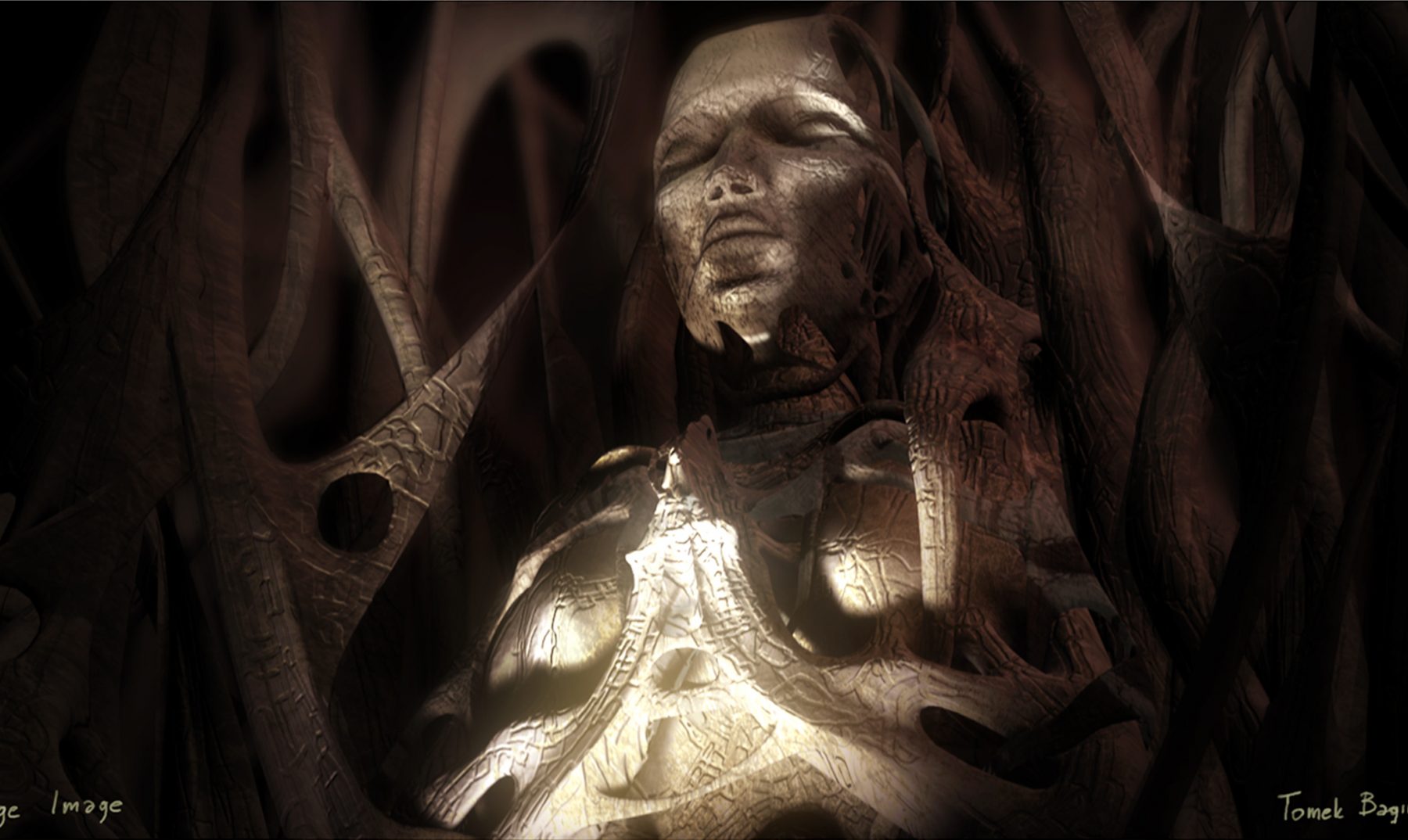
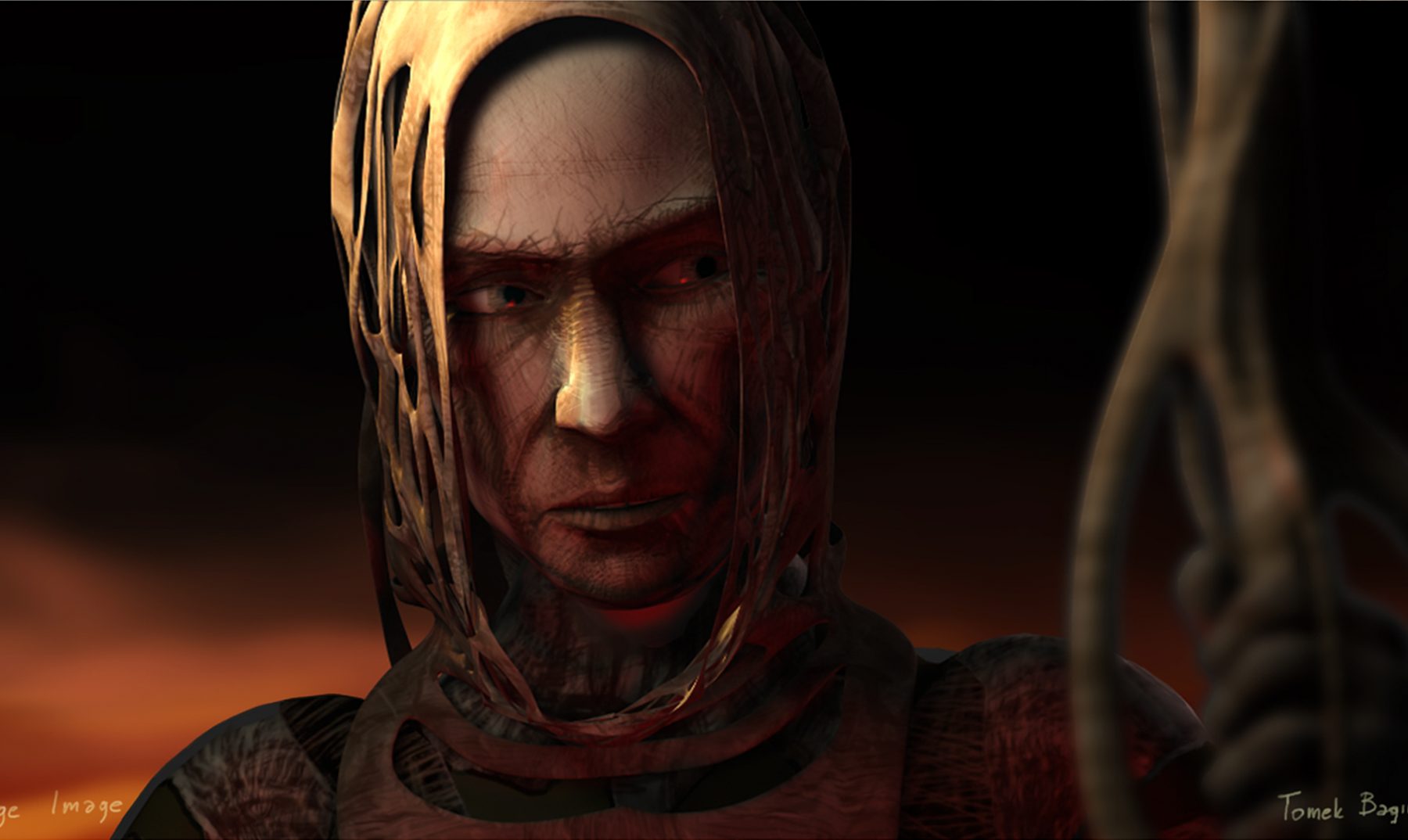
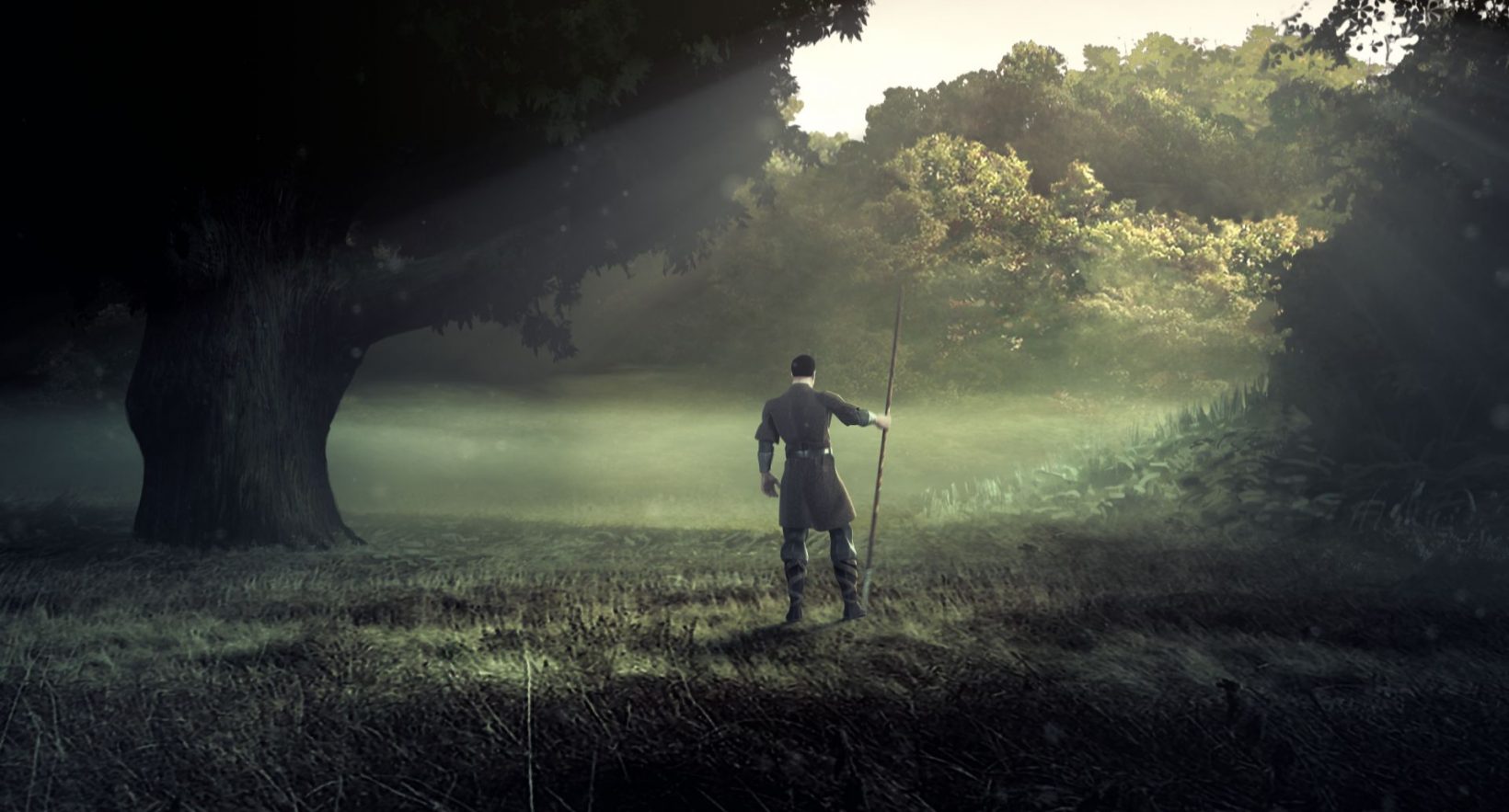
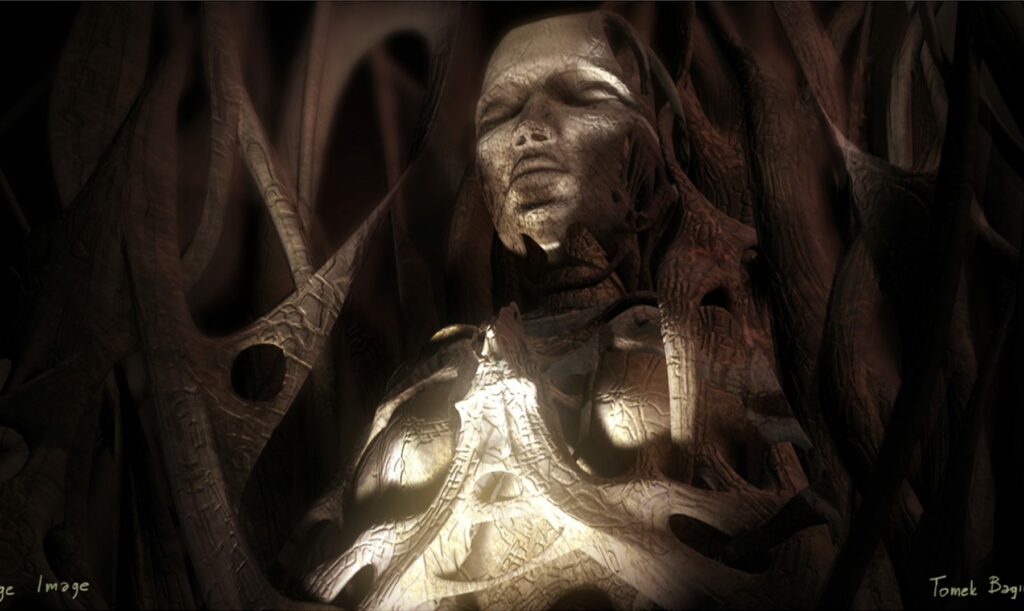
The aesthetic of The Cathedral is inseparable from that constraint. It does not try to be broad entertainment. It does not try to be funny. It does not build a large cast of expressive characters. It creates one monumental image-system: a pilgrim enters an organic cathedral, walks past living columns, and is eventually absorbed into the structure.
A man becomes architecture.
Family entertainment, but for metaphysics.
Jacek Dukaj, Gaudí, and Literary Epic CGI
The key to early Platige is not just CGI. It is literature.
Dukaj’s story gave The Cathedral intellectual weight. Platige’s images gave the story a body. That exchange matters because it became one of the studio’s recurring strengths: take something literary, historical, mythic, symbolic, or culturally dense, and compress it into a short digital form.
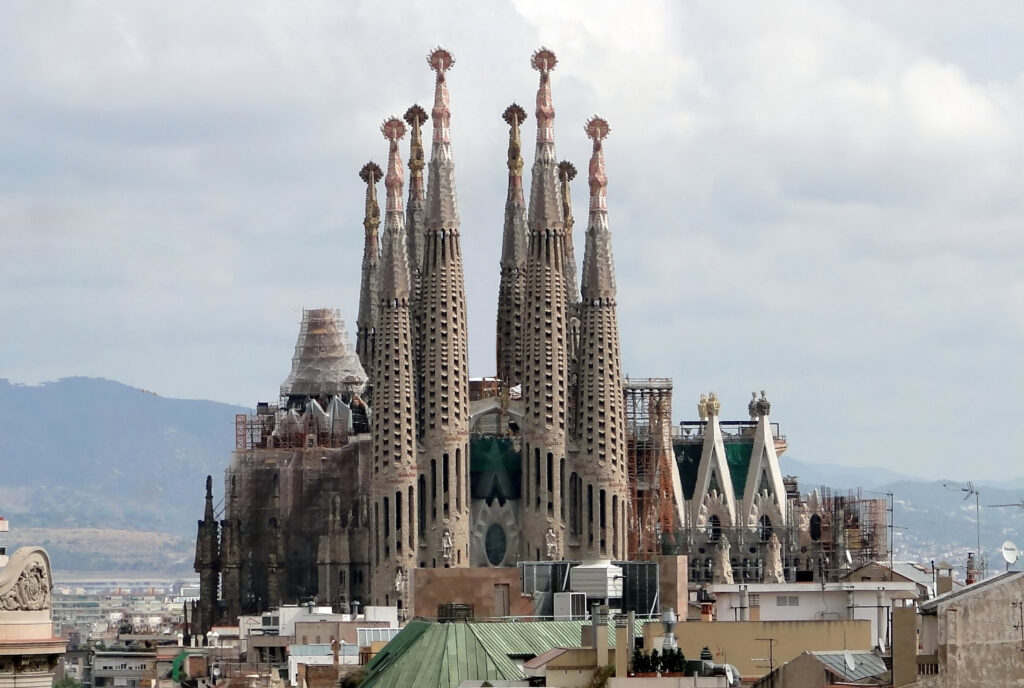
The inspiration behind Dukaj’s story has often been connected to Gaudí’s Sagrada Família. Not merely a cathedral that looks alive, but a cathedral that is alive – growing for ages in cosmic darkness. That is the kind of idea CG likes. It is too large, too strange, too architectural, and too expensive for ordinary realism. So animation gets the job.
The phrase that fits Bagiński’s early mode is literary epic CGI.
Not CGI as demonstration.
Not CGI as realism.
CGI as compressed myth.
The Cathedral is not a tech demo. It is a philosophical object with render time. This is why it worked as a calling card for Platige. The film did not merely say “we can do 3D.” It said: we can make a digital image carry symbolic pressure.
That is more useful.
Harder, too.
The Oscar Nomination Was Fuel, Not the Finish Line
The Oscar nomination did not make The Cathedral good. The film had to be good first. But the nomination made the film legible to people outside the niche where it was already admired. The Academy is useful that way. It turns difficult work into a sentence a producer can understand.
Platige itself has described The Cathedral as a film that not only received the Oscar nomination but inspired many young CG artists to seek work in creative industries. That claim is easy to believe, because The Cathedral was doing more than representing one director. It was representing a possibility: Polish CG could be internationally visible without waiting for a domestic Hollywood to exist.
There are two ways to think about the Oscar nomination.
One way is: a Polish animated short was nominated for an Academy Award.
Another way is: Platige acquired reputation collateral.
Reputation is not cash. But it can behave like cash in a creative market. It gets meetings. It attracts young artists. It reduces the perceived risk of ambitious work. It gives clients a reason to believe that the strange studio in Warsaw might actually deliver the impossible-looking thing on the storyboard.
Awards are not the business.
They make the business easier to explain.
Fallen Art: Same Mechanism, Worse Human Resources
After The Cathedral, Bagiński made Fallen Art.
At first glance, Fallen Art is the opposite of The Cathedral.
The Cathedral is solemn.
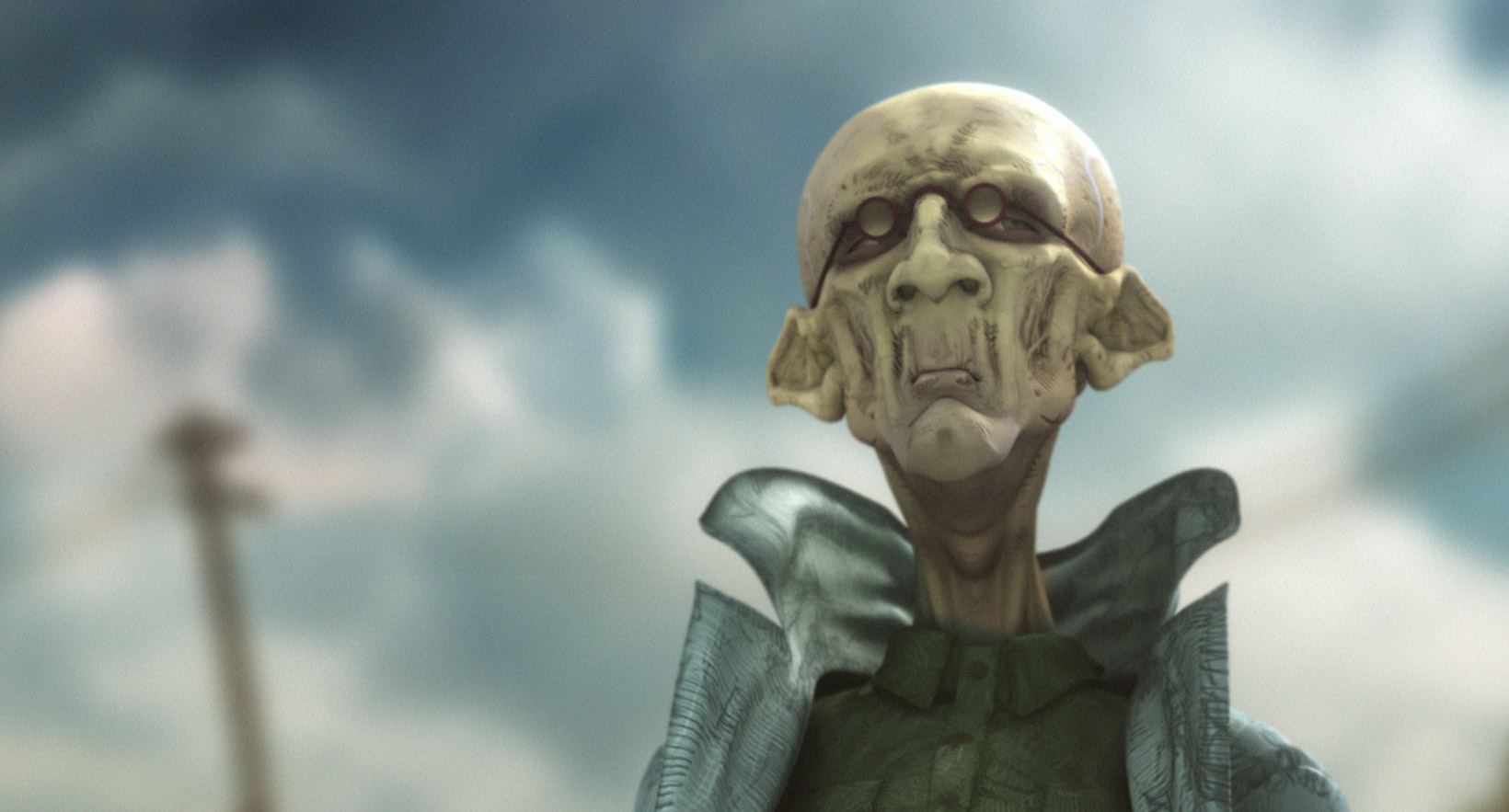
Fallen Art is grotesque.
The Cathedral is mystical.
Fallen Art is military.
The Cathedral turns a man into part of a sacred structure.
Fallen Art turns soldiers into material for an absurd artistic machine.
So, yes, totally different.
Not exactly.
The shared mechanism is that human beings become inputs for a larger system. In The Cathedral, the system is cosmic and sacred. In Fallen Art, it is bureaucratic, military, and stupid. This is the same anxiety wearing a different uniform.
Bagiński himself framed Fallen Art as a move away from the solitary, intensely personal method of The Cathedral. He wanted to do something less personal, something that could be realized with a team, something that would let the studio practice collaboration.
That is the studio transition in miniature: the private after-hours film becomes a team-based production system.
The result won BAFTA’s Short Animation award in 2006.
So the flywheel turned again.
A short film tests the team.
The team makes the short better.
The short wins prestige.
The prestige strengthens the studio.
Of course the soldiers have a worse time than the company.
The Business Model: Useful Prestige
Here is the part that is easy to miss if you only tell the story through awards.
Short films were not the business. They were the reputation engine.
A short film gives you prestige. Prestige gives you clients. Clients give you money. Money gives you tools. Tools give you another short film. This is not romance. It is a flywheel.
Commercially, Platige needed advertising, post-production, broadcast design, VFX and service work. Artistically, it needed ambitious shorts. Strategically, it needed the two categories to feed each other without collapsing into each other.
A pure art studio has prestige and no money. Bad.
A pure service studio has money and no mythology. Also bad, but more quietly.
Platige tried to have both.
This creates a structural tension that runs through the whole company. The same thing that made Platige flexible also made it dependent on other people’s worlds. It could make extraordinary things for clients, but the IP usually belonged to someone else. It could become internationally visible through The Witcher, Cyberpunk, Wonder Woman, Love, Death + Robots, commercials, events and game trailers, but visibility is not the same as ownership.
That is the trade.
A bridge studio can cross many markets. But a bridge is still infrastructure for other people’s traffic.
Useful.
Slightly awkward.
The Smaller Studios Prove the Market
This is also why Platige’s importance cannot be measured only by Platige.
A market changes when one company proves that a service can be exported from a place where clients did not expect it. After that, other companies can specialize. Some go into games. Some go into advertising. Some go into product CGI. Some go into architectural visualization.
Viscato is a good example of that specialization: a Polish 3D studio that does not need to become a miniature Platige because it can build its own international niche around photorealistic visualization for architecture, interiors, products and commercial spaces.
This is not the glamorous version of CGI. No dragon. No Oscar. No Geralt.
But economically, it is very important. Developers need images before buildings exist. Product brands need images before photoshoots make sense. Office designers need spaces to feel investable before the space is built. In that market, CGI is not spectacle. It is a decision-making machine.
The unbuilt thing becomes visible.
The visible thing becomes discussable.
The discussable thing becomes sellable.
That is a very different use of 3D.
Also useful.
Animated History of Poland: A Nation Becomes a Trailer
Now suppose you are asked to explain Poland.
This is already a problem.
You have roughly a thousand years of history. You have kings, wars, partitions, uprisings, culture, science, occupation, communism, Solidarity, transition, and a national habit of arguing about what should have been included. Also you have about eight minutes.
So you hire Platige.
Animated History of Poland was created for Poland’s presentation at Expo 2010 in Shanghai. The film takes viewers through 1,000 years of Polish history in about eight minutes, selecting 140 events and 500 animated characters from different periods.
That is not a documentary format. That is a compression device.
It functions less like a history lesson and more like a national cinematic trailer: here is the country, here are the battles, here are the wounds, here is the music, please feel continuity.
Is that historically complete? Of course not. Nothing about eight minutes and 1,000 years is complete.
But the interesting thing is not completeness. The interesting thing is the mechanism. Platige takes too much history and turns it into a single forward motion. That is what the studio had already learned to do. The Cathedral compressed metaphysical science fiction. Fallen Art compressed military absurdity. Animated History of Poland compressed national memory.
This is useful for advertising.
This is useful for games.
This is useful for states.
That is a little funny.
Also true.
Matejko to Wonder Woman: Polish Painting Enters Hollywood Through the Side Door
One of the best Platige stories begins with Jan Matejko.
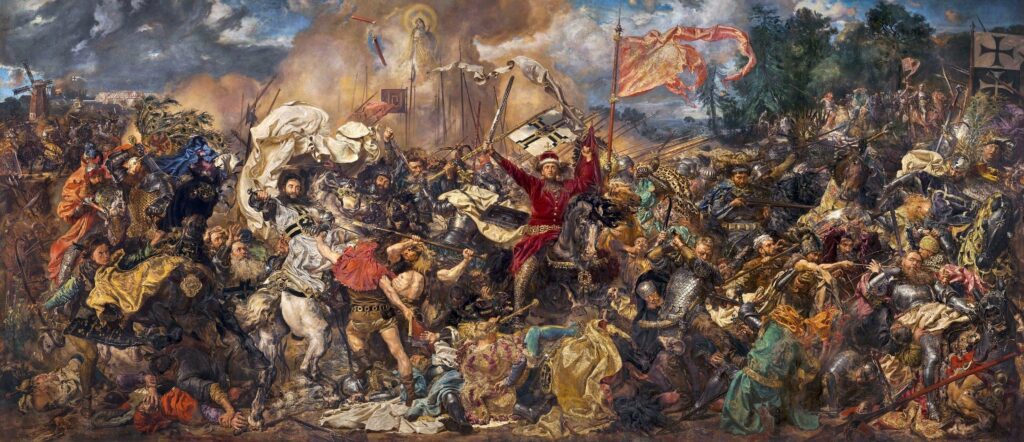
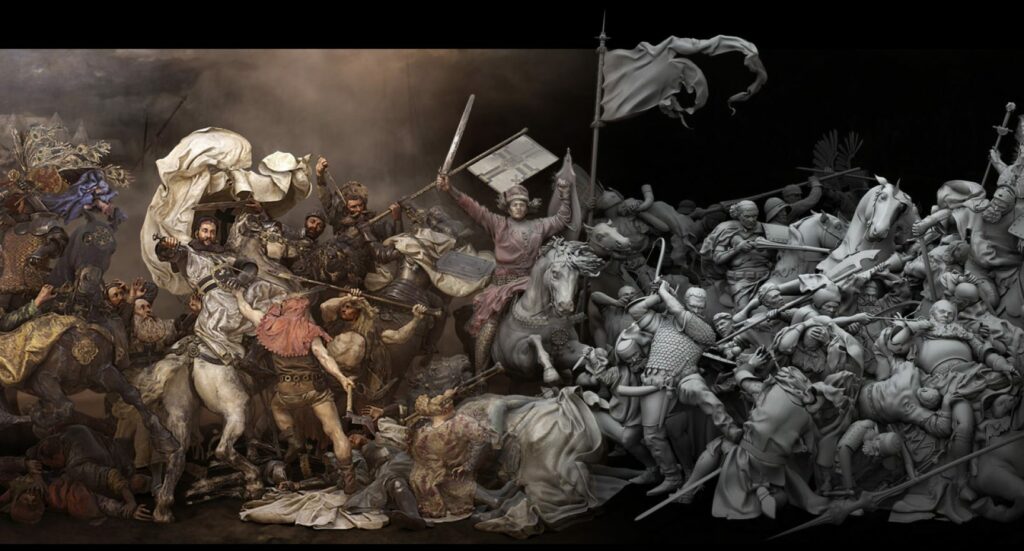
Platige’s Battle of Grunwald 3D transformed Matejko’s monumental nineteenth-century painting into a stereoscopic digital reconstruction. The project added depth and movement to a static painting, turning figures from the canvas into three-dimensional models and allowing viewers to experience the painting spatially.
This is already a very Platige thing to do. Take a canonical Polish historical image and convert it into a digital environment. History becomes space. Painting becomes pipeline. Matejko gets a render pass.
Then, unexpectedly, Hollywood.
For Wonder Woman, Platige created the animated prologue that tells the mythic history of the Amazons and the exile of Ares. Patty Jenkins was inspired by the studio’s earlier Battle of Grunwald 3D work, and that connection helped turn a Polish historical visualization experiment into a reference point for a DC superhero blockbuster.
This is the kind of cultural transfer that sounds fake because it is too neat.
A nineteenth-century Polish painting about a medieval battle becomes a reference point for a Hollywood myth sequence about Amazon warriors.
The surface story is that Platige worked on Wonder Woman.
The better story is that Polish historical painting entered Hollywood through a VFX pipeline.
This is why Platige is more interesting than a list of credits. The credits are good. The routes between the credits are better.
The Witcher: Game Cinematics Become the New Short Film
If The Cathedral is Platige’s founding myth as an auteur CGI studio, The Witcher is its founding myth as a global game-cinematic studio.
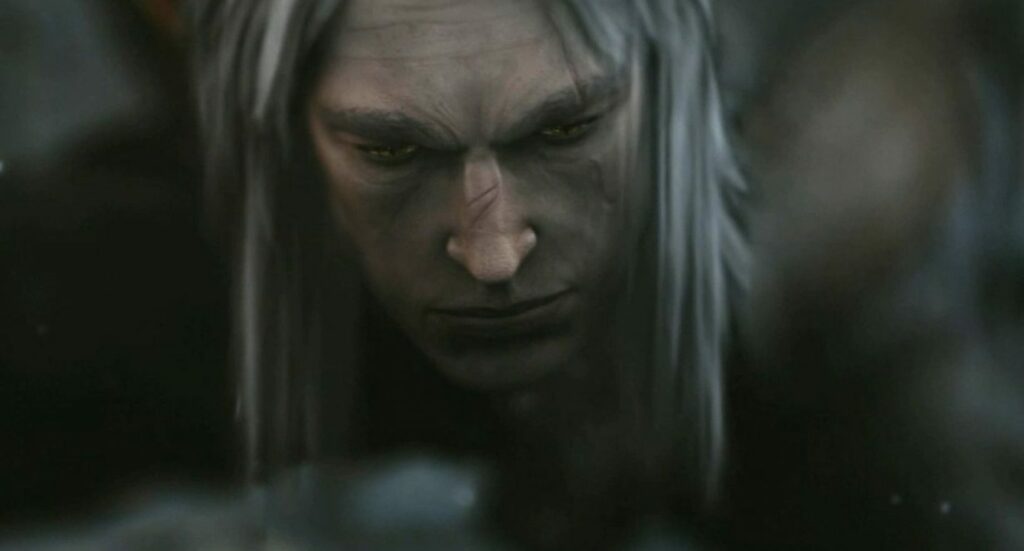
Since 2007, Platige has been creating game cinematics, starting with The Witcher series. Its trailers and intros often worked as long, eye-catching standalone film miniatures that gained cult status.
That phrase – standalone film miniature – is the key.
A game cinematic is advertising. But a good one is also a short film. It sells a product, but it also sells tone, violence, weather, moral atmosphere, character identity, and the feeling that the world extends beyond the frame. It is a commercial object wearing mythological clothes.
Platige was built for this. Its early shorts already did what game cinematics need to do: establish a world fast, imply depth without explaining everything, and make a few minutes feel larger than their runtime.
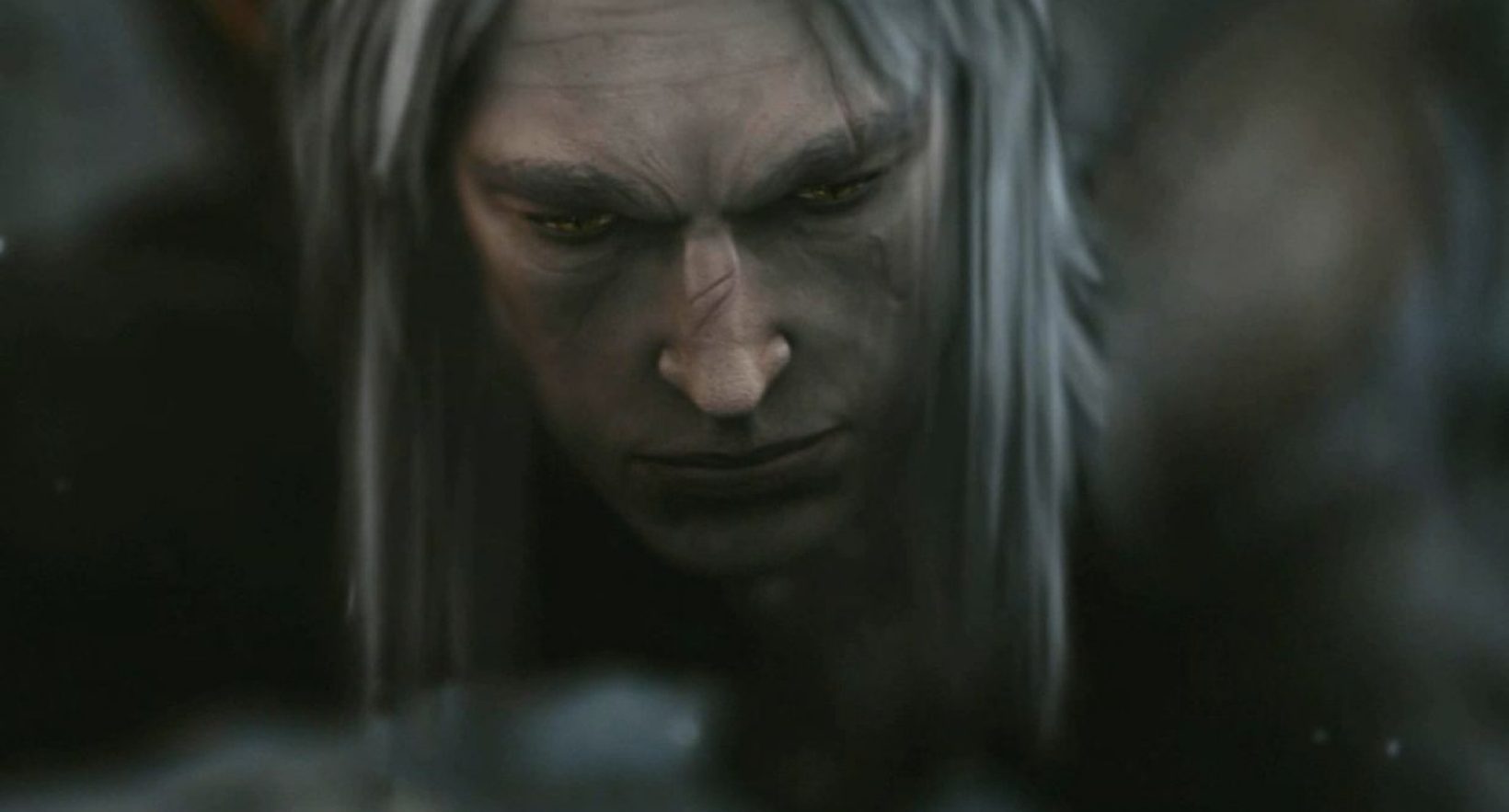
The intro and outro for the first Witcher game were created by a Platige team led by Bagiński. The project helped bring Geralt into twenty-first-century game culture and gave Platige a new kind of format: not a commercial, not a music video, not exactly a film, but something adjacent to all of them.
That is the category shift.
The short film starts as an artistic format.
Under market pressure, it becomes a game cinematic.
The game cinematic becomes a global calling card.
This is not selling out.
Not exactly.
It is finding a funded format for the same skill.
The Witcher 2 and The Witcher 3: Scale, Then Intimacy
The obvious way for game cinematics to develop is scale. More armor. More fire. More soldiers. More complicated monster opinions.
Platige did scale. But the more interesting move is that it also learned intimacy.
For The Witcher 2: Assassins of Kings, Platige’s cinematic helped introduce the political violence and assassination logic of the game’s world. The project was widely recognized within trailer and VFX circles and helped confirm that game cinematics were becoming a serious part of the studio’s identity.
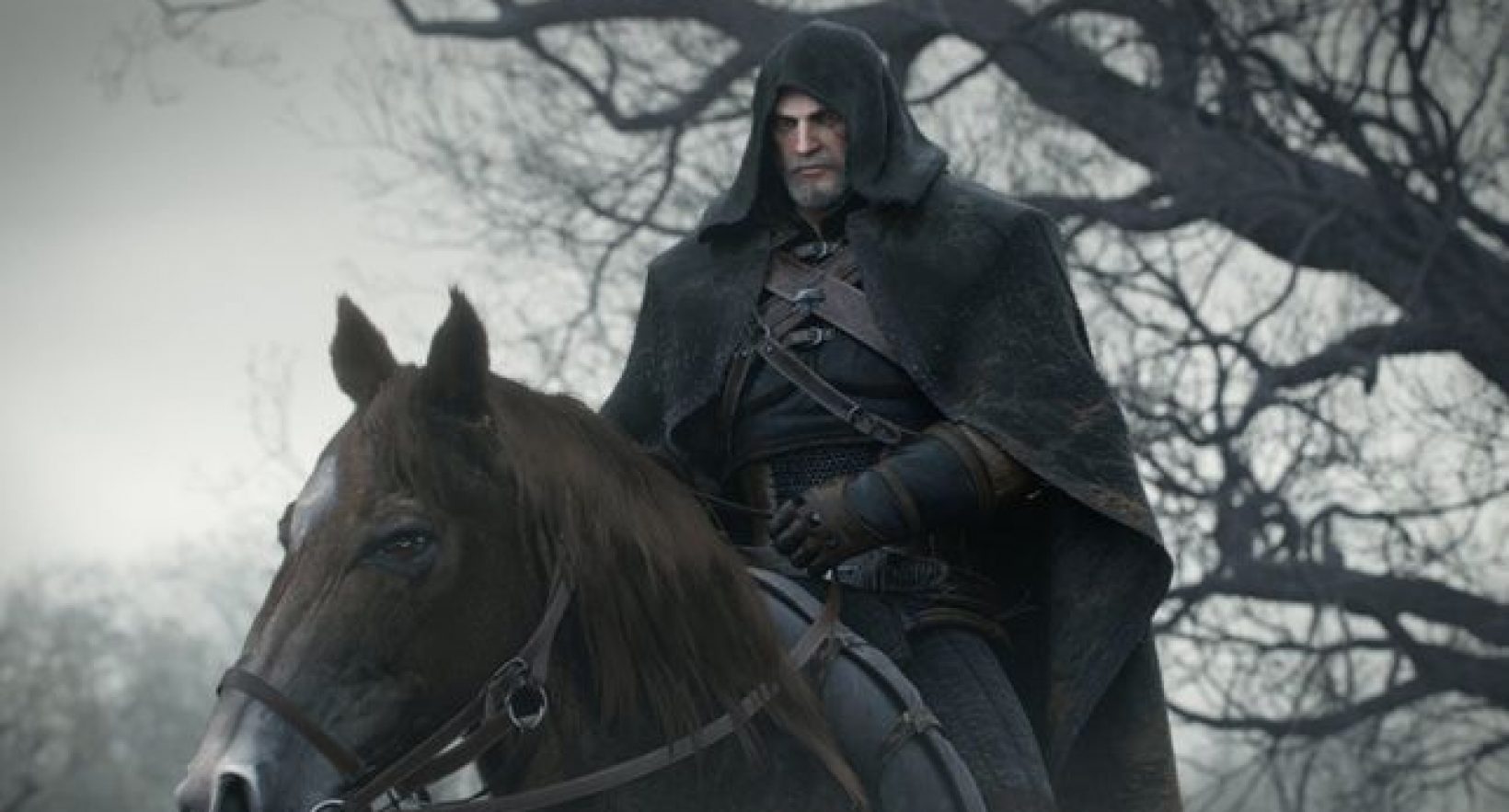
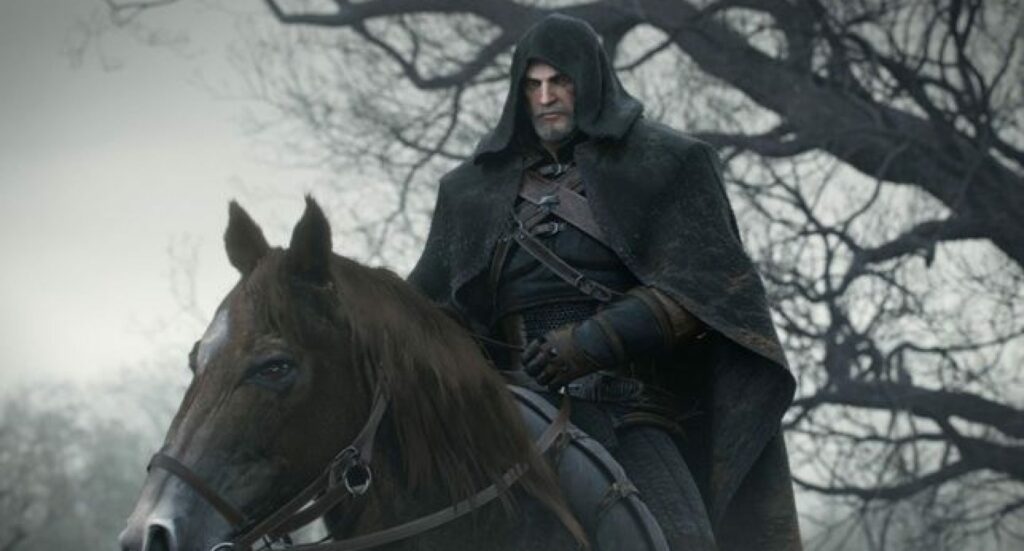
Then came The Witcher 3. Platige’s The Trail intro follows Geralt and Vesemir tracking Yennefer after a devastating battle in Temeria. Its other Witcher 3 work includes the famous Killing Monsters trailer, which is less a product announcement than a moral scene: Geralt sees violence, judges violence, and then commits better violence.
That is the Witcher proposition.
Not peace.
Better violence.
Technically, Platige’s The Witcher 3 production also shows the studio’s move toward more realistic character work. The production team used 3D scans of live actors for characters other than Geralt, an approach that added realism and helped accelerate the design process.
The small scene is harder than the big one in a particular way. If you have an army, smoke can hide things. If you have a face, the face has to work.
Animation is unfair like that.
Cyberpunk, Ubisoft, Riot, Capcom: The Machine Travels
Once Platige had the game-cinematic machine, it could move between worlds.
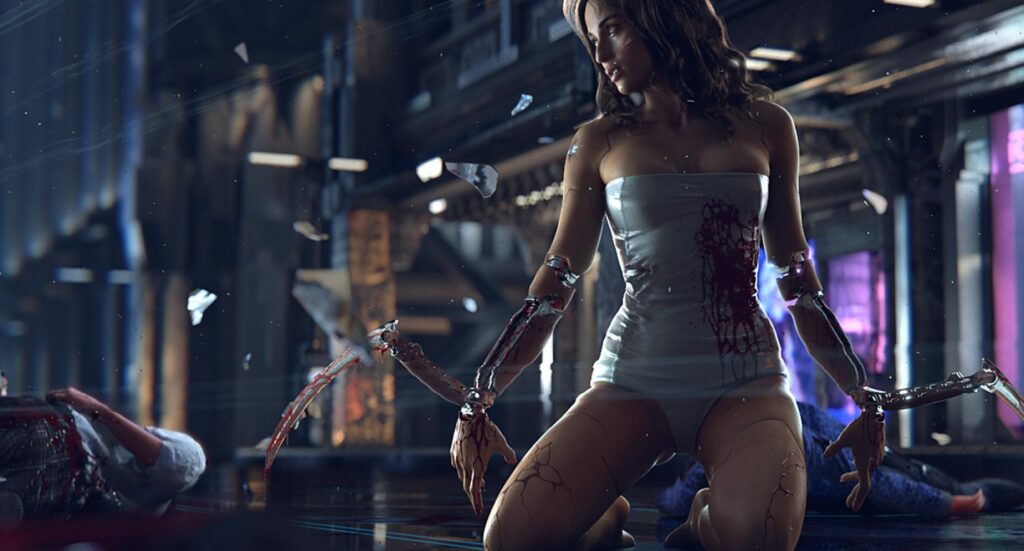
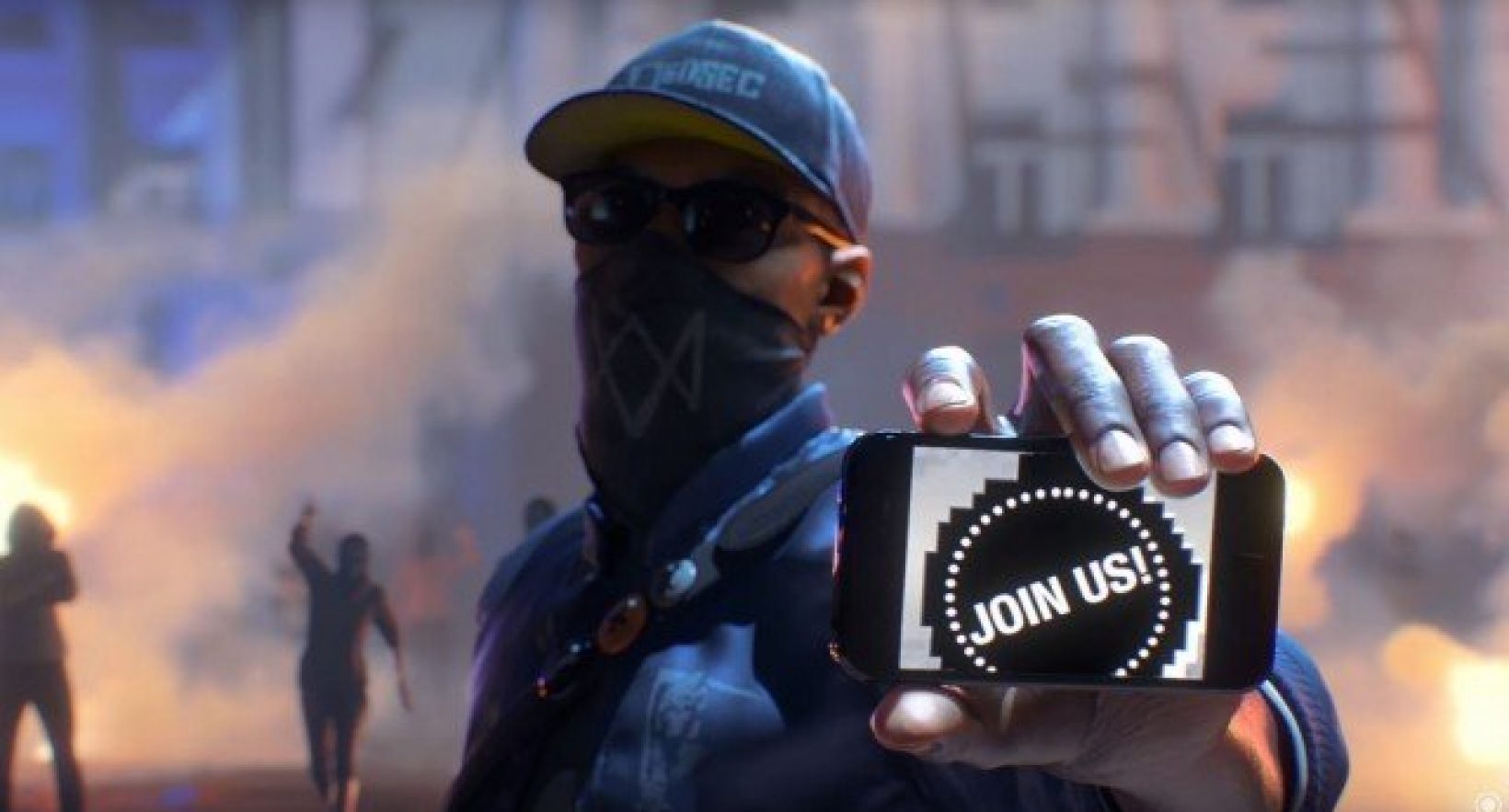
It created a cinematic trailer for Cyberpunk 2077, CD Projekt RED’s science-fiction RPG, centered on a cybernetically augmented woman in Night City. It made Ubisoft’s Watch Dogs 2 reveal trailer, a San Francisco-set project built around the atmosphere and attitude of a new open-world game. It worked in the orbit of esports and global game culture through League of Legends projects. It also created animation for major game brands beyond Poland.
The general rule is simple: once a studio can make a three-minute myth, every game publisher has a use for it.
A game needs a trailer.
A trailer needs a world.
A world needs a mood.
A mood needs someone who can make fog, leather, steel, guilt, neon or monster saliva feel expensive.
Platige had been practicing that since The Cathedral.
Netflix, The Witcher, and the Strange Loop of Polish Fantasy
The Witcher loop is almost too perfect.
A Polish writer creates Geralt.
A Polish game studio turns Geralt into a global gaming phenomenon.
A Polish CGI studio helps define his modern visual language through cinematics.
Netflix turns the property into a global streaming series.
The same Polish CGI studio works on the show’s VFX, and Bagiński becomes part of the executive production ecosystem.
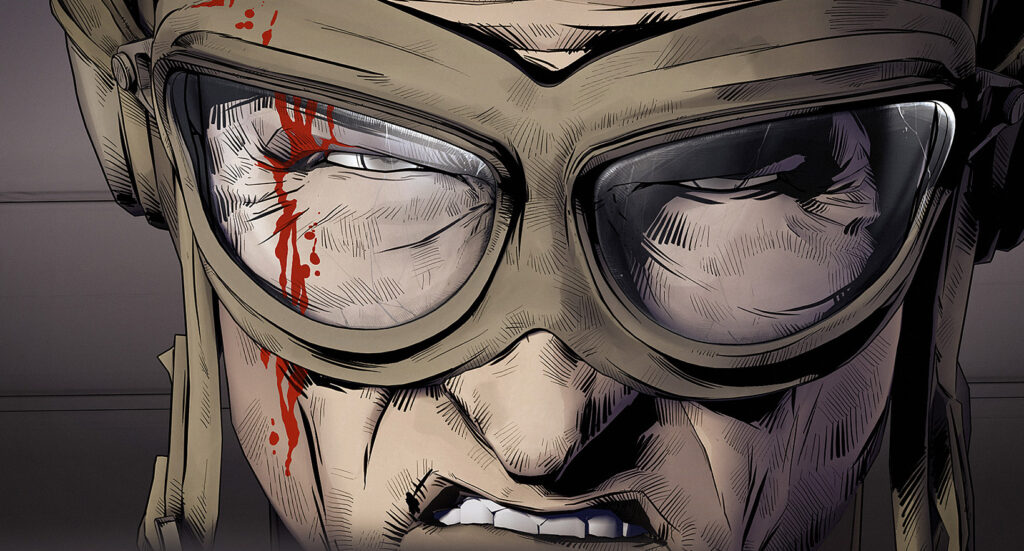
This is not just a credit. It is a loop in the history of Polish fantasy.
The property moves from literature to game to cinematic to streaming. Platige is not the owner of the whole chain. But it is present at several key translation points, especially where words and gameplay need to become images.
That is one of the studio’s real specialties: translation.
Literature into short film.
History into animation.
Painting into VFX.
Game worlds into trailers.
Fantasy IP into streaming effects.
Folklore into horror.
Translation is a business.
Also a worldview.
Damian Nenow: The Studio Was Not One Person
It is tempting to make Platige’s history a story about Bagiński.
That would be understandable. It would also be too simple.
Bagiński is central, especially in the studio’s early global visibility and in its connection to The Witcher. But the more interesting studio story is what happens when one breakthrough becomes a culture capable of producing other directors, other forms, other visual languages.
Damian Nenow is the crucial second line.
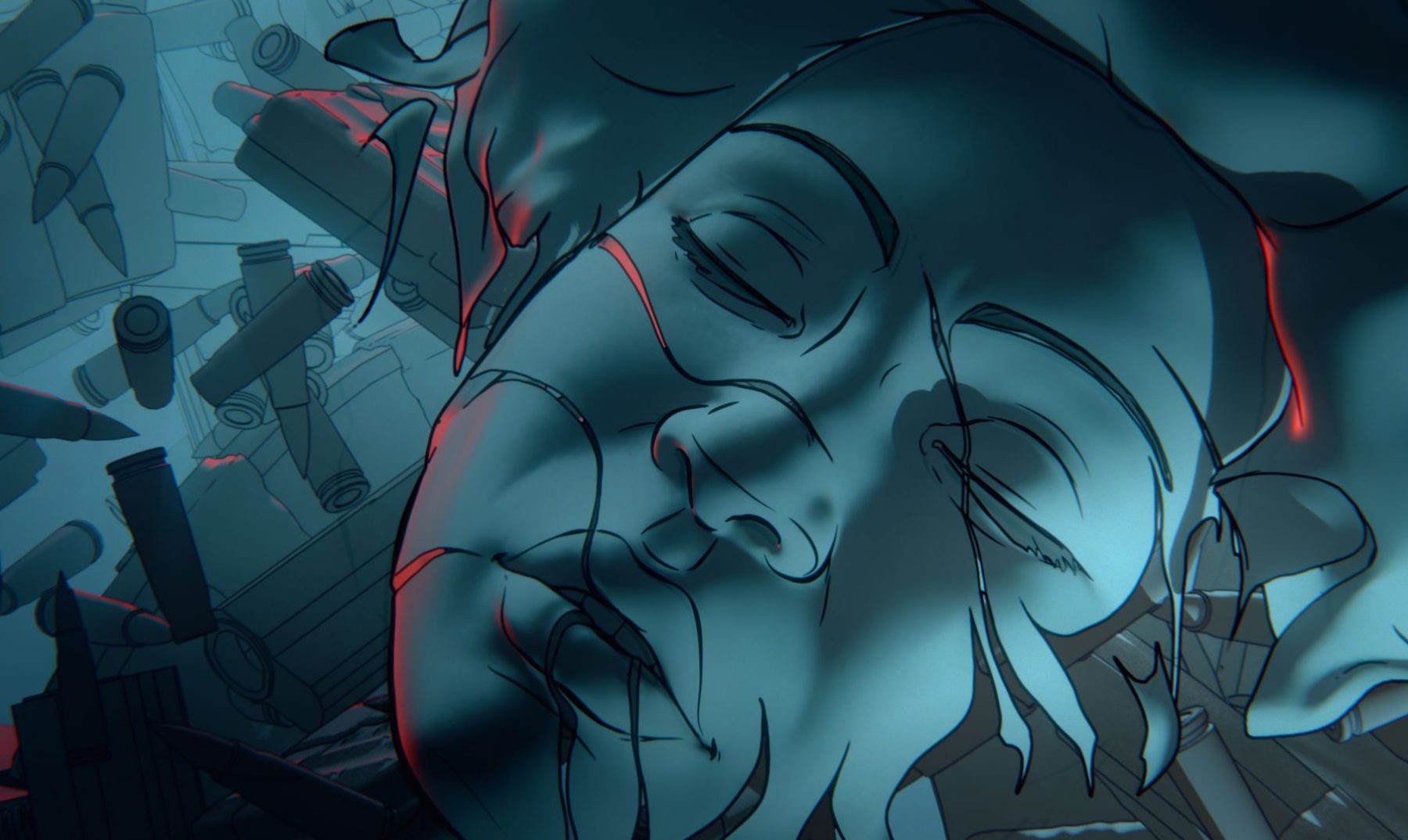
Paths of Hate is not The Cathedral. It is kinetic, graphic, violent, almost comic-book-like. It turns aerial combat into a moral mechanism: hatred becomes motion, motion becomes destruction, destruction becomes style.
Still Platige.
Different weather.
Nenow also directed Fish Night for Netflix’s Love, Death + Robots. That project matters because Love, Death + Robots is basically the streaming era discovering a category Platige had already been working in for years: adult short-form animation with genre logic, high visual ambition and international circulation.
The market finally invented a shelf for the thing Platige had been making.
Nice of it.
Another Day of Life: Kapuściński, Animation, Documentary
Then there is Another Day of Life.
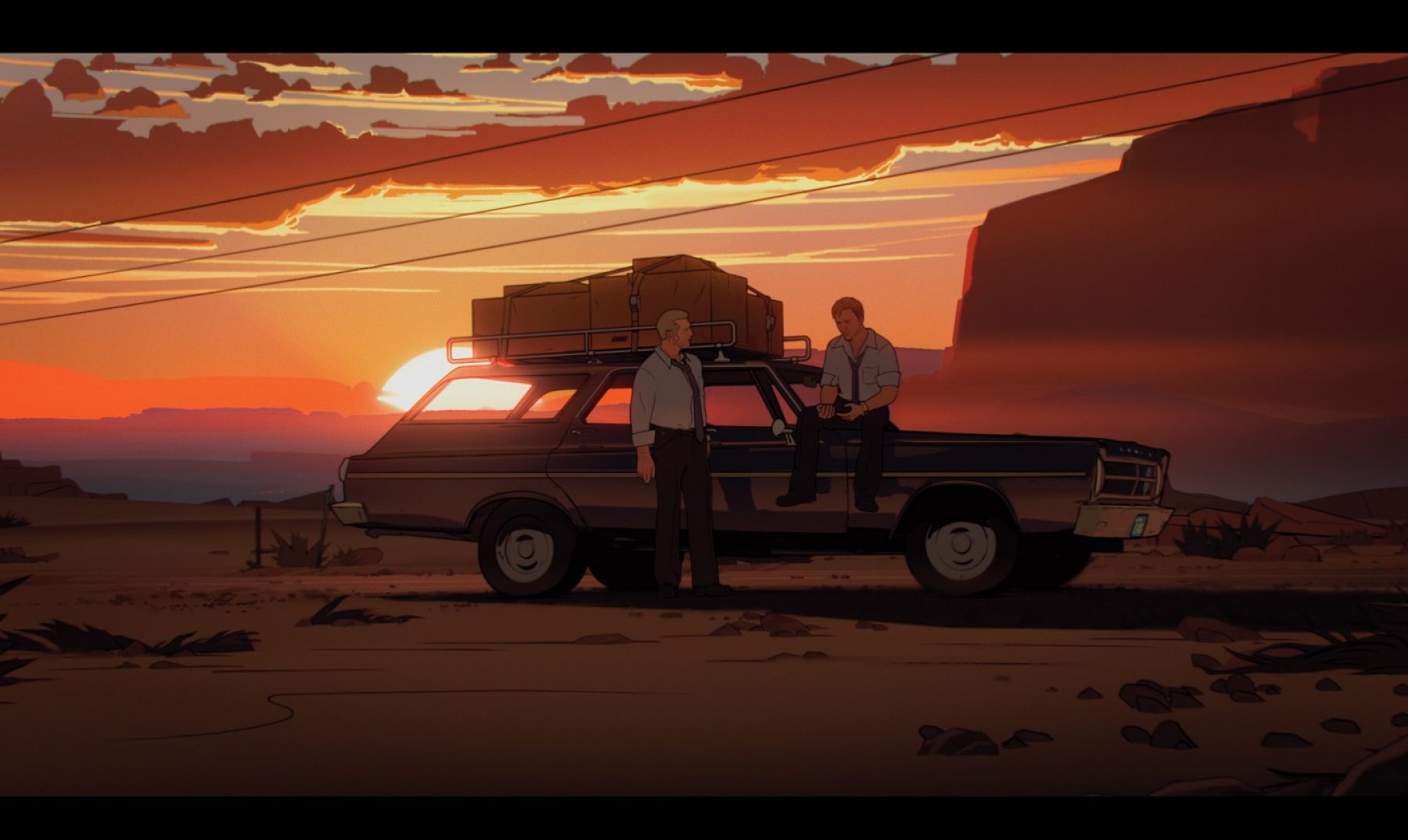
The film adapted Ryszard Kapuściński’s account of Angola’s civil war into a hybrid of animation and documentary. This is not merely another credit. It is a harder version of the Platige mechanism.
Shorts compress.
Trailers compress.
Commercials compress.
A feature has to sustain.
Another Day of Life asks whether the studio’s visual intensity can carry reportage, memory, panic, fear and political violence over a feature-length structure. It is still translation, but the source material is not fantasy.
It is witness.
The film won major European recognition, including the European Film Award for Best European Animated Feature Film and the Goya Award for Best Animated Film.
This gives Platige another bridge: not just art to advertising, or games to film, but documentary memory to animation.
The bridge is getting crowded.
Architectural Visualization: CGI Without Monsters
There is another Polish 3D story running next to Platige’s.
It has fewer monsters and more meeting rooms.
Viscato is useful here because it shows how Polish CGI moved into global architectural and commercial visualization. Paweł Bykowski publicly described the logic behind the name Viscato in 2017: it needed to be unique, easy to pronounce for foreign clients, and connected to visualization through the “VIS” prefix. That is a small detail, but a revealing one. From the beginning, this was not a local-only imagination. The name itself was built for export.
Viscato’s current positioning is clear: a multidisciplinary 3D visualization studio based in Wrocław, combining architecture, spatial planning, design and visual communication. It works for developers, architects, design studios and product brands, producing architectural visualizations, interior renderings, product visuals and 3D animations.
The company’s work sits in a different economy from Platige’s. Platige sells cinematic imagination. Viscato sells spatial confidence.
A client does not always need a story about a cursed warrior. Sometimes the client needs to know whether an office lobby, rooftop terrace, conference room or product packshot will feel expensive enough to justify the decision.
Viscato’s public portfolio includes office visualization and commercial workspace projects in places such as London and Amsterdam, as well as product CGI and residential development work. One London office project presents a workspace concept before completion, explicitly supporting commercial marketing, investor communication and leasing presentations. Another public project, Spaces Wonderwoods in Utrecht, connects Viscato’s visual credit to the flexible-workspace world around IWG and Spaces.
That is a useful contrast with Platige.
Platige helps visualize monsters, myths, game worlds and cinematic histories. Viscato helps visualize the spaces where modern work is supposed to happen: coworking floors, office interiors, business clubs, meeting rooms, lobbies and commercial environments. One part of Polish CGI sells narrative immersion. Another part sells spatial certainty.
Both are export businesses.
One makes the impossible look real.
The other makes the not-yet-built look inevitable.
The Boring Machinery: Advertising, Broadcast, Events
Now for the supposedly boring part.
Commercials, broadcast design, event visuals, brand films and technical service work are not a side story. They are the hidden machinery of the whole company.
Without advertising, there is less cash flow.
Without cash flow, fewer tools.
Without tools, less experimentation.
Without experimentation, fewer prestige projects.
Without prestige, less leverage with clients.
This is the flywheel again, just with less romantic lighting.
Over the years, Platige has worked across advertising, film, animation, visual effects, game cinematics, broadcast, events, interactive arts and cultural projects. That breadth is not a branding accident. It is the structure.
This is why “Polish Pixar” is the wrong comparison.
Pixar is a feature-animation studio. Platige is a hybrid production system. It makes commercials, shorts, cinematics, VFX, event visuals, cultural installations, real-time projects and, increasingly, scripted content.
A studio like that does not have one identity. It has a portfolio of identities that need to reinforce one another.
That is hard. But it also makes the company harder to define, which is sometimes useful. If one market slows, another may still need monsters, cars, explosions, murals, game trailers, or a national-history animation for a pavilion.
Diversification, but with dragons.
Real-Time Engines: The Pipeline Starts Moving
The latest technical shift is real-time.
Platige has moved into real-time engine technology across advertising, gaming and live events, and has worked as an Unreal Engine Authorized Service Partner. This is not just a software note. It changes the relationship between film, games and production.
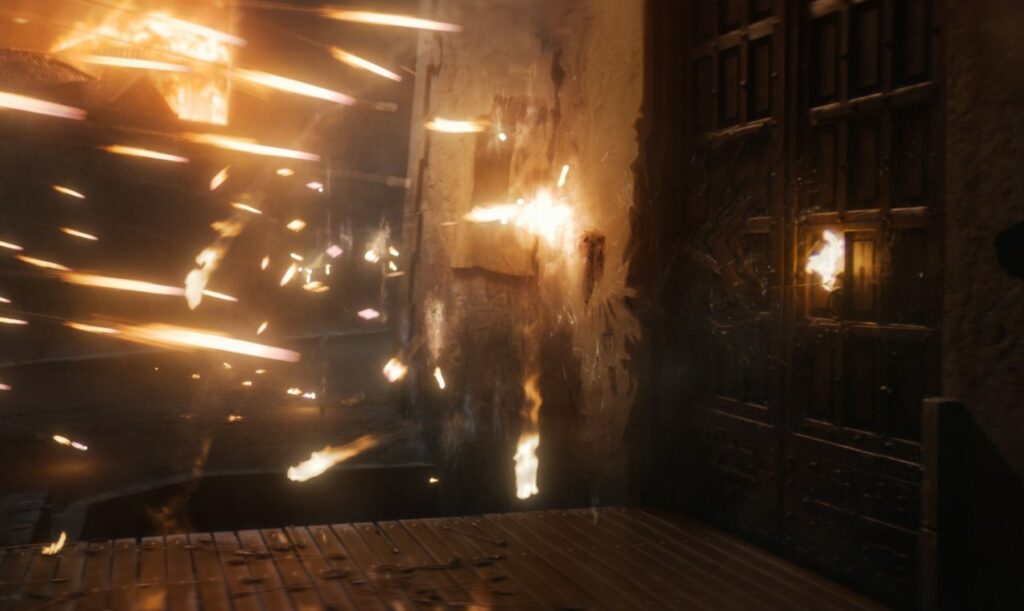
In the old model, CGI is slow. You build the scene. You render it. You wait. You revise. You wait again. Time is the villain.
Real-time engines make the image more responsive. Not free. Not easy. But more immediate. That matters for virtual production, broadcast, live events, game-adjacent pipelines and clients who want cinematic quality with less patience than physics would prefer.
For Platige, the move makes sense because the company has always lived between categories. Unreal Engine is also a between-category tool: born from games, useful for film, useful for broadcast, useful for previs, useful for virtual production, useful for clients who want to stand inside the image before the image is finished.
Technically exciting.
Economically pressurizing.
Creatively logical.
The pipeline is becoming more like the studio: hybrid.
The Witcher 4: The Loop Reopens
The Witcher loop did not end with Geralt.
The reveal trailer for The Witcher 4 opened a new saga centered on Ciri. It also showed how far the Platige/CD Projekt relationship had traveled: from the intro and outro of the first Witcher game to a new-generation cinematic reveal built in a market where game trailers are global cultural events.
This is a clean historical rhyme.
First Witcher: Platige helps bring Geralt into modern game culture.
Netflix Witcher: Platige works on the global streaming version.
The Witcher 4: Platige helps reveal a new saga centered on Ciri, with real-time technology now part of the creative-industrial stack.
The tools changed.
The mechanism did not.
A Polish fantasy world needs to become a global image. Platige is called.
Again.
The Risk: Other People’s Worlds
Here is the uncomfortable part.
The same model that made Platige powerful also created limits.
If you are a bridge studio, you can cross many markets. But you often do it in service of someone else’s IP, someone else’s campaign, someone else’s platform, someone else’s release schedule. You may make the trailer that defines the emotional memory of a game, but the game is not yours. You may create a stunning VFX sequence for a global film, but the film is not yours. You may help a streaming series look believable, but the streamer owns the show.
This is not bad. It is business. But it creates a question.
Can a studio that became excellent at translating other people’s worlds into images move upstream into owning more of the story?
That is the strategic tension behind the newest chapter.
Platige Film Project: The Service Studio Wants the Story
In 2025, Platige announced Platige Film Project, a new production studio within the Platige Group focused on producing and developing feature films and scripted series.
This is a category shift.
Platige starts as a service studio.
Under ambition, it becomes a story studio.
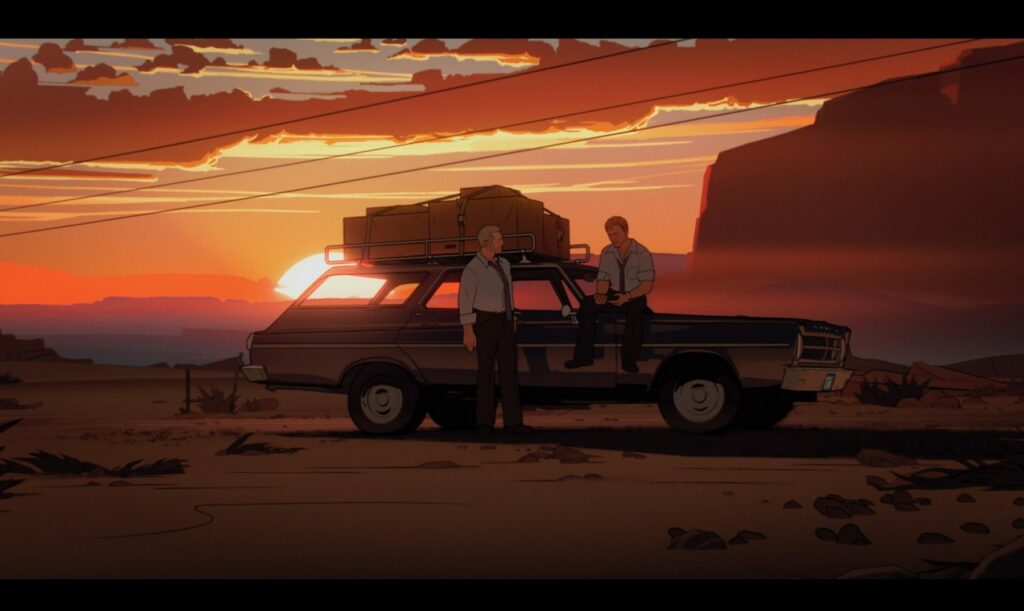
Not entirely. Not magically. Service work does not disappear because a company launches a scripted division. But the direction matters. For years, Platige has made other people’s stories look mythic. The new question is whether it can own more of the myth.
That is a different business.
VFX is execution under constraint.
Cinematics are storytelling under marketing pressure.
Original scripted production is risk with character arcs.
The skills overlap.
The incentives do not.
OPI: Folklore as Genre Engine
Then comes OPI.
Platige announced OPI as an original feature-length psychological horror rooted in Kashubian folklore, directed by Marta Giec. The film combines folk horror with an intimate story of toxic family ties and identity struggle.
This is a smart next move because it returns Platige to one of its oldest strengths: local material translated into globally legible form.
The Cathedral translated Polish speculative literature into CGI.
Animated History of Poland translated national memory into animation.
Battle of Grunwald 3D translated Polish painting into spatial VFX.
The Witcher translated Polish fantasy into global game and streaming imagery.
OPI translates Kashubian folklore into psychological horror.
That is not random. That is a pattern.
Folklore is useful because it is local but exportable. Horror is useful because it travels. Family trauma is useful because, unfortunately, everyone understands it. Add visual ambition, and you have a Platige-shaped object.
This is not folklore as museum display.
It is folklore as engine.
The Market After Platige
Platige’s influence on the Polish market is not only that it made famous images.
Famous images are nice. The more durable effect is that it helped make Polish high-end 3D believable as an export service.
That belief matters.
If you are a client in London, Amsterdam, Utrecht, Oslo or New York, and a Polish studio says it can make your film sequence, game trailer, office development or product image look world-class, someone has to have made that sentence plausible before. Platige did a large part of that work in film, commercials, games and VFX. Later and more specialized studios could operate in a market where “Polish CGI” no longer sounded like a local curiosity.
This does not mean Viscato exists because Platige exists.
That would be too clean. Markets are not family trees.
But Platige helped create the confidence layer in which studios like Viscato make more sense: Polish teams selling precise, photorealistic, internationally useful 3D work to clients outside Poland.
Viscato’s work for architectural and workspace visualization is a good example of that broader ecosystem. It is not doing the same thing as Platige. That is the point. A mature market does not produce only copies of its most famous company. It produces specializations.
Some studios build myth.
Some build offices before they exist.
Some build products without cameras.
Some build monsters.
Some build meeting rooms.
The category expands.
So the legacy is not just The Cathedral, Fallen Art, The Witcher or Wonder Woman.
The legacy is also the market permission.
After Platige, Polish 3D could be cinematic, commercial, architectural, product-driven, game-related, exportable and serious. Not all at once. Not always through one company. But as a market category.
Platige made the largest myth.
Other studios proved the category.
So What Is Platige Image?
There are several answers.
The boring answer is that Platige Image is a Warsaw-based animation, VFX and production studio founded in 1997.
The awards answer is that it is the studio behind an Oscar-nominated short, a BAFTA-winning short, acclaimed game cinematics, Netflix work, film VFX and a growing scripted-production push.
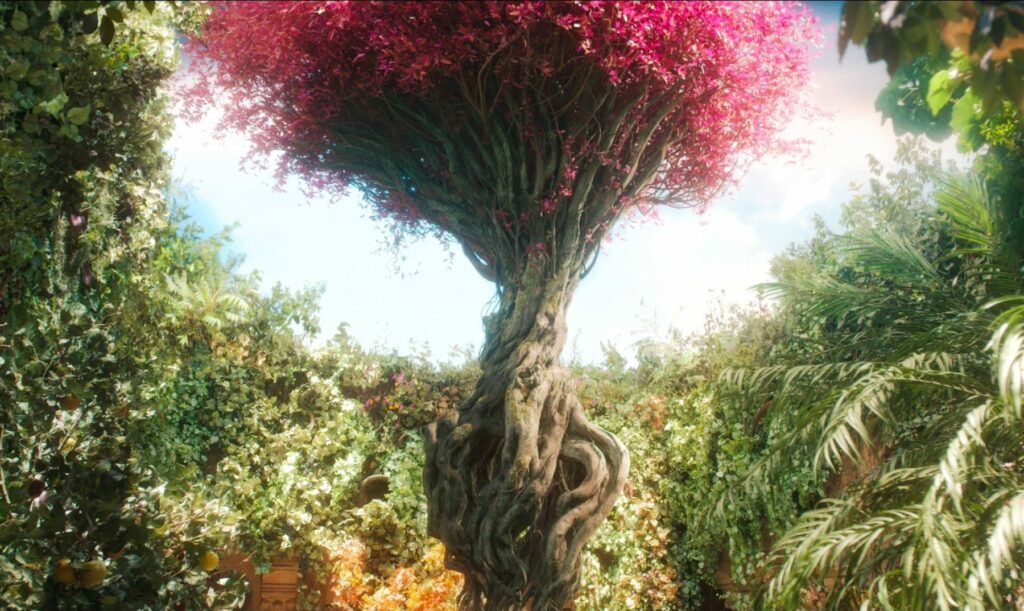
The business answer is that it is a diversified creative-services company operating across advertising, film, games, streaming, events, real-time engines and original content.
The market answer is that Platige helped make Polish high-end 3D internationally legible.
The useful answer is that Platige is a bridge studio.
It bridges art and advertising.
It bridges Polish literature and global CGI.
It bridges short films and game trailers.
It bridges national mythology and international entertainment.
It bridges service work and original production.
It bridges offline rendering history and real-time production.
It bridges local material and global genre.
It bridges a one-studio success story and a wider Polish 3D market.
This is not always clean. Bridges rarely are. They carry traffic. They need maintenance. They are useful because they are between things, which means they are never fully one thing.
Platige’s strength is that it learned to live there.
The General Rule
The general rule is that a studio’s history is not just its credits. Credits tell you what happened. Mechanisms tell you why it kept happening.
Platige’s mechanism is unusually clear:
Use commercial work to build tools.
Use tools to make ambitious short forms.
Use short forms to build reputation.
Use reputation to win larger clients.
Use larger clients to enter games, VFX, streaming and real-time production.
Use that expanded machine to move toward original scripted stories.
Repeat, preferably with monsters.
This is not a clean heroic story about art refusing commerce. It is better. It is a story about commerce becoming the infrastructure for art, and art becoming the reputation engine for commerce.
Commercials did not kill Platige’s ambition. They subsidized it.
Short films did not distract from the business. They branded it.
Game cinematics did not replace cinema. They became a new kind of short film.
VFX did not dilute the studio. It gave the studio more markets.
Scripted production is not a random pivot. It is the logical next question for a company that has spent almost three decades making other people’s stories look mythic.
Platige began with a man walking into a living cathedral.
Almost three decades later, the more interesting thing is not only that Platige is still building digital worlds. It is that Polish 3D no longer needs to be explained through one studio. Platige made the loudest argument: Polish CGI could win festival attention, sell games, serve global streamers and enter Hollywood pipelines. But around that argument, a broader ecosystem grew. Studios like Viscato show another version of the same export logic – less mythic, more architectural, less about monsters and more about offices, products, interiors and future spaces that need to be seen before they exist.
That is the real legacy.
A studio makes an image.
The image makes a reputation.
The reputation makes a market.
The market makes more studios possible.
This is not only the story of Platige Image.
It is the story of Polish 3D becoming believable.
A good trade.
Sources, references and image credits
This article uses project stills, production images and archival visual references solely for editorial, critical, historical and illustrative purposes. All copyrights, trademarks and intellectual property rights remain with their respective owners. Unless explicitly marked as public domain or Creative Commons, images are not presented as open-licensed material.
Main sources and references
Platige Image – official studio history and 25th anniversary materials: Platige Celebrates Its 25th Anniversary
Platige Image – Long Story Shorts, production context for The Cathedral and Fallen Art: Long Story Shorts
Platige Image – The Cathedral: The Cathedral – Animated Short
The Academy of Motion Picture Arts and Sciences – 75th Academy Awards, Animated Short Film nomination for The Cathedral: Oscars 2003
Culture.pl – The Cathedral by Tomasz Bagiński: The Cathedral – Tomasz Bagiński
Culture.pl – Tomasz Bagiński biography and filmography: Tomasz Bagiński – Biography
Platige Image – Fallen Art: Fallen Art – Animated Short
BAFTA – Fallen Art as 2006 Short Animation winner: BAFTA Film / Short Animation
Platige Image – Animated History of Poland: Animated History of Poland
Culture.pl – An Animated History of Poland: An Animated History of Poland – Tomasz Bagiński
Platige Image – Battle of Grunwald 3D: Battle of Grunwald 3D
Platige Image – Wonder Woman prologue / making-of: Wonder Woman – Making Of
VFXBlog – background on the Wonder Woman animated mural and the Matejko / Platige connection: How that incredible animated mural in Wonder Woman was made
Platige Image – The Witcher Intro: The Witcher Intro
Platige Image – The Witcher: The Hero of Popculture: The Witcher – The Hero of Popculture
Platige Image – The Witcher 2: Assassins of Kings: The Witcher 2: Assassins of Kings
Platige Image – The Witcher 3: Wild Hunt: The Witcher 3: Wild Hunt
Platige Image – The Witcher 3: The Trail: The Witcher 3: The Trail
The Art of VFX – interview / production notes on The Witcher 3 cinematic: The Witcher 3 – Tomek Bagiński, Maciej Jackiewicz, Grzegorz Kukuś – Platige Image
Platige Image – Cyberpunk 2077: Cyberpunk 2077
Platige Image – Watch Dogs 2: Watch Dogs 2
Platige Image – Paths of Hate: Paths of Hate
Platige Image – Another Day of Life: Another Day of Life
Platige Image – Fish Night, Love, Death + Robots: Fish Night
Platige Image – VFX for Netflix’s The Witcher: The Witcher – All You Need to Know
Platige Image – VFX showreel including The Witcher: VFX Showreel
Platige Image – Unreal Engine showreel and Unreal Engine Authorized Service Partner status: Platige Image presents its Unreal Engine Showreel
Platige Image – The Witcher IV cinematic reveal trailer: The Witcher IV
Platige Image – The Witcher 4 behind-the-scenes: The Witcher 4 – Cinematic Reveal Trailer Behind the Scenes
Platige Image – Gold Cube / ADC Awards for The Witcher 4 cinematic reveal trailer: Platige Image wins Gold Cube for The Witcher 4 Cinematic Reveal Trailer
Platige Image – Platige Film Project announcement: Platige Image Launches Platige Film Project
Platige Film Project – official page: Platige Film Project
Platige Image – OPI: Platige Image begins filming OPI
Viscato – official studio page, services, Wrocław base, international positioning, architectural/product/interior/animation services. (viscato.com)
Viscato – official “About Us” page, multidisciplinary team, architecture/spatial planning/design/visual communication positioning. (viscato.com)
Viscato – portfolio page, including architectural visualization, product CGI, office, interior and exterior projects. (viscato.com)
Bartek Majewski – 2017 article quoting Paweł Bykowski as founder of Viscato and explaining the naming logic behind Viscato. (Bartek Majewski)
Viscato – Battersea Office Renovation project, architectural office animation and commercial/investor communication use. (viscato.com)
Viscato – Lab Office Triton Street, London project, commercial office visualization and leasing/investor communication use. (viscato.com)
bs;bp – Spaces Wonderwoods project for IWG, with Viscato credit on visual material. (better space; better people)
IWG / Linkleaders – context for IWG’s Polish market presence and brands including Regus and Spaces. (linkleaders.prowly.com)
Image credits and copyright notices
“The Cathedral at Night: The After-Hours Myth of Polish CGI” – still from The Cathedral, dir. Tomek Bagiński, produced by Platige Image. Image source: Platige Image / The Cathedral still. Copyright: © Platige Image S.A. / respective rightsholders. Used here for editorial, critical and historical reference.
“The Cathedral: The Pilgrim Becoming Architecture” – still from The Cathedral, dir. Tomek Bagiński, produced by Platige Image. Image source: Platige Image / The Cathedral still. Copyright: © Platige Image S.A. / respective rightsholders. Used here for editorial, critical and historical reference.
“The Cathedral: The Human Face Inside the Organic Machine” – still from The Cathedral, dir. Tomek Bagiński, produced by Platige Image. Image source: Platige Image / The Cathedral still. Copyright: © Platige Image S.A. / respective rightsholders. Used here for editorial, critical and historical reference.
“Sagrada Família: Gaudí as the Hidden Ancestor of The Cathedral” – photograph of Sagrada Família, Barcelona. Image source: Wikimedia Commons – Sagrada Familia 01.jpg. Author: Bernard Gagnon. License: CC BY-SA 3.0 / GFDL, according to the Wikimedia Commons file page. Credit required: Bernard Gagnon / Wikimedia Commons / CC BY-SA 3.0.
“Fallen Art: Military Absurdity as a Production System” – still from Fallen Art, dir. Tomek Bagiński, produced by Platige Image. Image source: Platige Image / Fallen Art still. Copyright: © Platige Image S.A. / respective rightsholders. Used here for editorial, critical and historical reference.
“Animated History of Poland: A Thousand Years Compressed Into Eight Minutes” – still from Animated History of Poland, produced by Platige Image for Poland’s presentation at Expo 2010 in Shanghai. Image source: Platige Image / Animated History of Poland still. Copyright: © Platige Image S.A. / respective rightsholders. Used here for editorial, critical and historical reference.
“Jan Matejko, Battle of Grunwald: The Painting Before Platige Turned It Into Space” – Jan Matejko, Battle of Grunwald, 1878. Image source: Wikimedia Commons – Jan Matejko, Battle of Grunwald, Google Art Project. Copyright status: public domain; Wikimedia Commons marks the faithful photographic reproduction of the two-dimensional public-domain work as public domain / Public Domain Mark 1.0.
“Battle of Grunwald 3D: Matejko Turned Into a Digital Environment” – image from Platige Image’s Battle of Grunwald 3D project. Image source: Platige Image / Battle of Grunwald 3D still. Copyright: © Platige Image S.A. / respective rightsholders; original painting by Jan Matejko is public domain. Used here for editorial, critical and historical reference.
“Wonder Woman Prologue: The Polish Painting Pipeline Goes to Hollywood” – image from Platige Image’s Wonder Woman prologue / making-of materials. Image source: Platige Image / Wonder Woman still. Copyright: © Warner Bros. Entertainment Inc. / DC / Platige Image S.A. / respective rightsholders. Used here for editorial, critical and historical reference.
“The Witcher Intro: Geralt Enters 21st-Century Pop Culture” – still from The Witcher Intro cinematic produced by Platige Image for CD PROJEKT RED. Image source: Platige Image / The Witcher Intro still. Copyright: © CD PROJEKT S.A. / Platige Image S.A. / respective rightsholders. Used here for editorial, critical and historical reference.
“The Witcher 2: The Assassin as a Political Cinematic” – still from The Witcher 2: Assassins of Kings cinematic produced by Platige Image for CD PROJEKT RED. Image source: Platige Image / The Witcher 2 still. Copyright: © CD PROJEKT S.A. / Platige Image S.A. / respective rightsholders. Used here for editorial, critical and historical reference.
“The Witcher 3: Geralt, Horse, Fog, Moral Weather” – still from The Witcher 3: Wild Hunt cinematic produced by Platige Image for CD PROJEKT RED. Image source: Platige Image / The Witcher 3 still. Copyright: © CD PROJEKT S.A. / Platige Image S.A. / respective rightsholders. Used here for editorial, critical and historical reference.
“Cyberpunk 2077: Platige Moves From Dark Fantasy to Neon Dystopia” – still from Cyberpunk 2077 cinematic materials produced by Platige Image for CD PROJEKT RED. Image source: Platige Image / Cyberpunk 2077 still. Copyright: © CD PROJEKT S.A. / Platige Image S.A. / respective rightsholders. Used here for editorial, critical and historical reference.
“Watch Dogs 2: San Francisco Rebuilt as a Game Trailer” – still from Watch Dogs 2 reveal trailer produced by Platige Image for Ubisoft. Image source: Platige Image / Watch Dogs 2 still. Copyright: © Ubisoft Entertainment / Platige Image S.A. / respective rightsholders. Used here for editorial, critical and historical reference.
“Paths of Hate: Comic-Book War in Motion” – still from Paths of Hate, dir. Damian Nenow, produced by Platige Image. Image source: Platige Image / Paths of Hate still. Copyright: © Platige Image S.A. / respective rightsholders. Used here for editorial, critical and historical reference.
“Another Day of Life: Kapuściński as Animated Memory” – still from Another Day of Life. Image source: Platige Image / Another Day of Life still. Copyright: © Platige Image S.A. / Kanaki Films / Walking The Dog / Wüste Film / Animationsfabrik / respective rightsholders. Used here for editorial, critical and historical reference.
“Another Day of Life: War Reportage Turned Graphic Novel” – still from Another Day of Life. Image source: Platige Image / Another Day of Life still. Copyright: © Platige Image S.A. / Kanaki Films / Walking The Dog / Wüste Film / Animationsfabrik / respective rightsholders. Used here for editorial, critical and historical reference.
“Fish Night: Platige Inside the Netflix Adult Animation Wave” – still from Fish Night, Love, Death + Robots, dir. Damian Nenow. Image source: Platige Image / Fish Night still. Copyright: © Netflix, Inc. / Platige Image S.A. / respective rightsholders. Used here for editorial, critical and historical reference.
“The Witcher Netflix VFX: Magic as Grounded Physical Phenomenon” – image from Platige Image VFX materials for Netflix’s The Witcher. Image source: Platige Image / The Witcher VFX still. Copyright: © Netflix, Inc. / Platige Image S.A. / respective rightsholders. Used here for editorial, critical and historical reference.
“The Witcher Netflix VFX: The Tree, the Portal, the Impossible Made Believable” – image from Platige Image VFX materials for Netflix’s The Witcher. Image source: Platige Image / The Witcher VFX still. Copyright: © Netflix, Inc. / Platige Image S.A. / respective rightsholders. Used here for editorial, critical and historical reference.
“The Witcher IV: Ciri’s New Saga Begins” – still from The Witcher IV cinematic reveal trailer produced by Platige Image in collaboration with CD PROJEKT RED. Image source: Platige Image / The Witcher IV still. Copyright: © CD PROJEKT S.A. / Platige Image S.A. / respective rightsholders. Used here for editorial, critical and historical reference.
“The Witcher IV: The Monster-Cinematic Era in Unreal Engine” – still from The Witcher IV cinematic reveal trailer produced by Platige Image in collaboration with CD PROJEKT RED. Image source: Platige Image / The Witcher IV still. Copyright: © CD PROJEKT S.A. / Platige Image S.A. / respective rightsholders. Used here for editorial, critical and historical reference.
“OPI Behind the Scenes: Kashubian Folklore Enters Platige’s Scripted Future” – behind-the-scenes image from OPI, directed by Marta Giec. Image source: Platige Image / OPI BTS, photo F. Klimaszewski. Copyright: © Platige Image S.A. / Platige Film Project / photo: F. Klimaszewski / respective rightsholders. Used here for editorial, critical and historical reference.
“Tomek Bagiński: The Face of Literary Epic CGI” – portrait of Tomek Bagiński from Platige Image’s official talent page. Image source: Platige Image / Tomek Bagiński portrait. Copyright: © Platige Image S.A. / respective photographer and rightsholders. Used here for editorial, critical and historical reference.