Well, here is the basic story.
Rhythm & Hues was a visual effects company. It made animals. It made logos. It made aircraft, snow, skies, oceans, fur, muscles, daemons, talking pigs, polar bears that sold soda, lions that were gods, and one tiger that was not real but, for most practical moviegoing purposes, was real.
Then it won an Oscar for Life of Pi.
Then it went bankrupt.
This is not a story about a small failed company that briefly got lucky. It is a story about a company that spent twenty-five years making impossible images look normal, and then discovered that the business model for making impossible images was also impossible. Artistically, Rhythm & Hues was one of the most important creature studios in Hollywood. Economically, it was a vendor. That distinction did a lot of work.
The surface story is simple: a respected visual effects house won Academy Awards for Babe, The Golden Compass, and Life of Pi, but could not survive the pressures of modern Hollywood. The better way to think about it is this: Rhythm & Hues perfected the art of disappearing. Its best work did not announce itself as visual effects. It breathed inside the movie. And the better it disappeared, the easier it became for everyone else to forget who had built it.
That was bad.
Visually, excellent. Financially, bad.
The Oscar Night Problem
Start at the end, because the end is the cleanest version of the mechanism.
On February 24, 2013, Life of Pi won the Academy Award for Best Visual Effects. Bill Westenhofer, one of the film’s visual effects supervisors and a central Rhythm & Hues figure, came onstage with the winning team. He thanked people. He began to mention Rhythm & Hues, which had filed for Chapter 11 bankruptcy less than two weeks earlier. Then the orchestra played him off with the theme from Jaws. Then his microphone went dead.
This is almost too on-the-nose. If you wrote it in a movie about visual effects labor, someone would tell you to make it subtler.
Outside the Dolby Theatre, hundreds of VFX workers had already gathered to protest. Wired reported nearly 500 participants and signs including “I want a piece of the Pi too.” The protest was not only about one company. It was about a business where effects-heavy movies could dominate the box office while the companies making those effects operated on thin margins, chased tax subsidies across borders, and absorbed endless creative changes under fixed-bid contracts.
The basic model was:
- Studios need spectacular images.
- VFX vendors bid to make those images.
- Directors and studios keep changing the images.
- The vendor has already agreed to a price.
- The movie makes money.
- The vendor does not necessarily make money.
This is a strange way to finance miracles.
The oddest part of the Oscar night was not that Westenhofer was interrupted. Award shows interrupt people all the time. The odd part was that the interruption accidentally illustrated the entire labor structure of modern VFX: the image is celebrated, the people who made it try to speak, and the system plays music over them.
Cue shark.
Six People, One SGI, and a Name Someone Else Was Not Using
Now go back to 1987.
Rhythm & Hues was founded by John Hughes, Charles Gibson, Pauline Ts’o, Keith Goldfarb, Frank Wuts, and Cliff Boule, all coming out of Robert Abel & Associates, one of the key companies in the early history of computer graphics, commercials, and motion-control visual effects. The company began, according to History of CG, as six people in John Hughes’s living room with one SGI workstation, then moved into a former dental office in Santa Monica.
That is the romantic version. The funnier version involves a fire.
John Hughes later recalled that around the beginning of the company, a fire connected to a neighboring business destroyed his studio and his Silicon Graphics computer. He thought the insurance had lapsed. It had not lapsed on the computer. So the destroyed machine became a new machine, and a very small company suddenly had a very expensive, very important piece of hardware.
So, schematically:
A man has an expensive computer.
A fire destroys the computer.
Insurance replaces the computer.
A VFX company is born.
That is not a normal capitalization structure. But it worked.
The name also arrived in a weirdly casual way. Hughes said the group had gone through hundreds of possible names and could not agree. Then Neil Escuri, working nearby on a Hawaiian Punch commercial, offered a name he had planned to use for his own company but no longer needed: Rhythm & Hues. Hughes described it as a gift.
This is the first thing to understand about Rhythm & Hues. It was not born as a corporate brand exercise. It was born from a collapsing early-CG ecosystem, a borrowed name, a lucky insurance clause, and a handful of people who had been writing software because there was no other way to make the pictures.
In other words, the company started as a tool problem.
Before VFX Was VFX, It Was Software, Commercials, and Pain
The founders came out of a world where computer graphics was not a standardized production pipeline. You did not buy a package, hire a few artists, and render a tiger. You wrote things. You wrote animation software. You wrote rendering software. You wrote tools because the tools did not exist yet.
John Hughes had spent years at Robert Abel & Associates working on computerized motion-control systems and technical direction for commercials. He had worked on technically ambitious commercial projects before founding Rhythm & Hues, and that background mattered because early CGI was still a strange combination of engineering, advertising, graphics, and optimism.
That matters because Rhythm & Hues was never just “an effects vendor.” It was a code culture.
History of CG notes that the studio’s first job, on April 23, 1987, was a film project realizing the MGM/UA logo – unusual because most CG production work at that moment was for broadcast television, not high-resolution film. Its early years were filled with commercials, logos, and broadcast work, exactly the kind of short-form pressure cooker where early CGI techniques could be tested and refined. There is a general rule here: in early computer graphics, commercials were not a lesser art form. They were laboratories.
A commercial gives you 30 seconds. It gives you a brand. It gives you one impossible thing to make perfect. It does not give you feature-film scale, but it gives you pressure. And pressure is useful if you are building tools.
In 1990, Rhythm & Hues created more than 30 daylight shots of photorealistic aircraft, cluster bombs, and smoke for Flight of the Intruder, using proprietary software. The work was technically significant, but the film itself did not become a major cultural event, so the breakthrough was less visible than it might have been.This is a recurring Rhythm & Hues problem: the effect works, and therefore the public does not know there was an effect.
Invisible success. Awkward business model.
Coca-Cola Bears: The Animal Business Begins as Advertising
Before Rhythm & Hues made a pig talk, it made polar bears drink soda.
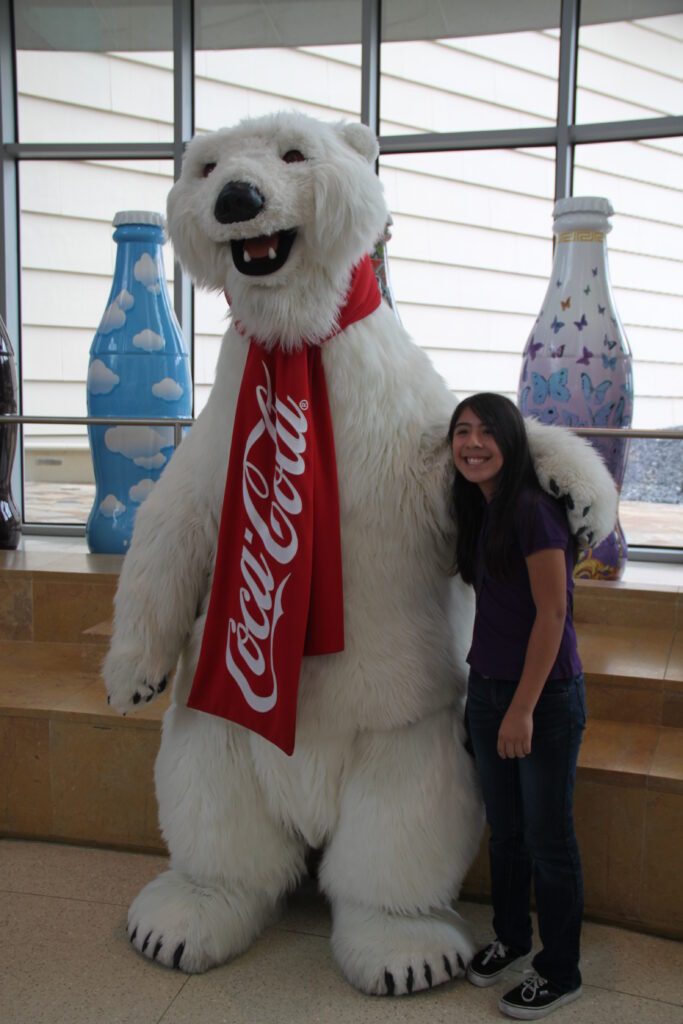
In 1993, Coca-Cola introduced the “Always Coca-Cola” campaign, and one of its commercials, Northern Lights, introduced the animated polar bears that became one of the company’s most recognizable advertising symbols. Coca-Cola’s own history says the idea came from creator Ken Stewart thinking about drinking Coke at the movies and noticing that his Labrador puppy resembled a polar bear.
This sounds like branding trivia. It is more than that.
The polar bears were a rehearsal for a major technical and artistic problem: how do you make a digital animal feel alive without making it grotesque? You need weight. You need fur. You need eyes. You need skin deformation. You need joints that do not look like rotating plastic tubes. You need a body that is stylized enough to be charming but physical enough to be believed.
Mark Henne, who worked at Rhythm & Hues, later explained that Maya did not yet exist and common packages like Alias and Wavefront did not provide the smooth skin deformation the bears required. Instead of simply buying tools, Rhythm & Hues re-engineered Wavefront and wrote its own version, then built internal modeling and rendering systems.
Of course they wrote their own software. What else were they going to do, buy the “make bear hips work” plugin in 1993?
The polar bear problem is deceptively specific. Quadrupeds are not bipeds. Their hips bend differently. Their bodies carry weight differently. A bear is a large soft object with bones inside and brand expectations outside. If the hips are wrong, the charm disappears. If the skin slides wrong, the animal becomes a toy. If the eyes are wrong, the whole commercial becomes a problem.
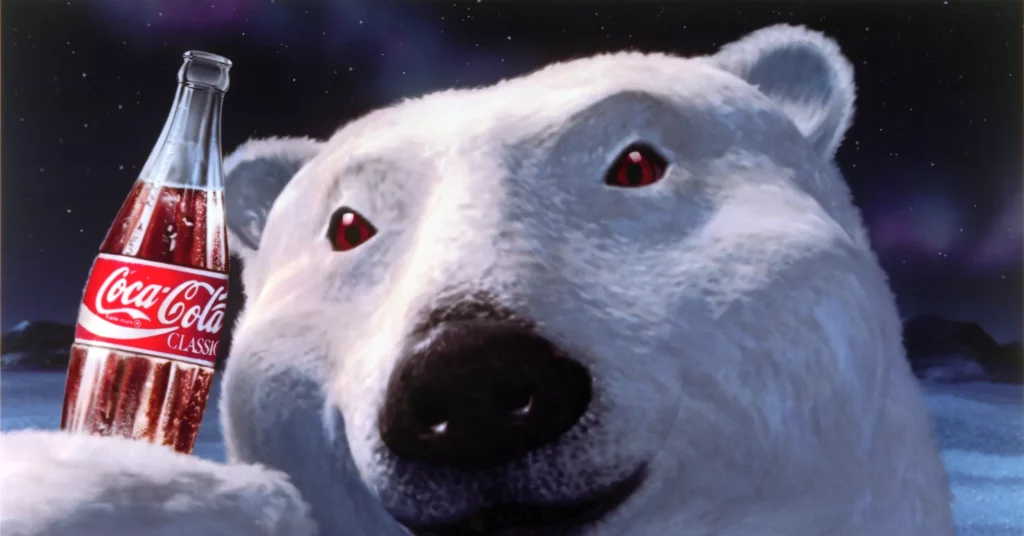
So before Rhythm & Hues became Hollywood’s unofficial digital zookeeper, it learned to make a bear watch the aurora borealis and drink Coke.
That sounds small. It was not.
Babe: Animals Don’t Really Talk
Then came Babe.
Babe is a very funny visual effects milestone because it does not look like a visual effects milestone. It is not a movie where a chrome robot melts through a floor or a dinosaur steps into a Jeep mirror. It is a sweet pastoral film about a pig who wants to herd sheep. It won the Academy Award for Best Visual Effects, and Charles Gibson’s acceptance speech contained the whole joke: he thanked the Academy for recognizing that Babe was a visual effects film, because “animals don’t really talk.”
Well, yes.
That is the basic idea.
But the interesting thing is how they talked. Babe used trained animals, animatronics, and CG muzzle work to create the illusion of speaking animals. Rhythm & Hues handled digital talking-animal effects as part of a broader hybrid process that also involved Animal Logic and Jim Henson’s Creature Shop.
This is a narrow target. If you animate the mouth too little, the animal does not speak. If you animate it too much, the animal becomes a joke. If you make the pig’s lips form perfect human phonemes, you have solved the wrong problem. You have made a pig do diction. Nobody wanted diction. They wanted Babe.
The production also belonged to a transitional era of VFX practice. Today, a set might use HDRI, chrome balls, gray balls, lidar scans, calibrated witness cameras and a lot of standardized reference capture. On Babe, the team worked with much more improvised practical references, including an apple box as a known object for scale and lighting.
That little red box is a good symbol.
Before the modern pipeline had a name for everything, artists were already solving the same problem: how do you bring the messy photographed world into the clean digital one, and how do you bring the clean digital thing back without anyone noticing?
There were also practical pig problems. Real animals grow. Real animals do not hit marks like actors. Real animals do not care about continuity. The production used many pigs, and the CG work had to adapt to changing bodies and different animals. A digital muzzle is not an abstract asset when every plate has a different living creature doing some slightly inconvenient version of the performance.This is the first great Rhythm & Hues principle:
The animal is not an asset.
The animal is an actor.
The actor has geometry.
The geometry is annoying.
Hollywood’s Digital Ark
One way to tell the Rhythm & Hues story is through technology. Another way is to list the animals.
The company’s filmography became a kind of digital ark: pigs, sheep, dogs, cats, mice, lions, polar bears, daemons, chipmunks, tigers, zebras, hyenas, orangutans, meerkats. BFI’s Sight & Sound framed Rhythm & Hues as a crucial studio in the history of computer-generated animals and treated Life of Pi as the film the studio had been building toward for years.
The animal problem kept getting harder.
In Babe, the problem was: can ordinary animals talk without breaking the movie?
In Stuart Little, the problem was: can a small stylized mouse live inside a live-action family movie?
In Cats & Dogs, the problem was: can domestic animals become comic action performers?
In The Chronicles of Narnia, the problem was: can a lion be photorealistic, mythological, emotional, and basically divine?
In The Golden Compass, the problem was: can an animal be a person’s external soul?
In Life of Pi, the problem was: can a digital tiger carry half a movie and not be noticed as digital?
This is not just a list of credits. It is an escalating series of questions about digital performance.
The basic model is: if the creature is a monster, the audience gives you some room. If the creature is a real animal, the audience has seen one. If the creature is a real animal with emotional narrative responsibility, now you have a problem.
Rhythm & Hues specialized in that problem.
Voodoo: The Hidden Anatomy
The public saw animals. Rhythm & Hues saw systems.
The key internal system was Voodoo, Rhythm & Hues’s proprietary application framework for character animation tools. In 2014, the Academy recognized Peter Huang, Chris Perry, Hans Rijpkema and Joe Mancewicz with a Technical Achievement Award for Voodoo, noting that its design had enabled a broad range of character animation toolsets at Rhythm & Hues for more than a decade.
Fxguide described Voodoo as a framework used across rigging, animation, camera tracking, matchmoving, fur, crowds and related creature work. It was not just one tool. It was a way for many departments to work on one digital body without ruining each other’s work.
Suppose you are making a tiger.
The modeler wants anatomy.
The rigger wants controls.
The animator wants performance.
The fur team wants guide hairs.
The lighting team wants believable response.
The matchmove team wants the tiger to sit in the plate.
The director wants the tiger to feel lonely, threatening, hungry, or unknowable.
The render farm wants everyone to calm down.
Voodoo is the place where these desires become a creature.
This is why proprietary tools matter. They are not just internal software. They encode taste. They encode working habits. They encode the studio’s theory of what a body is.
Technically, Voodoo was a toolset. Artistically, it was Rhythm & Hues’s anatomy book.
Aslan: The God-Lion Problem
Aslan in The Chronicles of Narnia: The Lion, the Witch and the Wardrobe was a crucial step. A talking pig can be charming if the mouth works. A divine lion has to be something else. He has to have authority. He has to have warmth. He has to be a photoreal animal and a theological symbol. This is not a normal fur problem.
Wired reported in 2005 that Rhythm & Hues spent a year developing fur techniques for Aslan, whose character included about 500,000 polygons and more than 5 million individually rendered hairs, with up to 50 animators focused exclusively on him. Director Andrew Adamson wanted Aslan to feel like a real lion while still being able to talk and emote without destroying that reality.
That is a good sentence because it contains the entire creature-performance problem.
A real lion cannot talk.
A fake lion can talk too much.
A movie lion has to talk just enough.
The Aslan work also became a bridge to Life of Pi. When Ang Lee came to Rhythm & Hues in August 2009, Bill Westenhofer recalled that Lee asked whether a digital character would look more or less real in 3D. The team did not know, so they tested it, using their experience with the earlier lion.
This is one of the best scenes in the whole story.
A director walks into a VFX studio and asks a strange question: does stereo make a digital animal more real or less real?
The honest answer is: nobody knows.
So they test it.
The previous lion becomes the proof-of-concept for the future tiger. Aslan auditions for Richard Parker. This is how technological lineages work: not as clean progress charts, but as old animals being asked new questions.
The Golden Compass: What If the Animal Is Your Soul?
The Golden Compass gave Rhythm & Hues another version of the animal problem. The daemons in Philip Pullman’s world are not pets. They are animal alter egos, external souls, companions that make psychology visible. Computer Graphics World summarized the conceit clearly: in the film’s parallel universe, every person has a daemon, a manifestation of the soul in animal form.
This is a different creature challenge.
A dog can be a dog.
A lion can be a lion-god.
A daemon has to be an animal and a metaphysical user interface for a human soul.
Rhythm & Hues’s Bill Westenhofer led the studio’s work on The Golden Compass, and the film went on to win the Academy Award for Best Visual Effects. The work centered heavily on photorealistic animals, some with speaking roles, and digital environments that had to support a parallel universe rather than merely decorate it.
This is a useful awards result because it says something about what the Academy was recognizing. Transformers had machines. Pirates of the Caribbean: At World’s End had spectacle. The Golden Compass had animal souls.
Of course, the machines were impressive. The pirate effects were impressive. But The Golden Compass asked a stranger question: can visual effects externalize identity without making the movie look like a digital petting zoo?
That is the kind of question Rhythm & Hues was built to answer.
Life of Pi: A Movie About Belief Made by People Whose Job Was to Make You Believe
Now we get to the tiger.
Life of Pi is almost too perfect as a Rhythm & Hues culmination. The story is about belief, survival, storytelling, and the question of what is real. The visual effects are about exactly the same thing. If you believe the tiger, the movie works. If you do not believe the tiger, the movie becomes a boy in a boat with a render.
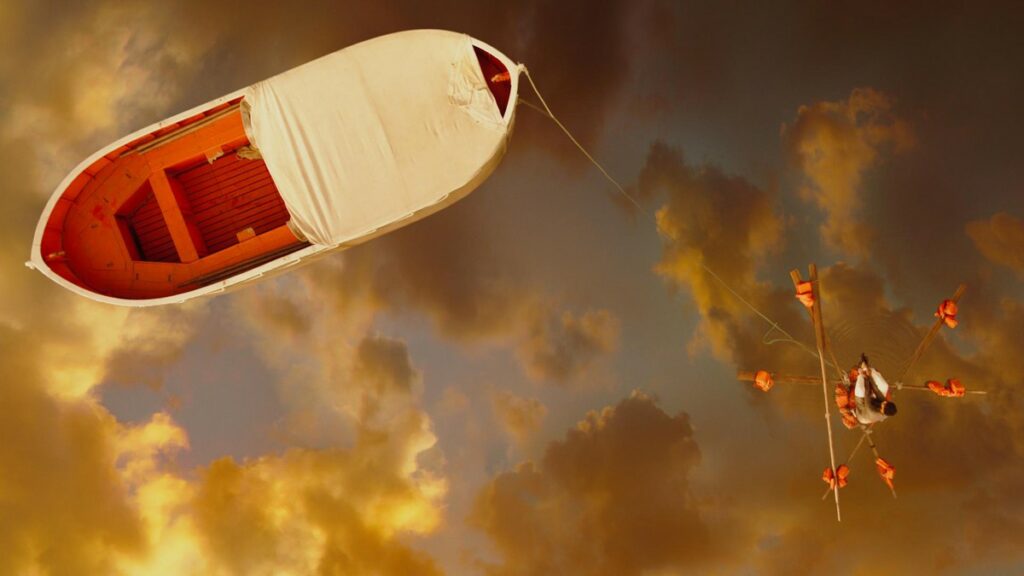
That is a different movie. Worse, probably.
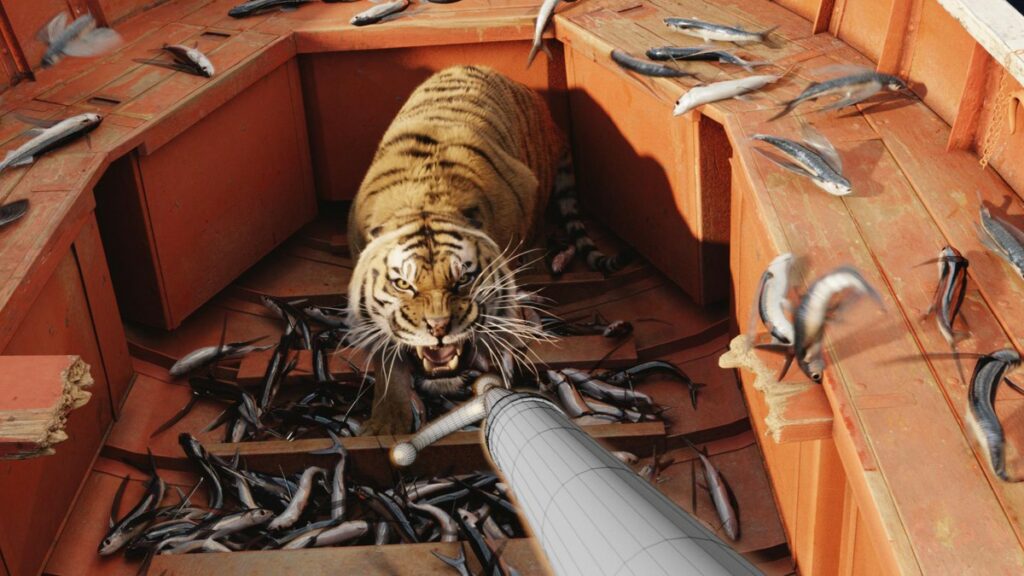
Ang Lee came to Rhythm & Hues in 2009 and asked whether a digital character would look more or less real in 3D. That question set the project in motion. Fxguide’s production coverage described the film as a project requiring multiple VFX companies to create digital oceans, environments, and animals, with Rhythm & Hues and MPC doing major work on the film’s central illusions.
The first important thing is that Ang Lee did not treat the effects as mere execution. Westenhofer recalled that Lee looked forward to “making art” with them, and that the film became a chance to combine art with VFX in an unusually direct way.
That sentence is lovely. It is also structurally painful.
Creatively, Rhythm & Hues was a collaborator.
Contractually, Rhythm & Hues was a vendor.
Financially, vendors have problems collaborators do not.
But before the business problem, there was the art problem.
The ocean had to be a character. Westenhofer told fxguide that the team had to make the ocean visually interesting because so much of the film takes place on water. The production shot in a bluescreen-surrounded wave tank in Taiwan measuring 75 by 30 meters and three meters deep, using 12 caissons to generate wave patterns and tracking grids to help solve the relationship between boat, water, and camera.
The basic problem was:
The boat moves.
The water moves.
The camera moves.
The stereo eyes disagree.
The tiger is not there.
The ocean is partly real and partly digital.
Please make this feel spiritual.
This is not a small ask.
Stereo made the work harder. Jason Bayever of Rhythm & Hues explained to fxguide that shooting on water and in stereo “don’t really play nicely together,” because reflective water can create differences between the left and right eyes, and moving boats on moving water give artists very few stable reference points. The team used synced witness cameras to solve the boat motion first, then the main camera
The ocean was not just simulated. It was directed. It had moods. The work was not simply “make water.” It was “make water that belongs to this moment in the boy’s story.”
This is where VFX becomes painting with computational plumbing.
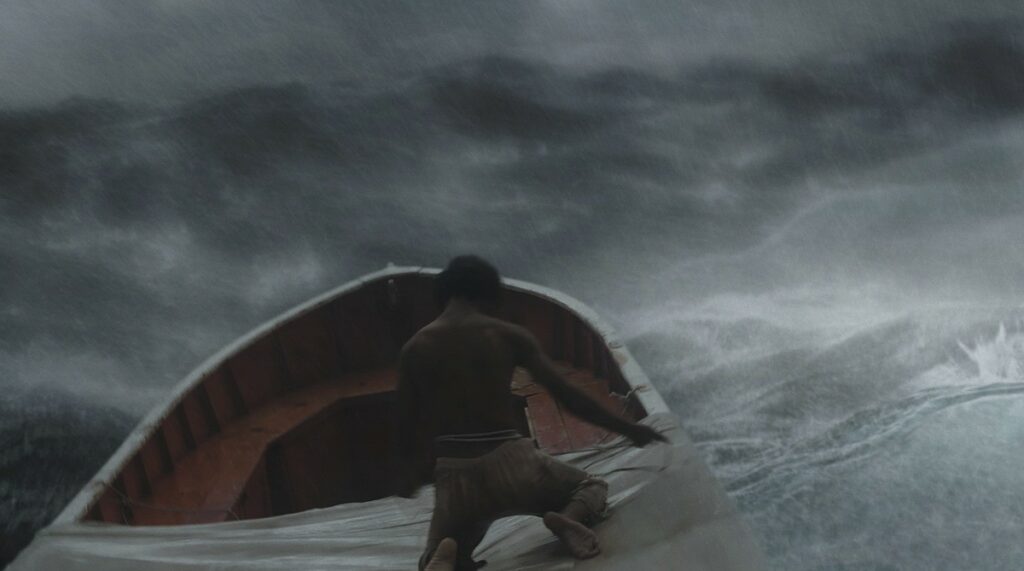
A director says: make the sky pensive.
The VFX team says: sure, but also what is the stereo convergence of pensive?
Richard Parker, Built in Layers
The tiger was named Richard Parker. The tiger was not real. The tiger had to be real.
The Academy’s “Deconstructing Pi” event reported that the digital Bengal tiger took more than a year to build, had more than 10 million hairs, and could take up to 30 hours to render for a single frame. The film included 690 effects shots out of 960 total shots, and the production used up to 260 TB of hard disk space at peak.
Those numbers are useful, but they do not fully explain the achievement. A lot of hairs is not a tiger. A lot of render time is not a performance.
Erik-Jan De Boer explained the tiger in terms of anatomical layering: skeleton, muscles, subcutaneous tissue, skin, and finally fur. The sense of weight came from details like paws contacting the ground, toes and claws flexing, muscles moving, and skin responding under fur.
This is the important distinction.
A fake tiger can look like a tiger in a still image.
A real tiger has weight.
A movie tiger has behavior.
Richard Parker needed all three.
The film also used a blue stuffed animal on set as a stand-in for the tiger with actor Suraj Sharma. The Academy also noted the absurdly charming fact that Sharma did not know how to swim when he started the movie.
So on set you have a teenage actor, water, a boat, a blue stuffed stand-in, and the knowledge that a huge part of the emotional relationship in the finished movie will be created months later by people animating claws, muscles, fur, eyes, hunger, and indifference.
Acting, but deferred.
The Ocean, the Tiger, and the Question of What Is Real
One reason Life of Pi worked so well is that its technical premise and its narrative premise were the same premise.
The movie asks: which story do you believe?
The VFX asks: which image do you believe?
That is a neat alignment. Almost too neat.
Westenhofer’s BAFTA acceptance speech made a version of this point: one of the central themes of Life of Pi is asking the audience to question what they believe is real and not real, and the visual effects team’s job was to ask the same question inside the images.
This is why the film is such a good case study for Rhythm & Hues. The studio’s greatest strength was not spectacle in the obvious sense. It was controlled ambiguity. The audience did not always know where the photographed animal ended and the CG animal began, where the tank ended and the digital ocean began, where cinematography ended and visual effects began.
This is the success condition.
It is also the recognition problem.
If viewers think the tiger is real, they do not think about the artists. If critics praise the “photography” of the ocean without realizing how much of it was digitally constructed, the VFX has succeeded aesthetically and failed institutionally. BFI’s Sight & Sound framed Life of Pi as the film Rhythm & Hues had been building toward through years of animal work, integrating lessons from earlier productions into a film where digital animals had to succeed both visually and dramatically.
This is the invisible labor puzzle:
The better the work, the less it looks like work.
That is great for cinema.
Not great for invoices.
What Rhythm & Hues Was Not
Now, before the economics, a caveat.
This is not a story where one villain destroys one good company. That would be cleaner. It would also be less interesting.
The large studios wanted lower prices. Of course they did. The VFX vendors wanted prestigious work. Of course they did. Directors wanted better shots. Of course they did. Governments wanted film jobs. Of course they offered subsidies. Artists wanted to do great work. Of course they stayed late. The audience wanted magic. Of course it did.
Everyone had an incentive.
The problem is not that everyone behaved irrationally. The problem is that everyone behaved rationally and the result was stupid.
That is the mechanism.
The Business Model: Fixed Bids, Moving Targets, and Thin Air
Now we get to the boring part. The boring part is the important part.
Visual effects vendors often work under fixed-bid contracts. The studio bids on a package of work. The client accepts. Then the movie changes, because movies change. Shots are redesigned. Edits move. Directors ask for another version. Water goes the wrong way. A creature needs different behavior. Lighting changes. Simulations are redone. Rendering time increases.
If the contract does not fully account for those changes, the vendor absorbs the cost.
This is not always because anyone is evil. It is because the incentive structure is bad.
TheWrap summarized the issue bluntly in its coverage of Life After Pi: the problem was not only incentives, but a flawed business model in which VFX houses make fixed bids and then can be forced to pay for cost overruns themselves.
Suppose you are a VFX vendor.
You bid $10 million on a package of shots. The studio says yes. Great. You have revenue.
Then the director changes the sequence. The water is wrong. The tiger’s performance is wrong. The light is wrong. The sky needs to be more pensive. The shot count changes. The movie is better now. Artistically, good.
Financially, maybe not.
If you can bill for every change, you are fine. If you cannot, the quality of your work becomes a liability. The more committed you are to making the shot great, the more unpaid work you may do. Passion becomes margin compression. This is not a healthy business.
Technically, this is collaboration. Economically, it is risk transfer.
Tax Incentives: A Race to the Bottom With Render Farms
Tax incentives made the problem more global.
Wired described the 2013 VFX protest as a response to an industry trend in which work moved to countries and regions with better tax incentives, putting pressure on California-based VFX houses to compete with subsidized production costs elsewhere.
This is not a normal market. Or rather, it is a market where the customer shops not only for talent and price, but also for public policy.
The VFX company wants work.
The client wants subsidies.
The artist wants stability.
The government wants jobs.
The production wants leverage.
The invoice wants to be smaller.
Everyone gets something, except maybe the company trying to survive between one jurisdiction’s subsidy and another jurisdiction’s subsidy.
The awkward thing is that Rhythm & Hues itself became global. By the Life of Pi period, the company was not simply a local Los Angeles shop. It was part of a distributed international production model, with work moving through multiple facilities and countries. That was partly an operational response to the same pressures reshaping the industry. The global pipeline was not an abstract enemy. It was also the way major VFX work got done.
Globalization gave the industry scale. It also made labor easier to move, compare, and price.
That is useful.
That is dangerous.
Both things can be true.
Outsourcing and the Vendor Problem
The word “vendor” is doing a lot of work here.
If you are a studio like Pixar, you own the movie. You develop the tools, employ the artists, shape the story, and participate in the value of the finished asset. If the film succeeds, the company benefits from the success in a broad way.
If you are a VFX vendor, you may create the image that sells the movie, but you do not own the movie. You are paid for work. The work may be central to the movie’s value. But you are not usually paid like an owner of that value.
This is the core economic problem of Rhythm & Hues.
Rhythm & Hues did not decorate Life of Pi. It made Life of Pi possible. But the company was paid as a service provider, not as a co-owner of the tiger, the ocean, the wonder, or the box office.
Legally, that is normal.
Economically, that is the story.
Bankruptcy: The Balance Sheet Had Opinions
Rhythm & Hues filed for Chapter 11 bankruptcy protection in February 2013, shortly before the Oscars. The Los Angeles Times reported that the company had laid off 250 employees and that its sale to an affiliate of Prana Studios was approved by a federal bankruptcy judge in March 2013, in a transaction valued at about $30 million.
TheWrap reported that the bankruptcy filing came within 24 hours of Rhythm & Hues accepting a BAFTA award for its Life of Pi work. That is a pretty compact version of the whole story.
The company wins the award.
The company owes money.
The company needs the movie finished.
The company is sold in bankruptcy.
The movie remains beautiful.
This is not a contradiction in Hollywood. It is a business model with a sad ending.
You might object that many companies go bankrupt. Sure. But most companies do not go bankrupt while the exact work that helped define their reputation is being celebrated by the Academy. Timing matters. Symbolism matters. Sharks matter.
Life After Pi: The Autopsy
The documentary Life After Pi, directed and edited by former Rhythm & Hues employee Scott Leberecht, became the autopsy of this moment. Cartoon Brew described the 30-minute film as documenting Rhythm & Hues’s financial collapse and explaining why the bankruptcy was part of a broader Hollywood VFX business problem that had led to many studio closures over the previous decade.
The film is not important because it says “this company had trouble.” Companies have trouble. The film is important because it explains the machine: fixed bids, tax incentives, global labor movement, creative overrun, lack of backend participation, and artists who do the work that makes the movie possible without participating in the movie’s upside.
That is the whole VFX labor crisis in miniature.
A company wants to preserve culture.
The market wants lower prices.
The project wants more work.
The employees want to be paid.
The clients want the movie finished.
The balance sheet wants a sacrifice.
There are no good choices. There are just different ways to lose the thing you were trying to save.
The Green Square
After the Oscars, the protest moved online. Wired reported that VFX Solidarity International encouraged supporters to change their Facebook and Twitter profile pictures to a green square, a reference to the green screens that VFX artists fill in; the group gathered more than 60,000 likes.
This was a good symbol because it reversed the usual direction of VFX.
Normally, green is what disappears. The artist removes the green and replaces it with the world. The audience sees the world.
In the protest, the green stayed.
The missing background became the message.
That is elegant. Also bleak.
Why VFX Artists Are So Invisible
There are three reasons VFX artists are invisible.
The first is technical: the best invisible effects are designed not to be seen. If the ocean feels real, the ocean gets credit for being ocean-like. If the tiger feels real, the audience thinks “tiger,” not “hundreds of artists, proprietary fur tools, muscle simulations, lighting, compositing, render management, and a blue stuffed stand-in.”
The second is cultural: film authorship is usually assigned upward. Directors, cinematographers, production designers, actors, studios, franchises. VFX artists are often discussed as technicians, even when they are making fundamental creative decisions about light, performance, color, scale, and atmosphere.
The third is economic: VFX companies are vendors. Vendors do not usually get the mythology. They get deadlines.
This is why Life of Pi is so revealing. Ang Lee could tell Rhythm & Hues that he wanted to make art with them. The Academy could reward the resulting work. The audience could believe the tiger. The press could praise the beauty of the images. And the company could still file for bankruptcy.
Creatively, central.
Financially, peripheral.
This is weird.
The General Rule
The general rule is that a visual effect can be essential to a movie and still be treated as a replaceable service.
That is the whole problem.
If a film needs a tiger, and only a few companies can make a tiger, those companies seem powerful. But if the work is bid competitively, spread globally, pressured by subsidies, and revised endlessly, the power may sit with the buyer, not the maker.
The tiger is rare. The vendor is replaceable. This is the strange economics of magic.
Rhythm & Hues was a great company partly because it made this contradiction invisible for so long. It built the tools. It trained the artists. It solved the animals. It built digital bodies that could act. It made Coke bears charming, Babe speak, Aslan breathe, daemons externalize souls, and Richard Parker survive at sea.
Then the contradiction became visible all at once.
At the Oscars.
With the Jaws theme.
Of course.
After Pi: Did Anything Change?
The obvious question is whether the Rhythm & Hues collapse fixed anything.
The boring answer is: not immediately.
The more interesting answer is: it became part of the industry’s memory. It gave the VFX community a clean image of the problem: the Oscar-winning company that could not afford to survive the Oscar-winning work.
A decade later, the labor conversation looked different. In May 2025, IATSE announced that VFX workers for Marvel Studios, Walt Disney Pictures, and the Avatar franchise had voted to approve their first collective bargaining agreements after unionizing in 2023. (IATSE)
That does not mean the Rhythm & Hues story caused those contracts. History is not that tidy. But it does mean the old problem had not disappeared. The fight moved from protest signs and green profile squares into contracts, bargaining units, hiring rights, overtime rules, and the boring machinery of labor power.
Boring machinery is underrated.
The tiger became labor history.
Legacy: What Rhythm & Hues Actually Left Behind
The easy legacy is the awards. John Hughes’s later biography summarizes Rhythm & Hues’s record as three Oscars for Best Visual Effects – Babe, The Golden Compass, and Life of Pi – plus multiple technical Oscars for science and engineering achievements.
But the deeper legacy is not the trophies. The deeper legacy is a way of thinking about digital creatures.
Rhythm & Hues helped move CG animals from spectacle to performance. Its animals were not just visual tricks. They were characters with weight, attention, hesitation, appetite, mood, and story function. The studio’s best work sits in the strange zone where biology, acting, animation, software, and photography meet.
That is an art form.
The second legacy is less comfortable. Rhythm & Hues became the case study for VFX economics because its collapse was so narratively clean. An Oscar-winning studio working on an Oscar-winning film filed for bankruptcy at the moment of maximum public recognition. Life After Pi then turned that collapse into an industry lesson: fixed bids, subsidies, outsourcing, lack of backend participation, and the cultural invisibility of artists were not side issues. They were the machine.
The company’s story starts with one SGI workstation and a lucky insurance clause. It ends, symbolically, with hundreds of artists outside the Oscars and a green square where the finished image should be.
Between those two images is the history of modern VFX.
The Punchline
Okay, so here is the basic idea of Rhythm & Hues.
A group of artists and programmers built tools because the tools did not exist. The tools made animals. The animals became performances. The performances made movies possible. The movies made money. The company that made the performances did not necessarily share in that money. Then everyone was surprised when the company failed.
Not everyone, probably.
The market was not surprised. The market had been explaining itself the whole time. It had a simple message: we love your tiger, but we would like it cheaper.
Rhythm & Hues gave Hollywood some of its most convincing digital animals. It also gave Hollywood one of its clearest warnings.
The warning was this: if the people who make the impossible are treated as interchangeable vendors, eventually the impossible gets very expensive for them.
Financially expensive.
Humanly expensive.
Artistically, eventually, expensive too.
Sources, References and Image Credits
Main sources and further reading
This article was based on reporting, interviews, archival sources and industry analysis from the following sources:
History of CG – Rhythm & Hues
Interview with John Hughes, Rhythm & Hues
DigiPen – How Mark Henne Crafted Polar Bear Skin in Coca-Cola’s Classic Holiday TV Ads
befores & afters – “I’m treating my animals like movie stars”
Wired – The CG Chronicles of Narnia
Computer Graphics World – Animal Control / The Golden Compass
fxguide – Life of Pi: a tiger’s tale
fxguide – Voodoo magic
Oscars.org – Deconstructing Pi
Oscars.org – 86th Scientific & Technical Awards / Voodoo application framework
BAFTA – Life of Pi Special Visual Effects acceptance transcript
Wired – Green Scream: The Decay of the Hollywood Special Effects Industry
Los Angeles Times – Rhythm & Hues finalizes sale to Prana Studios
TheWrap – Life After Pi Chronicles Collapse of Rhythm & Hues
Cartoon Brew – Life After Pi Documentary Exposes Flawed VFX Business Model
IATSE – VFX members ratify first three contracts with major studios in the US
Polish Copyright Act – Article 29, quotation right / prawo cytatu
Image, video and copyright credits
VFX protest outside the 2013 Oscars – “jfh_20130224_VFXunite_7403”
Photo by Jeff Heusser / Flickr. Used under Creative Commons Attribution-ShareAlike 2.0 Generic – CC BY-SA 2.0. Source: Flickr photo page. Image may have been resized or cropped for layout. No endorsement by the photographer is implied.
VFX protest outside the 2013 Oscars – “jfh_20130224_VFXunite_7420”
Photo by Jeff Heusser / Flickr. Used under Creative Commons Attribution-ShareAlike 2.0 Generic – CC BY-SA 2.0. Source: Flickr photo page. Image may have been resized or cropped for layout. No endorsement by the photographer is implied.
Rhythm & Hues Studios Kaohsiung Office, Taiwan
Photo by SSR2000 / Wikimedia Commons. Used under Creative Commons Attribution-ShareAlike 3.0 Unported – CC BY-SA 3.0 or GFDL, as listed on the file page. Source: Wikimedia Commons file page. Image may have been resized or cropped for layout. No endorsement by the author is implied.
Coca-Cola polar bear advertisement, France, 1922
Image credited on Wikimedia Commons to Coca-Cola / Gaston Dorfinant. Marked as public domain / Public Domain Mark 1.0 on Wikimedia Commons. Source: Wikimedia Commons file page. Used as historical context for Coca-Cola’s polar bear imagery.
Coca-Cola polar bear costume at World of Coca-Cola
Photo by Gary Todd / Wikimedia Commons. Released under CC0 1.0 Universal Public Domain Dedication. Source: Wikimedia Commons file page. Image may have been resized or cropped for layout.
Coca-Cola “Northern Lights” / 1993 CGI polar bears
Copyright remains with The Coca-Cola Company and/or its respective rightsholders. Source used for reference and visual quotation: The Coca-Cola Company – Coca-Cola’s Polar Bears. Any stills or frames are used only in direct critical and historical discussion of the advertising campaign and Rhythm & Hues’ digital animal work.
Mark Henne / Coca-Cola polar bear production material
Copyright remains with the original rightsholders and/or DigiPen, as applicable. Source used for reference and visual quotation: DigiPen – How Mark Henne Crafted Polar Bear Skin in Coca-Cola’s Classic Holiday TV Ads. Any image use is limited to direct discussion of the CGI process, skin deformation and Rhythm & Hues’ early software pipeline.
Babe – talking animal VFX material
Copyright remains with the film’s respective rightsholders and/or the source publisher. Source used for reference and visual quotation: befores & afters – “I’m treating my animals like movie stars”. Any stills or production images are used only in direct critical discussion of the film’s talking-animal visual effects.
Babe wins the Academy Award for Visual Effects
Video copyright remains with the Academy of Motion Picture Arts and Sciences and/or respective rightsholders. Source: Oscars official YouTube clip. Embedded or referenced for historical and critical discussion of the film’s recognition as a visual effects achievement.
Aslan – The Chronicles of Narnia: The Lion, the Witch and the Wardrobe
Copyright remains with the film’s respective rightsholders and/or the source publisher. Source used for reference and visual quotation: Wired – The CG Chronicles of Narnia. Any stills are used only in direct critical discussion of Aslan, digital fur, creature realism and Rhythm & Hues’ animal-performance work.
The Golden Compass – daemons and creature effects
Copyright remains with the film’s respective rightsholders and/or the source publisher. Sources used for reference and visual quotation: Computer Graphics World – Animal Control and Animation World Network – Navigating The Golden Compass, Part 1. Any stills are used only in direct critical discussion of daemons, digital animals and VFX character interaction.
Life of Pi – Richard Parker, ocean and VFX breakdown material
Copyright remains with the film’s respective rightsholders, Rhythm & Hues, fxguide and/or other credited source publishers, as applicable. Source used for reference and visual quotation: fxguide – Life of Pi: a tiger’s tale. Any stills, breakdown images or frames are used only in direct critical discussion of Richard Parker, digital fur, water simulation, stereo compositing and the film’s visual effects pipeline.
Life of Pi visual effects making-of video
Copyright remains with the original rightsholders. Source: Vimeo – Life of Pi Visual Effects Making Of. Embedded or referenced for critical and educational discussion of the film’s VFX process.
Life of Pi wins Best Visual Effects at the 85th Academy Awards
Video copyright remains with the Academy of Motion Picture Arts and Sciences and/or respective rightsholders. Source: Oscars official YouTube clip. Embedded or referenced for historical and critical discussion of the 2013 Oscar ceremony and Rhythm & Hues’ bankruptcy context.
Life After Pi – official documentary
Copyright remains with Scott Leberecht, the documentary’s creators and/or respective rightsholders. Source: Life After Pi official YouTube video. Embedded or referenced for critical and historical discussion of Rhythm & Hues’ bankruptcy and the VFX business model.
Life After Pi – trailer / documentary coverage
Copyright remains with the original rightsholders and/or source publisher. Source used for reference: The Hollywood Reporter – Life After Pi documentary trailer coverage. Any images are used only in direct critical discussion of the documentary.
Getty Images / Academy Awards press photos, if used
Any Getty Images material is used only under a separate paid Getty Images license. Source: Getty Images – Life of Pi photo archive. Copyright and usage restrictions are governed by the applicable Getty Images license.
Alamy / Life of Pi promotional stills or posters, if used
Any Alamy material is used only under a separate paid Alamy license. Source: Alamy – Life of Pi film poster and stills. Copyright and usage restrictions are governed by the applicable Alamy license.
Custom green square illustration – “The Missing Image Became the Message”
Original graphic created for this article. © eric3d.com, unless otherwise stated. Inspired by the public visual language of the 2013 VFX protest and green-screen production culture; not a reproduction of any third-party image.
Copyright and quotation note
Some film stills, production images, screenshots and embedded videos referenced above may be protected by copyright and are not presented as open-license material. Where used, they are used as visual quotation and critical reference in direct connection with the article’s discussion of Rhythm & Hues, visual effects history, film authorship and the VFX business model. All copyrights and trademarks remain with their respective owners.