
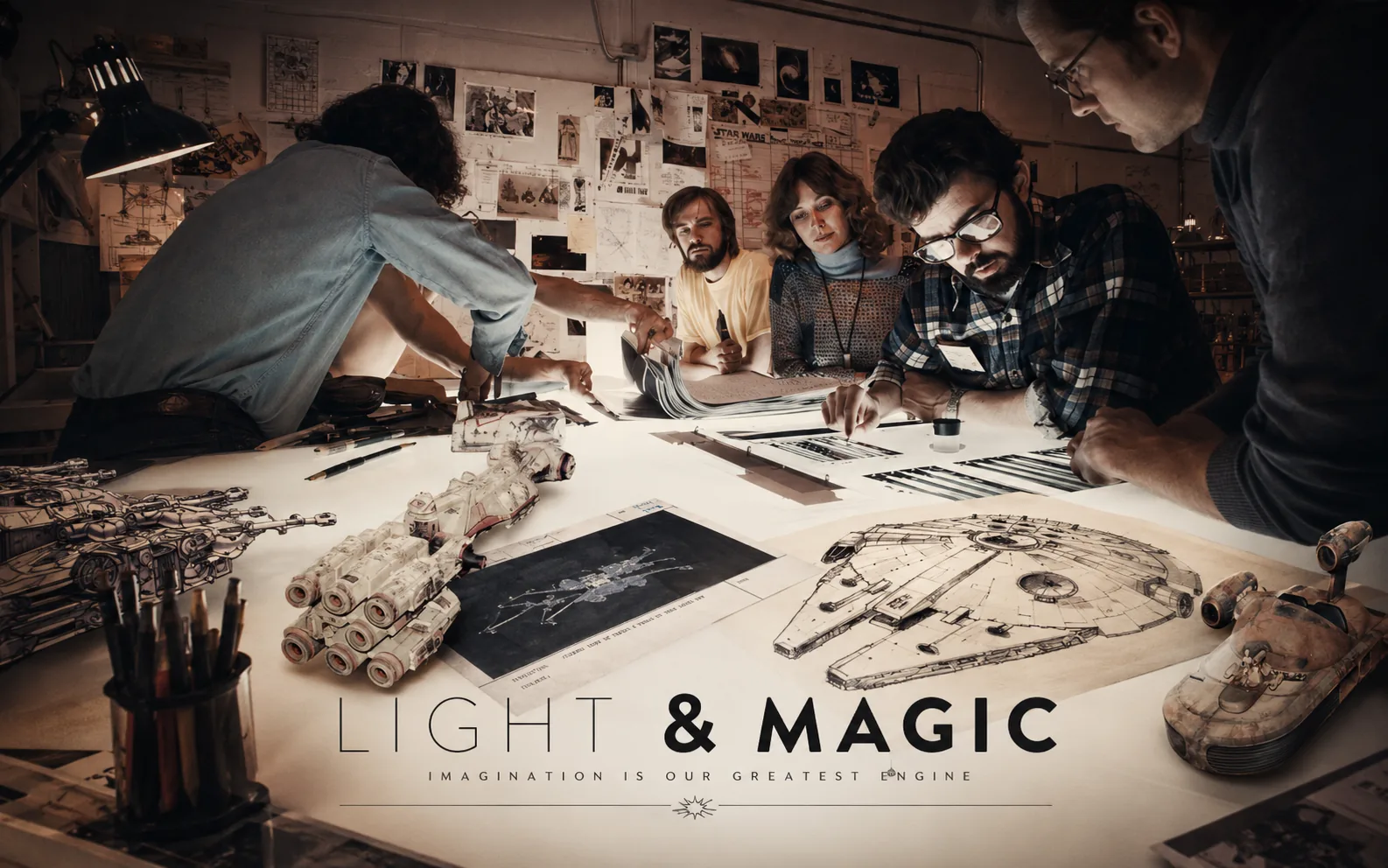
Or: how a warehouse in Van Nuys became Hollywood’s R&D department
Okay, so here is the basic idea of Industrial Light & Magic.
George Lucas wanted to make Star Wars. Hollywood did not have the machine to make Star Wars. So Lucas built the machine.
This sounds obvious now, because Star Wars is no longer just a movie. It is a mythology, a franchise, a merchandise system, a corporate asset, a streaming library, a theme-park geography, a toy line, a licensing universe, a family argument and, occasionally, a movie. But in 1975 it was a production problem.
Lucas had a space opera. He had dogfights in space. He had a trench run. He had ships that needed to move less like models and more like fighter planes filmed by someone hanging out of another fighter plane. He had a story that required visual effects, and the existing Hollywood effects infrastructure was not built for that story. So, on May 28, 1975, Lucas created Industrial Light & Magic as part of Lucasfilm to make the images the rest of Hollywood could not yet make.
That is the surface story: Star Wars needed effects, so Lucas created an effects company.
The better way to think about it is this: Lucas created a problem, and then created the institution whose job was to solve that problem. The problem was not just “make a spaceship.” The problem was: make a new grammar for moving images, using tools that did not exist yet, with people who were not quite sure whether they were filmmakers, engineers, model makers, photographers, animators, programmers, production managers or lunatics in a warehouse.
The answer was ILM.
This was weird. Productively weird.
The warehouse before the empire
The founding myth of ILM does not begin in a gleaming research campus. It begins in a warehouse in Van Nuys.
This matters. A lot of company histories want the origin to look inevitable: founder has vision, company has mission, market has need, everyone wins. Fine. But ILM’s origin is more interesting because it looks less like a normal company and more like a temporary workaround that became permanent.

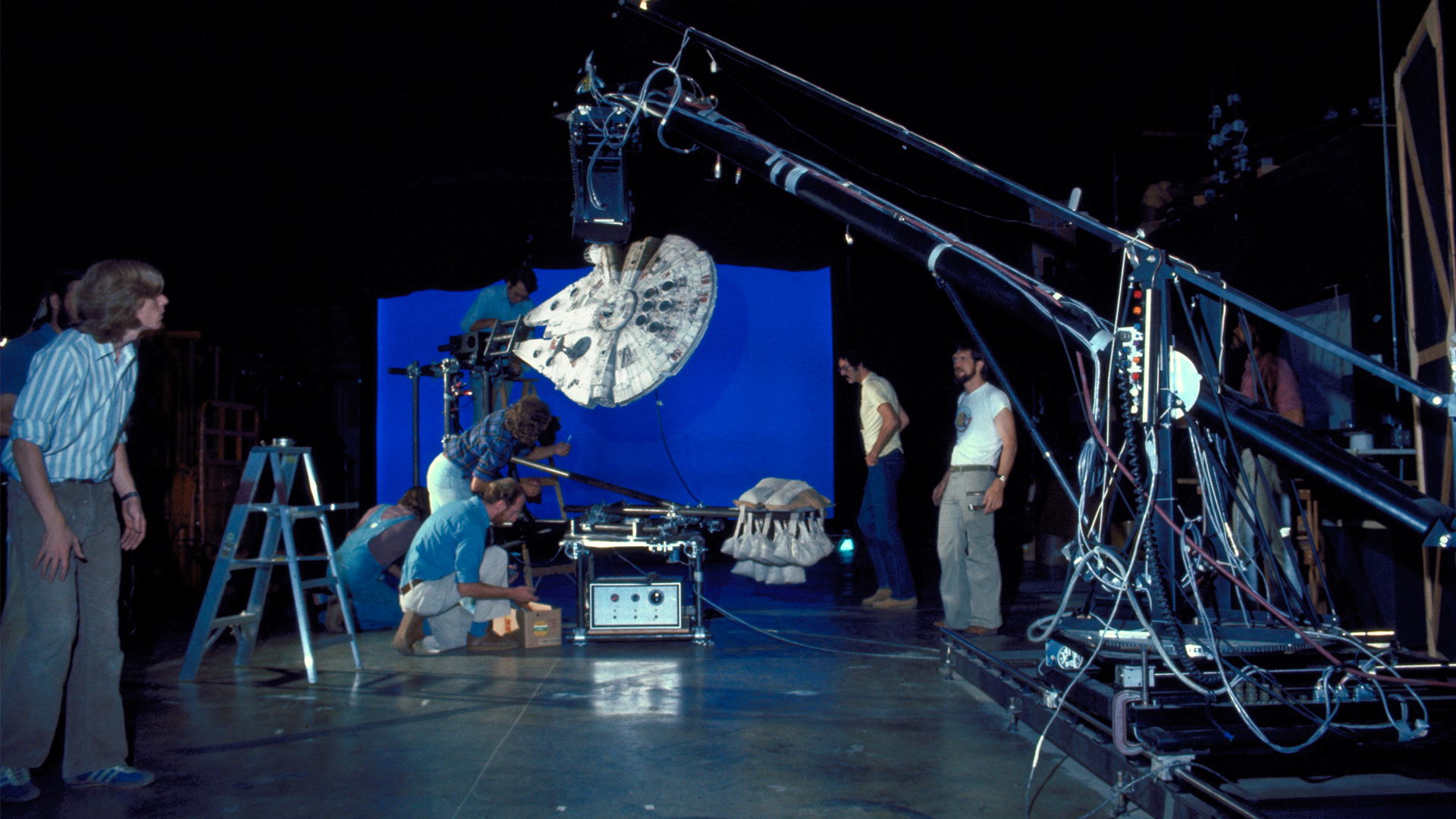
Lucas hired John Dykstra to supervise the visual effects for Star Wars. Dykstra found a building on Valjean Avenue in Van Nuys. The early crew moved in. The space was industrial, hot, improvised and very much not the future of cinema, except that of course it was.
The company had artists and engineers and model makers. It had ideas. It did not yet have a smooth production system. This is an important distinction. Genius is not a pipeline. A camera rig is not a schedule. A model shop is not a finished movie.
Patricia Rose Duignan is essential here. She worked with ILM from the early Star Wars period into the 1990s, in production and organizational roles, and later as ILM’s first marketing director. Her role matters because the early ILM story is not just about boys with cameras and models. It is also about people who had to turn chaos into deliverables.
That is the real first-act conflict.
ILM did not just have to invent the shot. It had to invent the company that could deliver the shot.
There is a useful little business model here:
Lucas wants images. The industry cannot supply the images. Lucas builds the supplier. The supplier becomes more important than anyone expected.
That is a good business if it works. It is also a ridiculous business, because the supplier has to invent its own product before delivering it.
Suppose you are ILM in 1975. You have an empty building. You have a deadline. You have a director who wants spaceships to move like war footage. You have models, cameras, lights, film stock, motors, optical printers, matte paintings and a lot of confidence, some of it justified. If you deliver the shots, the film works. If you do not deliver the shots, the movie has actors looking at things that do not exist.
That is a lot to ask of a warehouse.
The camera problem
The obvious thing about Star Wars is the spaceships. The less obvious thing is the camera.
Lucas did not just want miniatures photographed nicely. Miniatures had existed for decades. Matte paintings had existed. Optical compositing had existed. Stop-motion had existed. The old Hollywood workshop could make things that were not real look reasonably real, if the camera behaved.
Lucas wanted the camera not to behave.

He wanted the camera to chase the ships, dive with them, bank with them, slide past them. That broke a lot of traditional visual-effects assumptions, because classical optical effects were easier when cameras were locked down and elements could be combined without changing perspective too much.
So here is the mechanism:
If the camera is locked, you can combine elements more easily. If the camera moves, everything becomes harder. If the camera moves and the elements are photographed separately, the motion has to be repeatable. If the motion has to be repeatable, you need a machine.
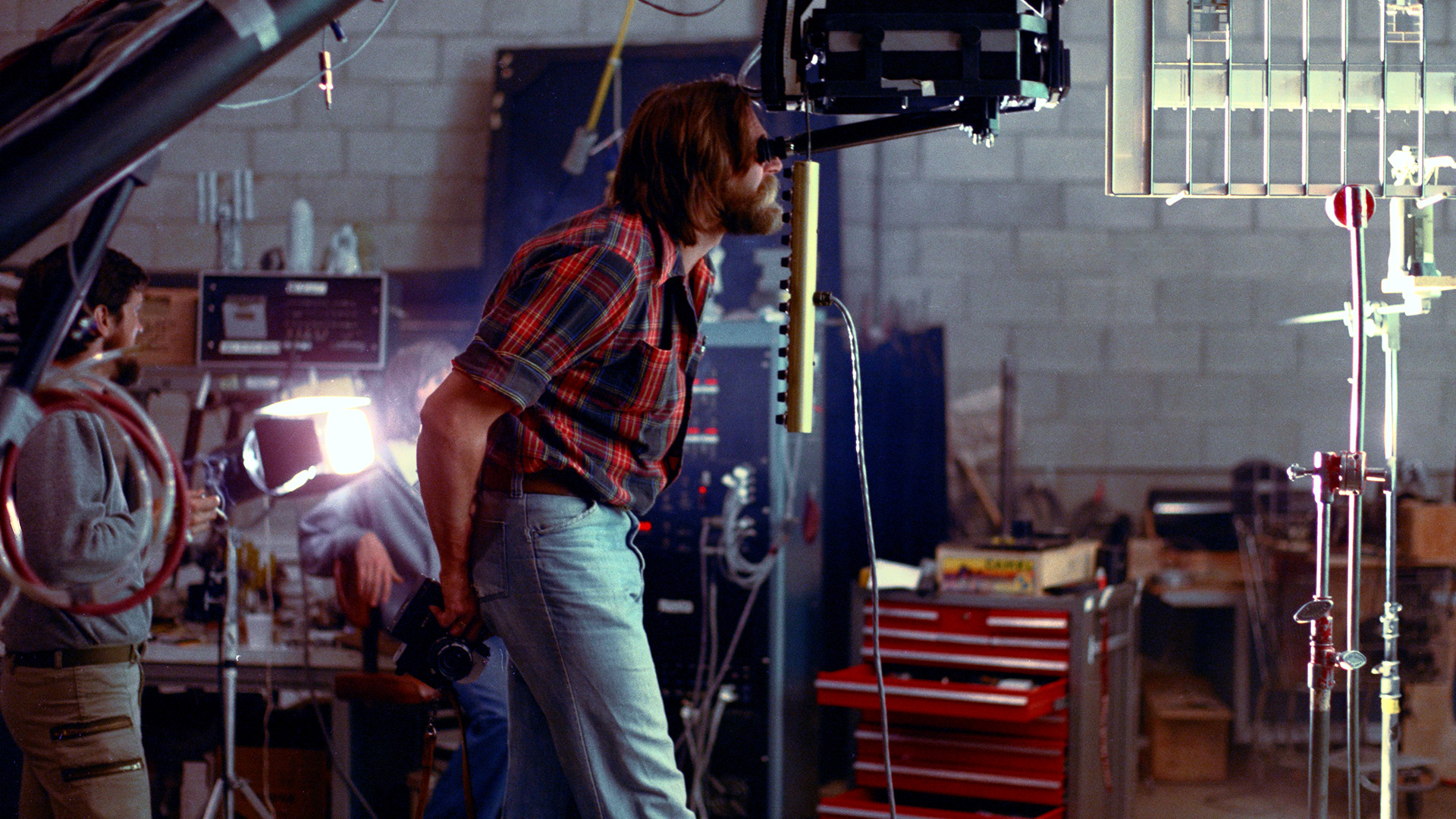
That machine was the Dykstraflex.
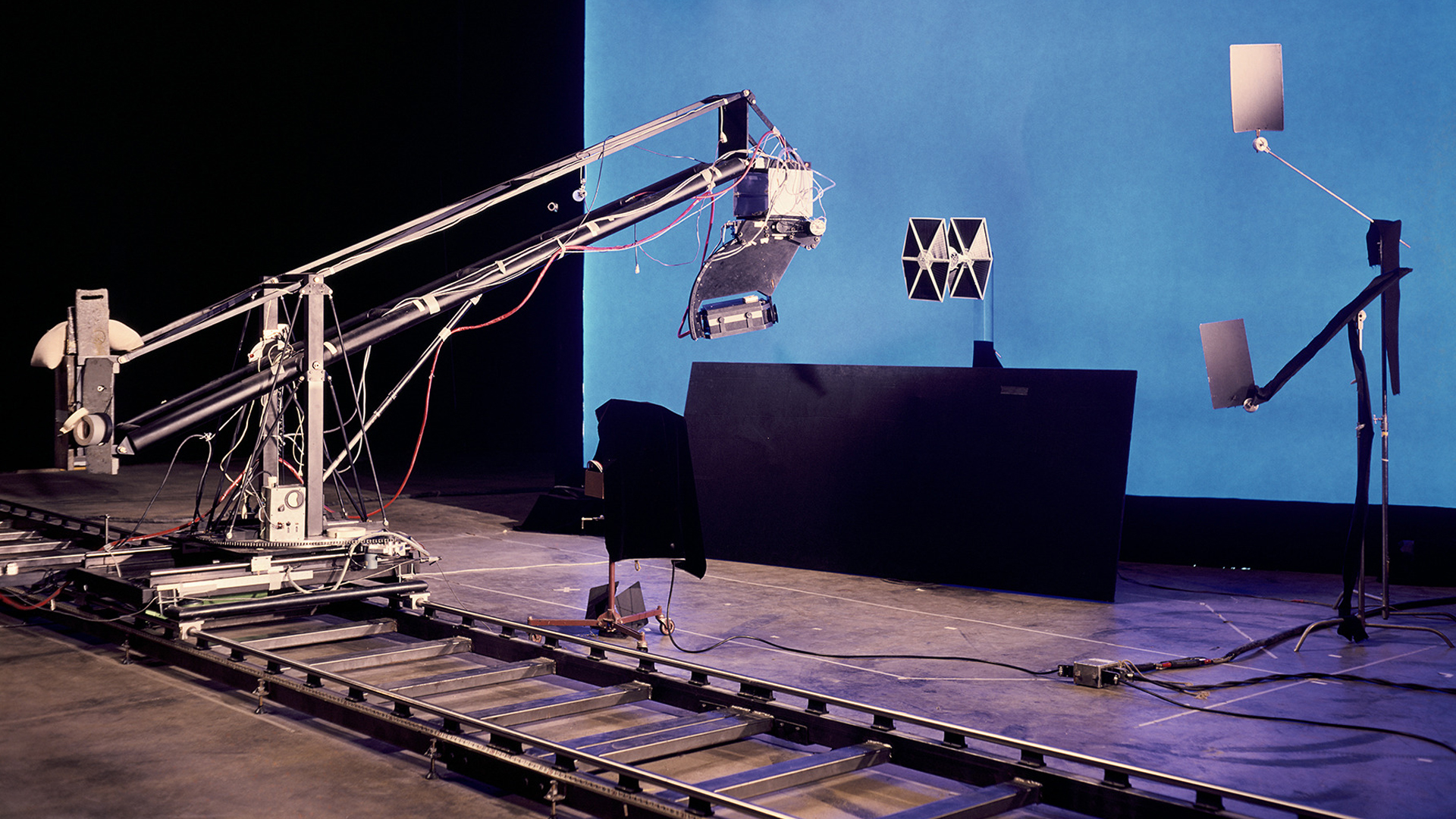
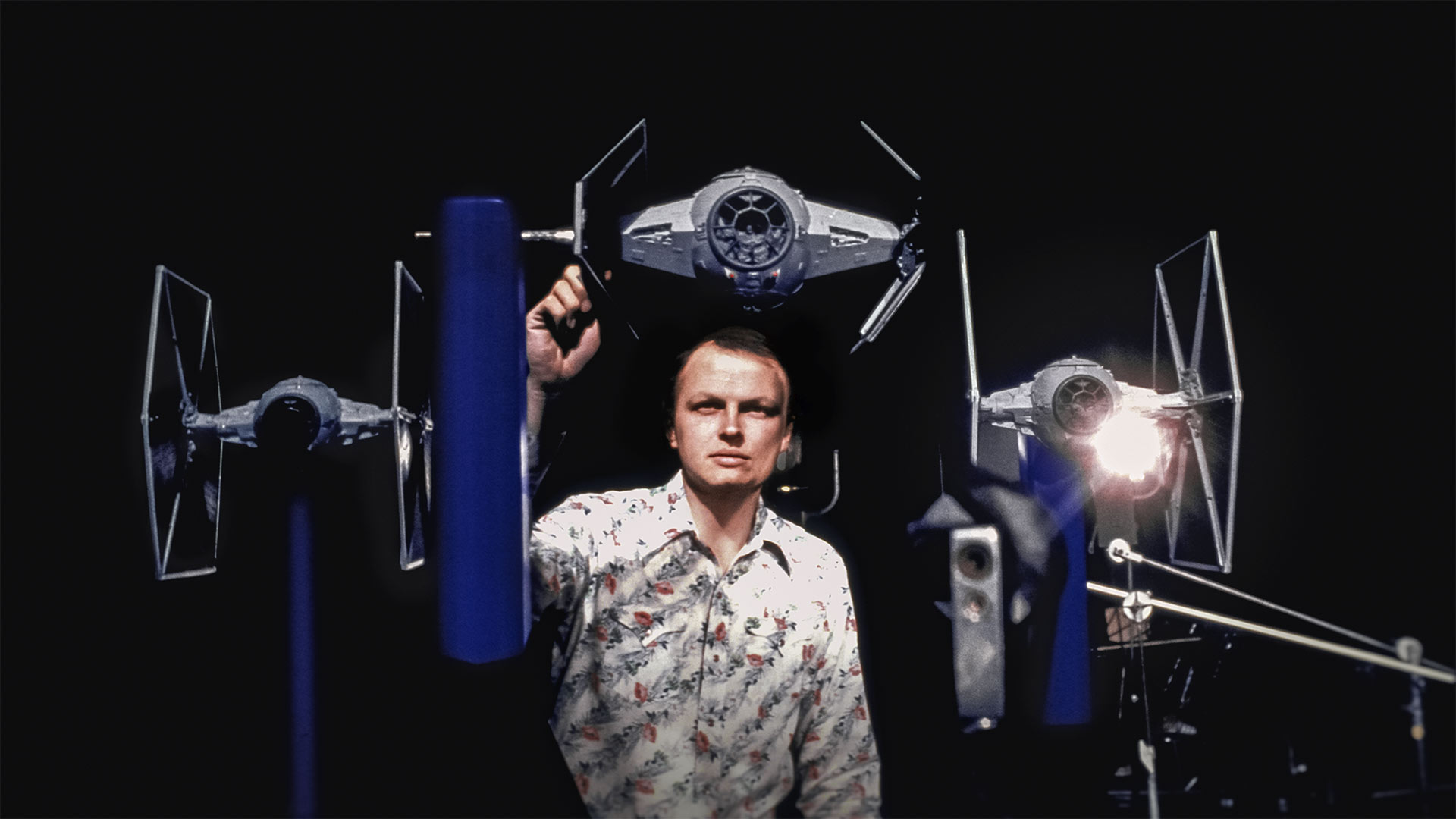
The Dykstraflex was a motion-control camera system. It used motors and computer control to repeat camera movements with precision. It allowed ILM to photograph one element, then photograph another element, then another, all with the same movement, so those elements could later be combined into one shot.
This is the basic trick: you film the spaceship. Then you film another element. Then another. Each element needs the same camera move, or the illusion breaks. The Dykstraflex made the move repeatable.
So the Dykstraflex was not just a camera rig. It was a way to make separate pieces of time agree with each other.
That is technical. Also poetic. Mostly technical.
And the roots are stranger than “a movie guy invented a camera thing.” Part of the prehistory of this motion-control approach came from research into perception, urban planning and environmental simulation. Before the Death Star trench run, there was work on computer-controlled cameras and miniature environments designed to understand how people respond to images of streets and buildings.
This is one of the best details in the whole ILM story. Before space fantasy, there was environmental psychology.
One way to think about Star Wars is that it was a fantasy movie. Another way to think about it is that it was a perception experiment with a box-office gross.
The scale problem
The word “magic” in Industrial Light & Magic is doing some work. But the early ILM was not magic in the clean digital sense. It was physical. It was models, motion-control rigs, optical printers, paint, light leaks, blue screens, dust, wires, acrylic, kitbashed plastic parts and people making tiny objects look huge.
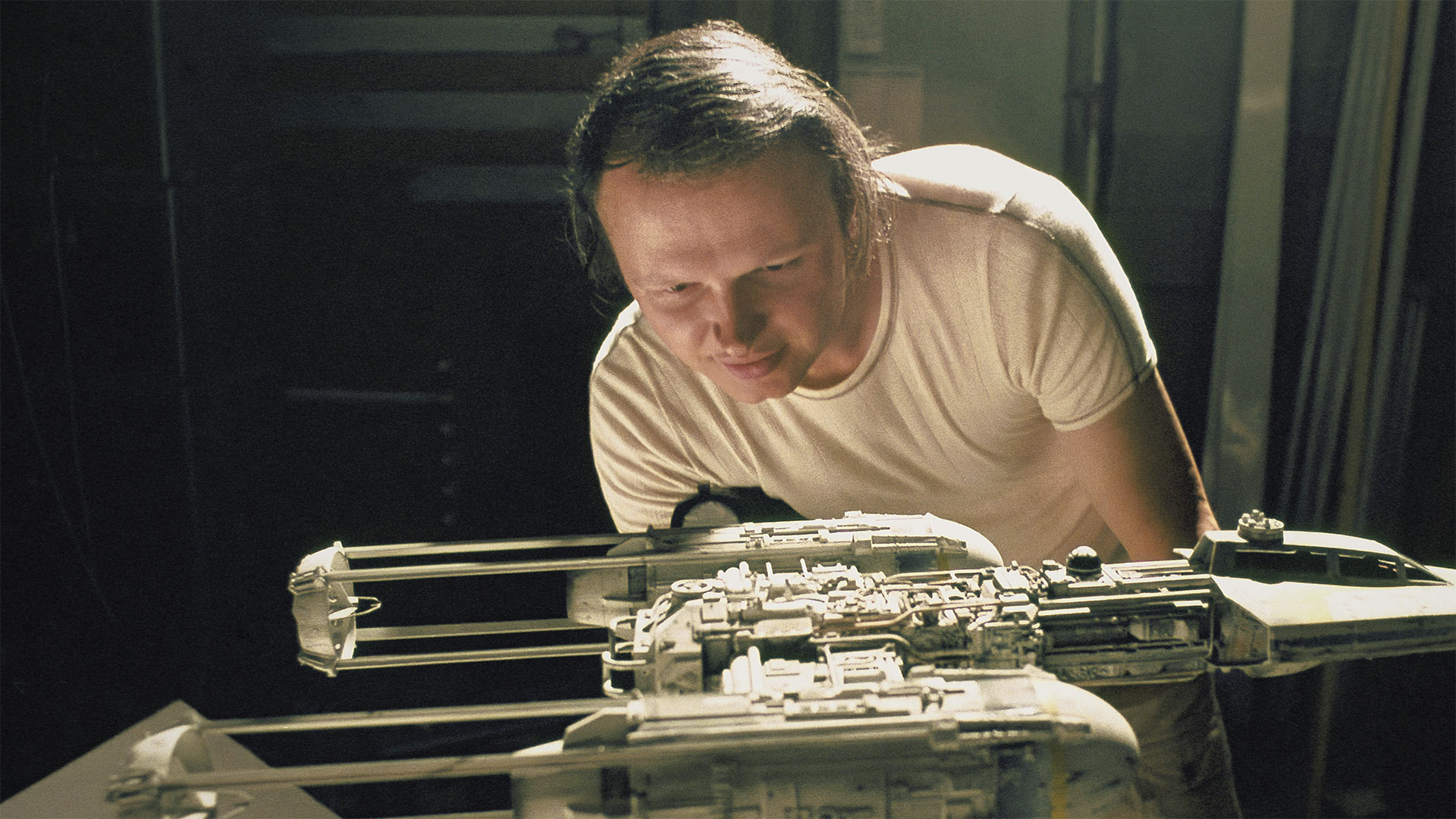
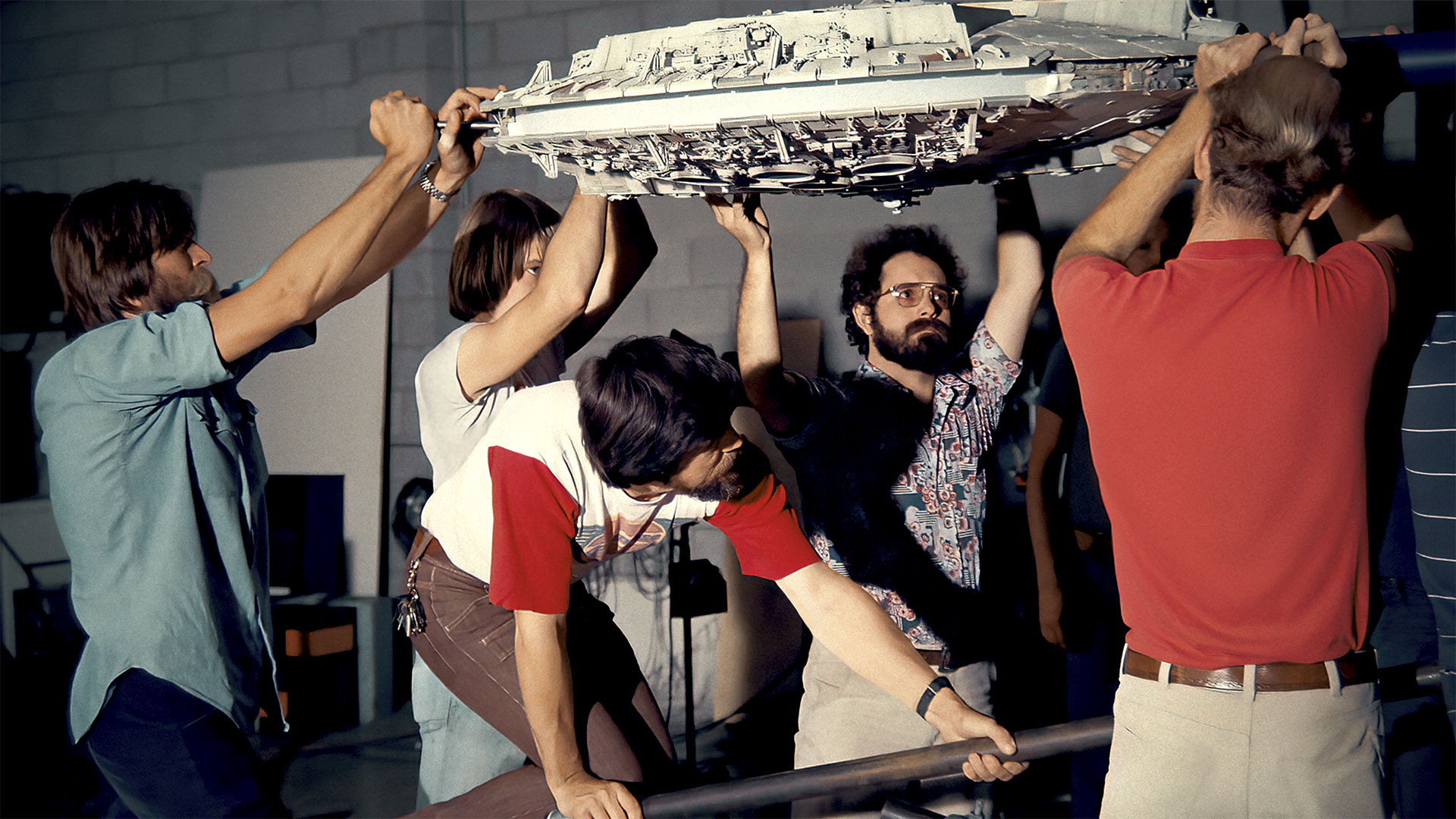
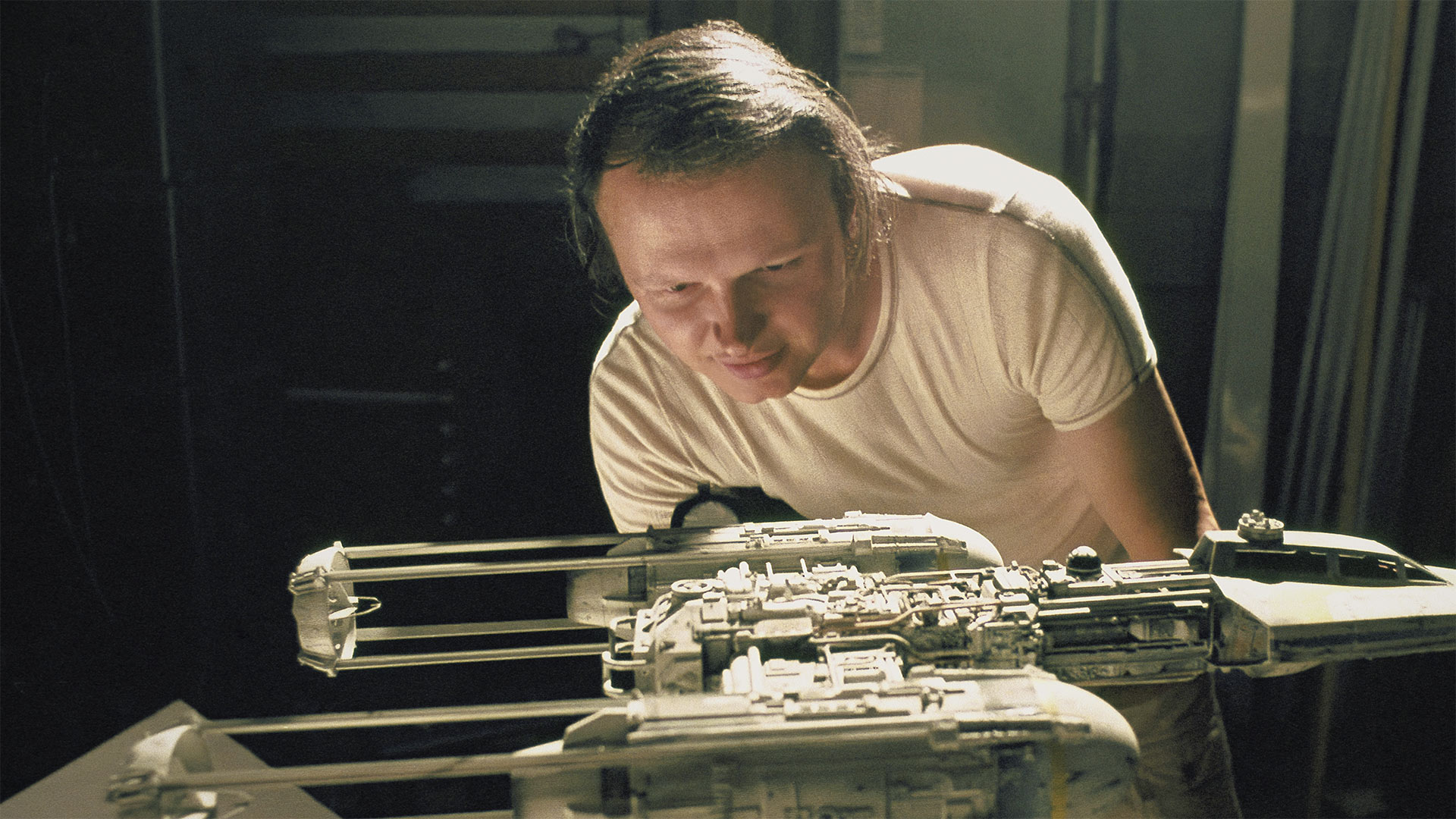
The model shop was not a decorative department. It was the asset side of the balance sheet. ILM needed ships, and the ships had to hold up under a camera. So the model makers built them with surface detail, asymmetry, dirt, dents and greebles – the little technical-looking bits that make a model feel bigger than it is.
This is a general rule of visual effects: scale is not a number. Scale is a story told by detail.
A smooth three-foot spaceship looks like a toy. A three-foot spaceship covered in tiny panels, pipes, scars and mechanical nonsense starts to look like a machine. The nonsense is not nonsense if it creates scale. It is story-backed plastic.
And this remained true even when ILM later returned to Star Wars digitally. When ILM worked on later films such as Rogue One, artists studied and recreated the handmade language of the original models. They scanned kitbashed pieces. They rebuilt imperfections. They added tiny crookedness, chipped edges and slight asymmetries, because perfectly clean CG does not feel like large physical machinery.
The funny thing is that digital ILM had to learn how to fake analog imperfection. The computer was too clean. The old model shop had been messy in exactly the right way.
The asset starts as a plastic part. Under digital pressure, it becomes a shader problem.
Optical compositing: accounting with light
The early ILM pipeline also depended on optical compositing. This is one of those phrases that sounds abstract until you reduce it to the basic model.
You have a spaceship. You have a star field. You have a laser blast. You have an explosion. You have a matte painting. You need one shot.
So you photograph each element separately and combine them on film using optical printers, mattes, passes and careful exposure control. The final image is a stack of decisions. The optical printer is the ledger. Light is the currency.
This is why motion control mattered so much. If each layer has to line up with every other layer, then every error compounds. A small registration problem becomes a visible shimmer. A bad matte line becomes a halo. A slightly wrong move becomes fake.
The optical era was, in some ways, more honest about the materiality of illusion than the digital era. You could see the layers because the layers had physical consequences. Every pass through the printer added grain and contrast. Every composite had a cost.
Digital compositing later made the layers more flexible. But the basic idea remained the same: separate the impossible image into pieces that can be made, then recombine them into something that looks inevitable.
Visual effects are a decomposition problem.
Artistically. Technically. Emotionally, sometimes.
The performance problem
The early ILM story is not only A New Hope. The Empire Strikes Back is where ILM’s analog craft becomes richer, stranger and more characterful.
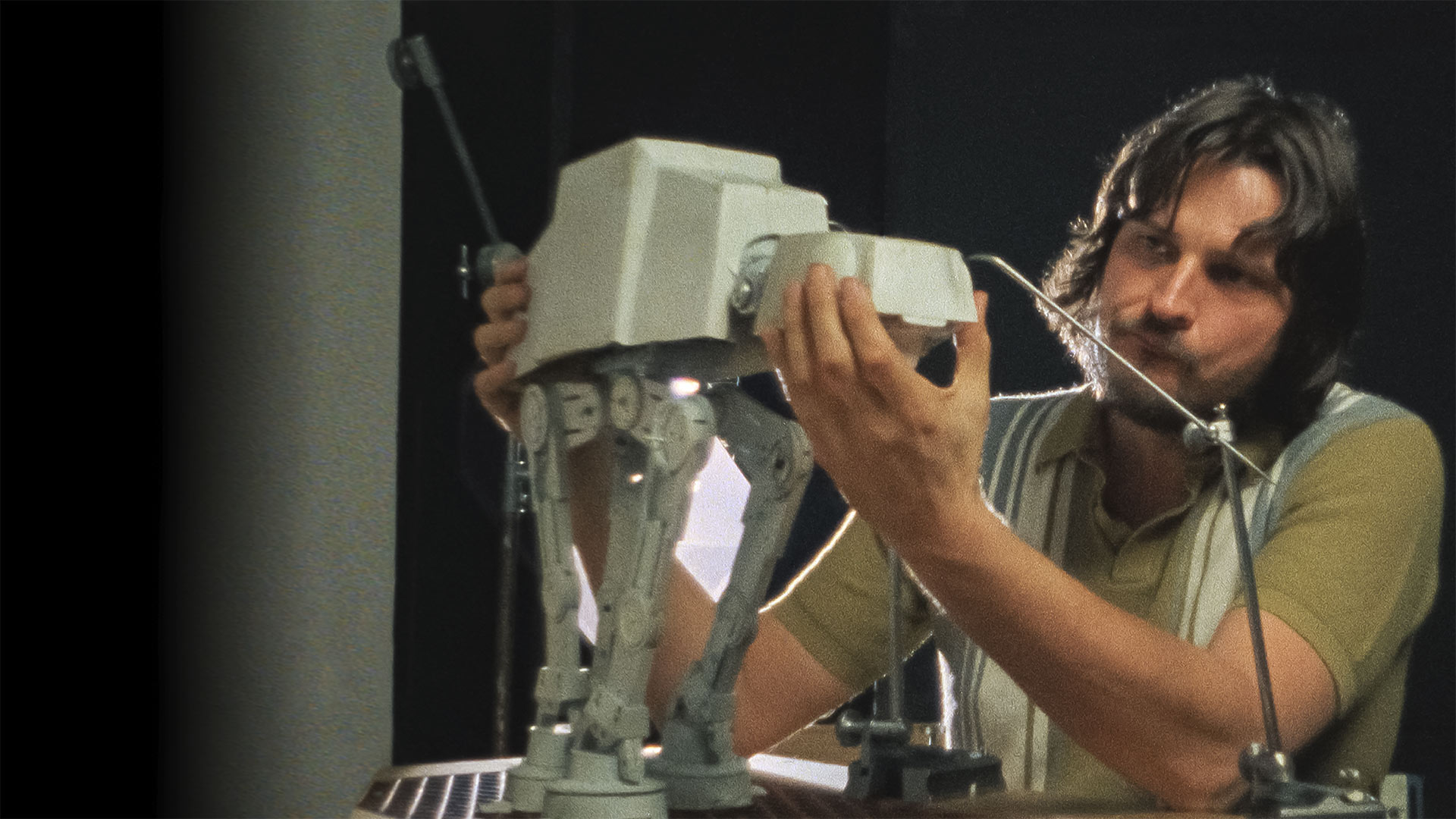
The Battle of Hoth is a good example because the AT-AT walkers are not just vehicles. They are military architecture with legs. They have to be slow enough to feel huge, mechanical enough to feel manufactured and alive enough to be threatening.
This is the trick: a machine has to act.
The walkers move through a miniature battlefield, but the sequence works because ILM treats movement as performance. A foot comes down. Weight shifts. The head turns. The body pauses. The walker is not a dinosaur, exactly, but it has behavior.
This is not a vehicle shot. It is creature animation wearing armor.
That matters because it carries forward into digital ILM. When ILM later animates a T. rex, or a liquid-metal assassin, or Davy Jones’s tentacles, the question is not only “can the computer render it?” The question is “does the thing behave?”
The old model shop already knew this. The computer had to learn it.
The digital thing arrives, but not all at once
The surface story of ILM is often: first miniatures, then computers.
That is true, but not interesting enough. The better story is that the computer did not replace the workshop. The computer became another room in the workshop, and for a long time nobody was entirely sure what to store in that room.
The transition was gradual, awkward and full of hybrid methods. This is important because “CGI changed everything” is a lazy sentence. It did, eventually. But it changed everything by first changing a few very specific things: image processing, morphing, compositing, surface behavior, character animation, scanning, rendering, motion capture and eventually real-time production.
The computer starts as a tool. Then it becomes a department. Then it becomes the pipeline. Then it becomes the set.
That is the ILM story.
Lucasfilm Computer Division: the useful adjacent thing
You have to be precise here: Pixar did not simply “come out of ILM.”
Pixar came out of Lucasfilm’s Computer Division. But that distinction is not a reason to leave it out. It is the reason the story is interesting.
Lucasfilm was not just building an effects vendor. It was building an ecosystem for the future of filmmaking: visual effects, sound, editing, computer graphics, digital imaging, printing and software. In 1986, Steve Jobs bought the Computer Division from George Lucas and established it as Pixar.
The important point is not “ILM invented Pixar.” It did not.
The important point is that Lucasfilm created the institutional weather in which Pixar could happen.
This is the same general mechanism again:
Lucas wants control over the filmmaking process. Control requires tools. Tools require researchers and artists. Researchers and artists create things with uses beyond the original problem. The side project becomes an industry.
That is how a film company accidentally becomes a technology incubator.
Accidentally. But also not accidentally.
The first CG character problem
One of the cleanest bridge moments is Young Sherlock Holmes.
The movie is not remembered like Star Wars, T2 or Jurassic Park. It does not have that cultural balance sheet. But it has a very important asset: the stained-glass knight.
The knight is widely remembered as the first fully computer-generated character in a feature film. The sequence was created through the Lucasfilm/ILM computer graphics environment and animated by John Lasseter before Pixar became Pixar in the public imagination.
This is a wonderful transitional object. The knight is not yet the future in the way the T. rex is the future. It is more like a message from the future left in a mid-1980s fantasy film.
The knight also shows the strange institutional overlap of the era. It is an ILM effects milestone, a Lucasfilm Computer Division milestone and a pre-Pixar milestone.
The stained-glass knight is not a huge scene. That is part of the point. The future often begins as a small scene that most people do not know how to categorize.
Is it animation? Is it visual effects? Is it software? Is it a character?
Yes.
The transformation problem
Then comes Willow, which is easy to skip and should not be skipped.
The movie matters because of morphing. A character transforms through several animal forms and then into a human. A goat becomes an ostrich becomes a peacock becomes a tortoise becomes a tiger becomes a woman. The shot is not about any single form. It is about the transition.
This is another useful mechanism.
The problem is not “make a creature.” The problem is “make change itself visible.”
That matters because transition becomes one of ILM’s great digital subjects. Morphing in Willow leads conceptually toward the watery pseudopod in The Abyss, the liquid-metal T-1000 in Terminator 2, and the broader idea that a digital body does not have to stay one body.
The old practical creature had mass.
The new digital creature had liquidity.
That is a category shift.
The material problem: can water act?
The Abyss is where ILM’s digital work becomes emotionally and narratively central. Not yet blockbuster-obvious, but central.
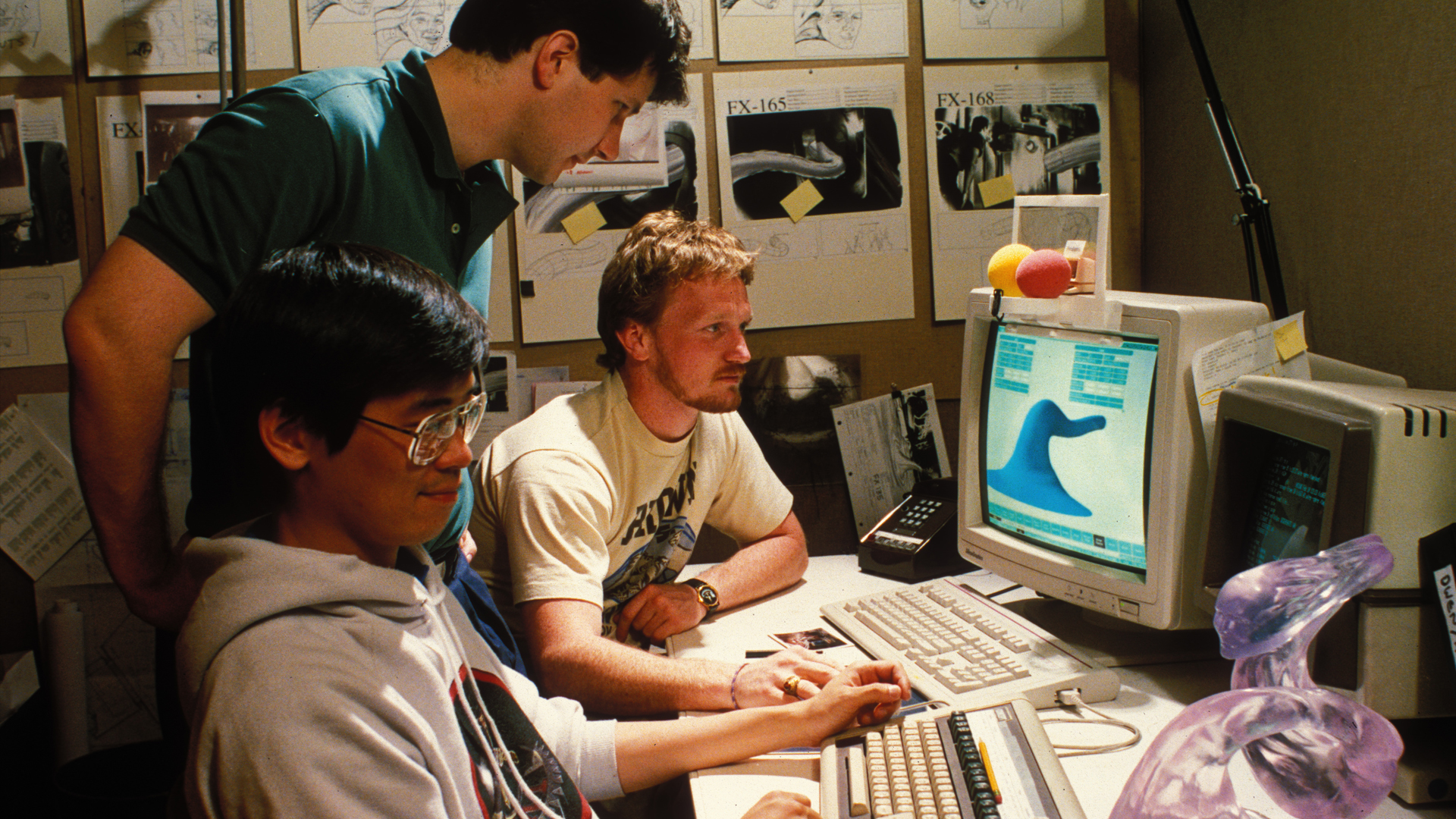
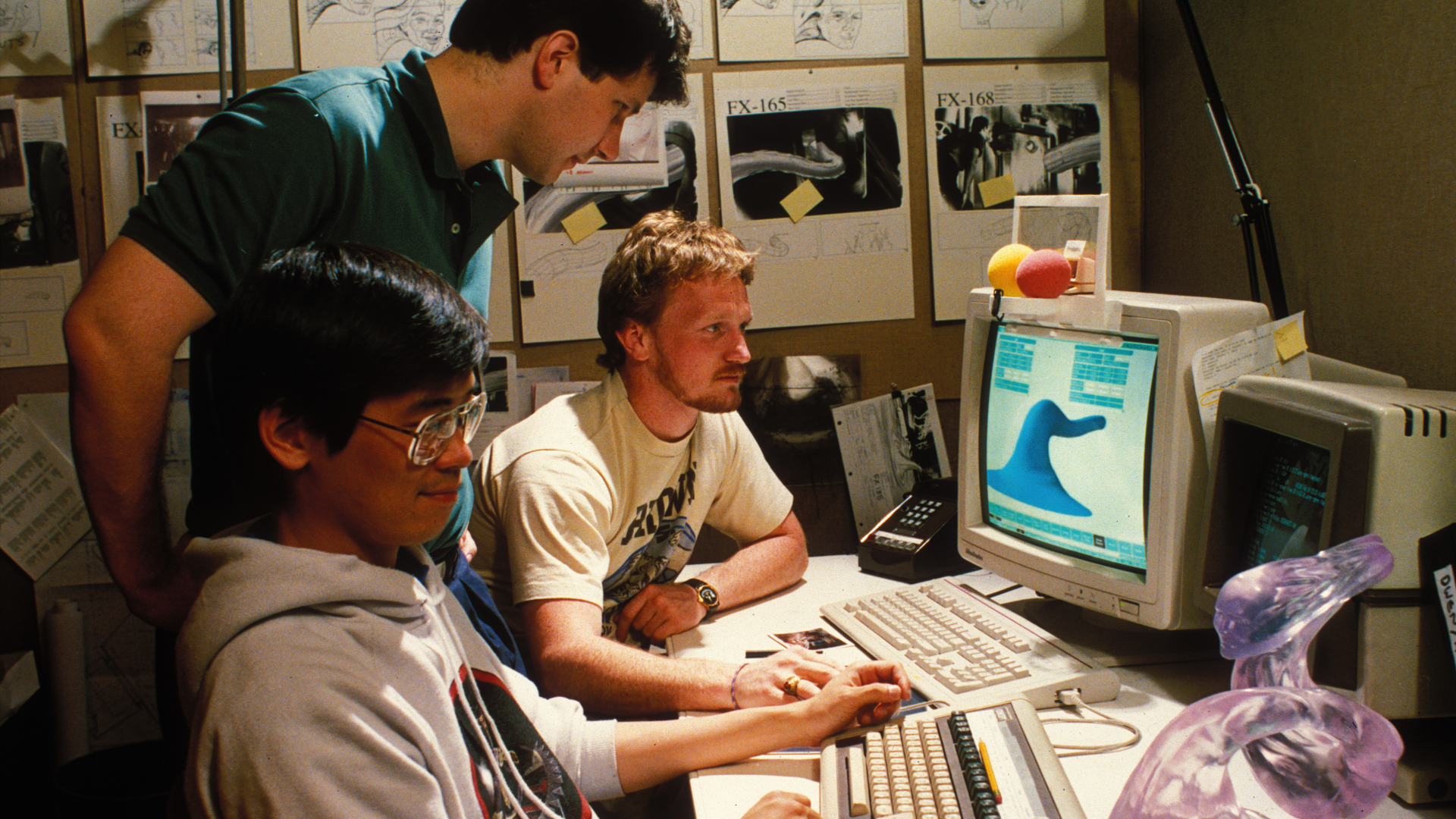
James Cameron needed a water pseudopod: a tentacle-like alien presence made of seawater, reflective and translucent, moving through an underwater drilling complex. It had to look like water. It had to move like a creature. It had to feel strange, but not silly.
That is a hard brief.
The best anecdote is the test. Cameron needed to know whether ILM could make the pseudopod work. The ILM team had very little time to create something convincing enough to show him. The test mattered because it did not just prove that a shape could be rendered. It proved that digital material could behave.
That is such an ILM story that it almost sounds fake.
Director: “Can you make a sentient water tentacle by tomorrow?” ILM: “Define tomorrow.” Director: “Tomorrow.” ILM: “Fine.”
The point is not that the test was perfect. The point is that the test changed what seemed possible. If ILM could make water behave like a creature – not just a simulation, not just a reflection, but a character-like presence – then the computer had moved from drawing shapes to performing material.
This was not yet Jurassic Park. It was more fragile than that. More experimental. But it proved a new thing: digital imagery could be organic, reflective, emotional and integrated into live action.
The water tentacle was not the whole future. It was a liquidity event.
Sorry. But also yes.
The villain problem
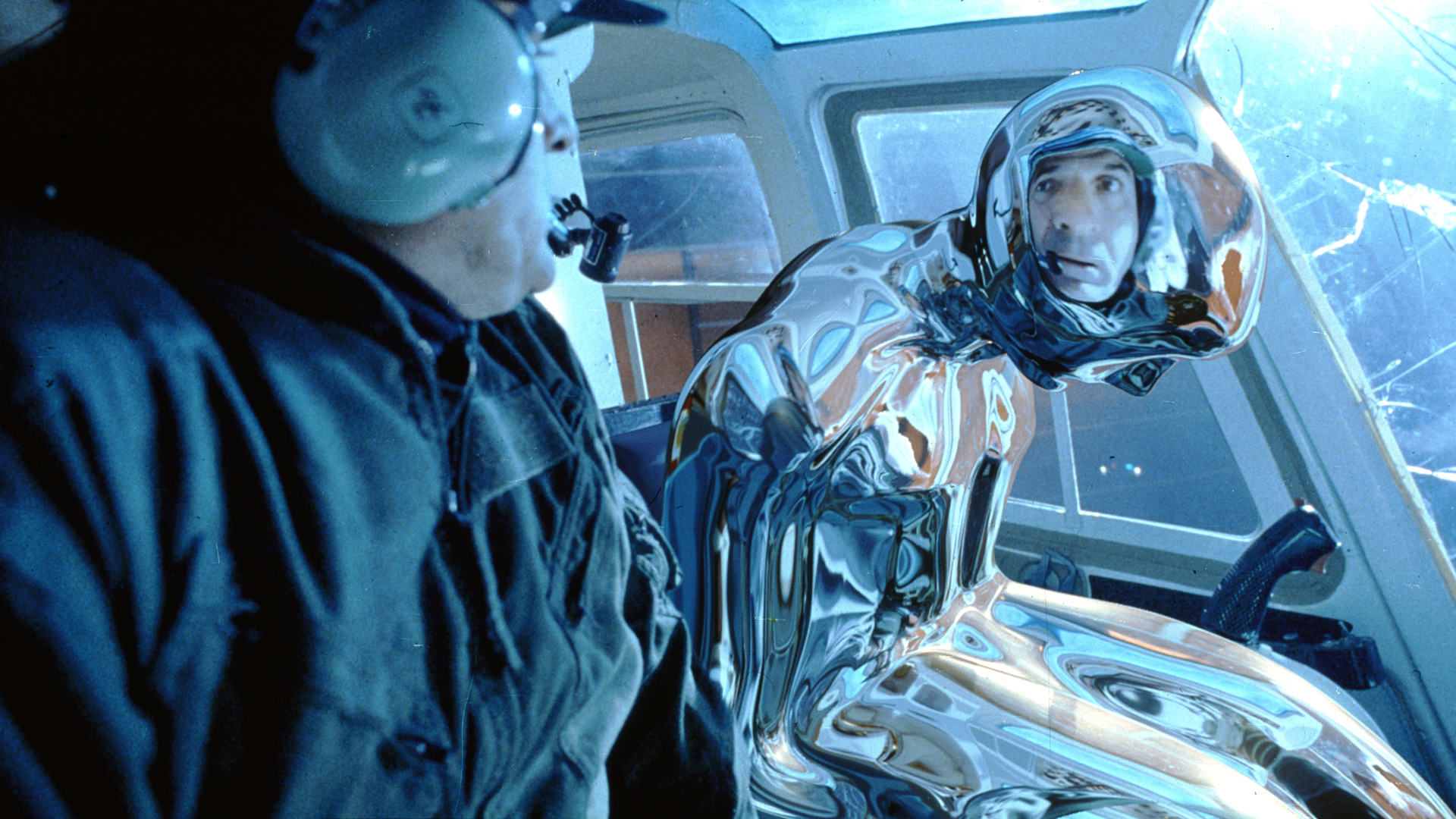
Terminator 2: Judgment Day is where the digital effect stops being a novelty and becomes the concept of the antagonist.
The T-1000 is not simply a man with special effects. The T-1000 is the special effect. His fictional premise is that he is made of liquid metal. He can melt, reform, imitate, heal and change shape. His body is not stable. That is the threat.
The basic model is simple:
The T-1000 is made of liquid metal. Liquid metal can change shape. Changing shape is the character’s threat. Therefore the visual effect is not decoration. It is the villain’s business model.
This is why T2 matters so much. The T-1000 is not a monster that has some CG shots. It is a monster whose fictional premise requires CG. You cannot separate the plot from the technology. The character is an argument for the effect.
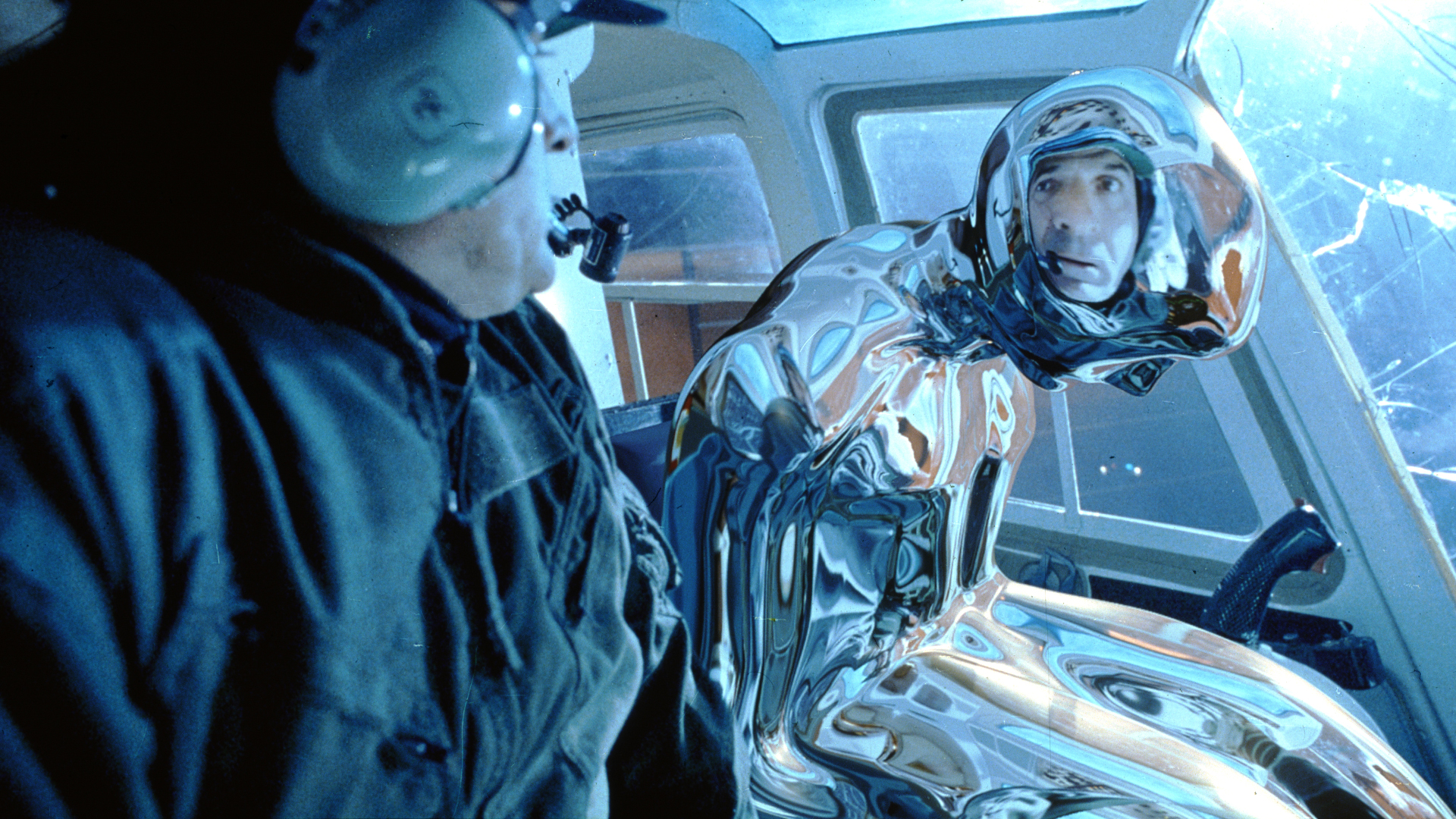
And, again, the important thing is hybridization. T2 was not a pure-CG film. Stan Winston Studio handled practical effects and prosthetics; ILM handled the computer-generated liquid-metal work. The effect worked because it moved between real and digital methods without making the audience care where the border was.
That is the job.
The border exists. The audience should not be able to trade on it.
The belief problem
Here is the basic mistake people make about Jurassic Park: they say it was the movie where CGI replaced practical effects.
Not exactly.
Jurassic Park was the movie where CGI proved it could share the screen with practical effects and win the audience’s belief. That is more interesting.
The final film used only a small amount of fully CG dinosaur footage compared with the length of the movie. That is the absurd part. A handful of minutes helped change the visual-effects business and, by extension, cinema itself.
The surface story is “digital dinosaurs.”
The mechanism is hybrid credibility.
Stan Winston’s animatronics gave the dinosaurs weight, presence and close-up physical reality. Phil Tippett’s stop-motion and creature-animation knowledge gave them performance logic. ILM’s digital artists gave them full-body motion, scale and a new kind of freedom. The computer did not replace the workshop. It absorbed the workshop’s knowledge.
The famous internal story is that the dinosaurs were originally expected to rely heavily on practical and stop-motion methods, but a digital T. rex test changed the direction of the film. Phil Tippett’s famous “I think I’m extinct” line became one of the great jokes in VFX history.
That line is funny because it is almost true and not true at all.
Tippett was not extinct. His tools were changing. His knowledge was being repriced.
This is the deeper Jurassic Park story. The old craft did not disappear. It became training data for the new craft, in the human sense. Animators needed to understand weight, anticipation, anatomy, performance, camera, blocking and fear. The computer could render the dinosaur, but it could not tell the dinosaur how to be scary.
That remained an artist problem.
Technically digital. Economically disruptive. Artistically old-fashioned.
The interface problem: the Dinosaur Input Device
The Dinosaur Input Device is a perfect ILM object because it is both clever and slightly ridiculous.
The problem was cultural as much as technical. Stop-motion animators understood articulated models. Computer animators worked inside software. How do you move knowledge from one group to the other? You build a physical armature with sensors, so moving the puppet can generate digital motion data.
That is the bridge: a puppet that talks to a computer.
The thing starts as a puppet. Under technological pressure, it becomes an interface.
This is ILM in one object.
After Jurassic Park, the problem changed
Before Jurassic Park, the question was: can the computer make something believable?
After Jurassic Park, the question became: how much of the movie can the computer carry?
This is a dangerous question, because the answer is often “more than it should.” But for ILM it opened the next phase. Digital animals, digital doubles, digital environments, simulations, character animation, digital compositing and increasingly complex pipelines became normal. The spectacle market had repriced the possible.
Studios learned the wrong lesson and the right lesson.
The wrong lesson was: use CGI for everything.
The right lesson was: use CGI when the effect has inherited enough craft to be invisible.
ILM’s best work usually understood this. The computer was not valuable because it was new. It was valuable because it gave filmmakers a way to solve old problems differently: scale, movement, danger, transformation, impossible bodies, impossible places.
The new tool was interesting because the old problem remained.
The digital actor problem
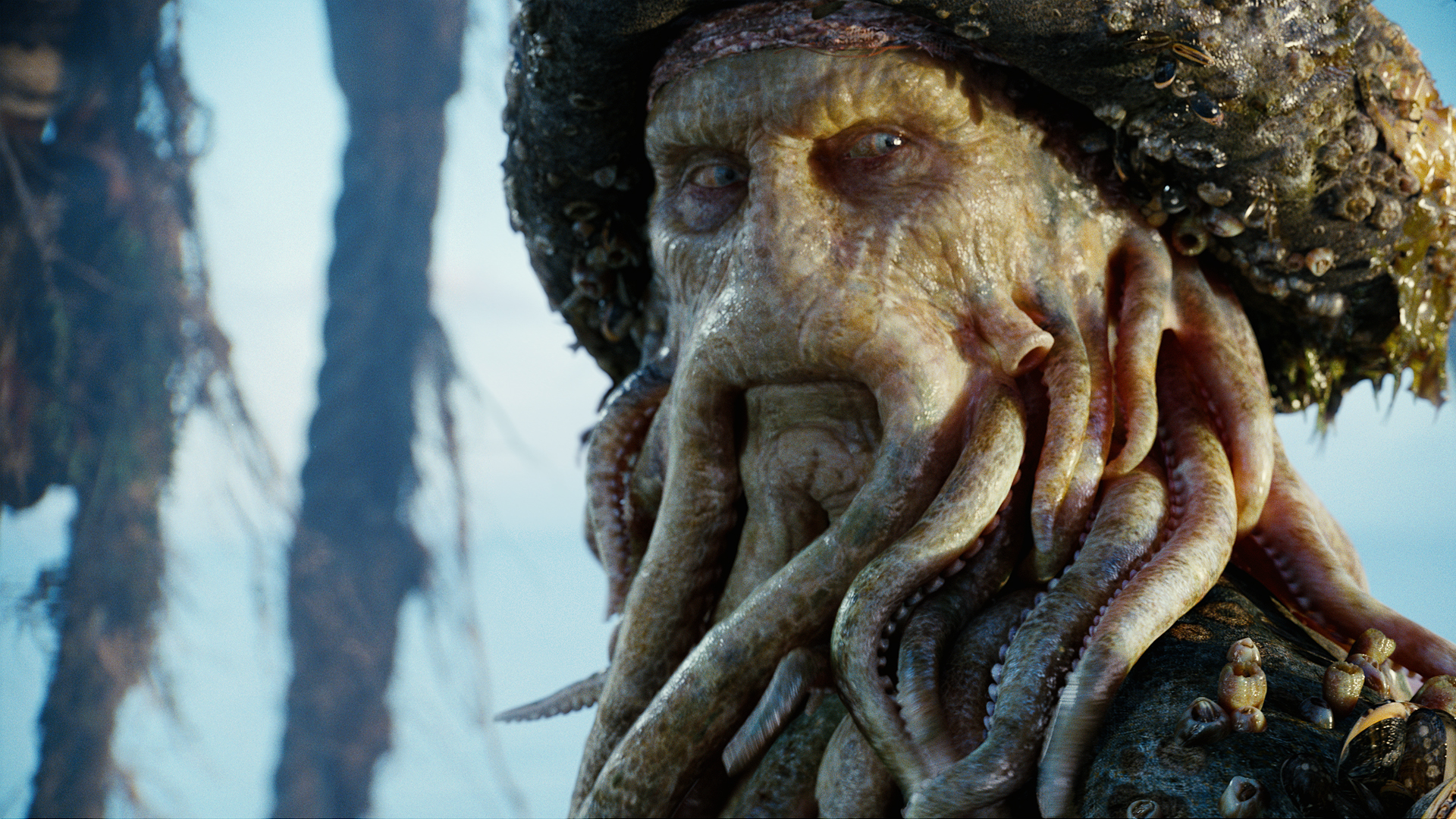
If Jurassic Park proved that digital creatures could be believed, Pirates of the Caribbean: Dead Man’s Chest proved that a digital character could hold a scene as a performance.
Davy Jones is not just a tentacle effect. He is a working actor buried under a digital marine disaster.
This matters because there is a big difference between making a digital creature and making a digital actor. A creature has to move believably. A digital actor has to think believably. The audience has to feel timing, intention, irritation, sadness, vanity, hesitation. The pixels have to perform.
The key detail is that Bill Nighy performed on set. He was not removed from the live-action environment and reconstructed elsewhere. He acted with the other actors. The director could direct him. The scene could happen as a scene.
That changes the mechanism:
Old motion capture: actor performs in a capture space, movie happens later. IMocap: actor performs in the scene, with other actors, under the director’s eye, while the digital character is built from that performance.
This is not just a technical improvement. It is a power shift back toward the set.
The actor wants to act. The director wants to direct. The VFX team wants usable data. IMocap lets everyone get something, as long as the dots track and the pipeline behaves.
Of course the pipeline does not simply “behave.” Pipelines are institutions. They have moods.
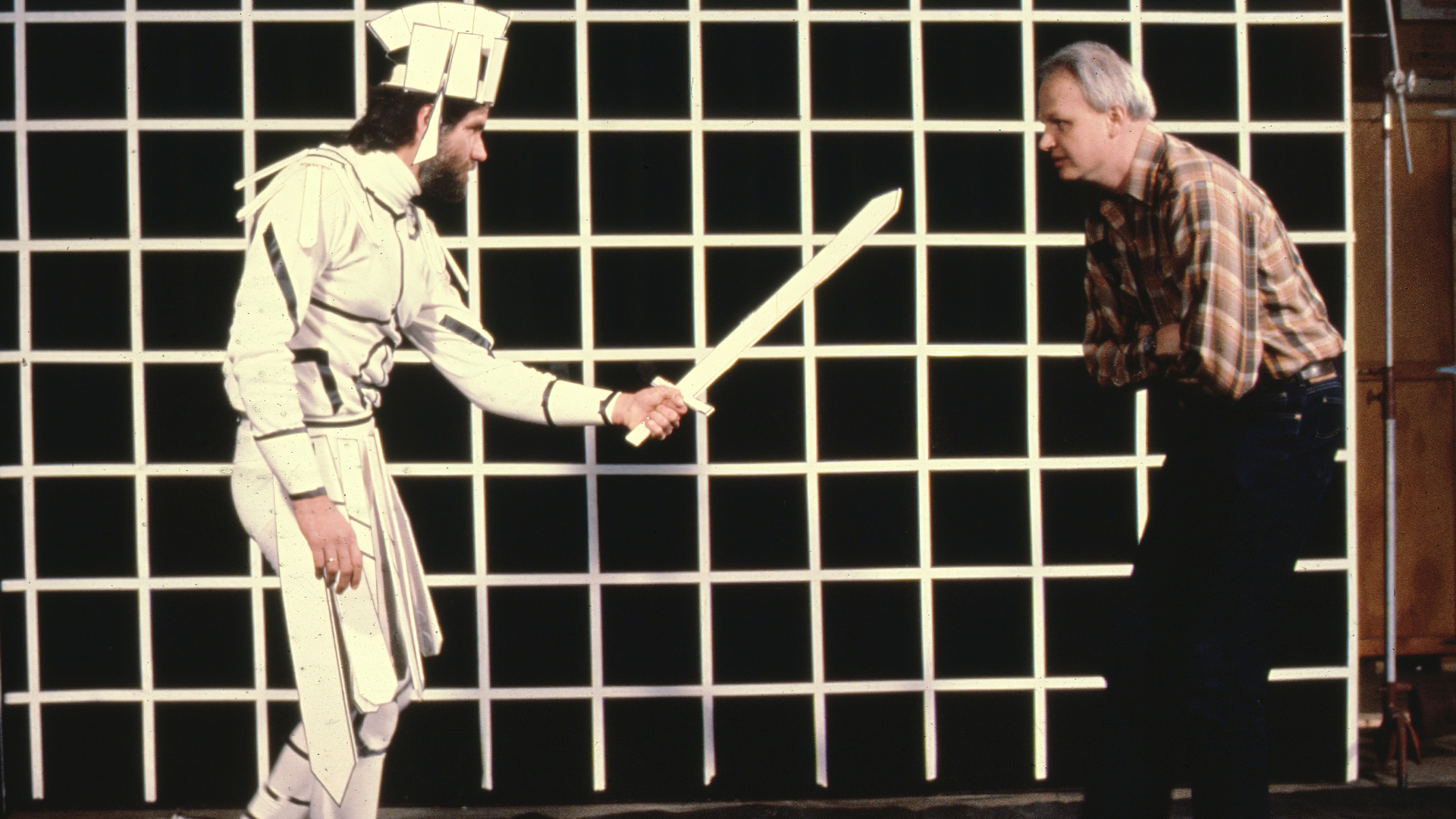
But Davy Jones worked because the performance remained legible. The eyes, timing, posture, pauses and irritation of Bill Nighy survived the tentacles. The digital face did not erase the actor; it translated him.
That is very hard. The audience did not need to know it was hard.
That was the point.
The infrastructure problem
One of the most important ILM themes is that the company’s products were not only shots.
They were methods.
IMocap was a method. Zeno was a method. OpenEXR was a method. Photoshop, in its origin story, was adjacent to the same culture of digital image manipulation. EditDroid was a method. StageCraft is a method. The films are the public outputs; the tools are the compounding asset.
This is the business value of ILM that is easy to miss. A visual-effects company sells finished images, but a great visual-effects company also builds internal systems that let it sell future impossibilities. The tool is not just a cost. The tool is accumulated leverage.
If the tool solves one film’s problem, fine. If the tool becomes useful on the next film, better. If the tool becomes an industry standard, now the tool has escaped.
OpenEXR escaped.
Photoshop escaped.
Pixar escaped.
This is not normal vendor behavior. This is laboratory behavior.
Photoshop: the image tool that walked out of the effects house
John Knoll is one of the best human through-lines for an ILM article because he connects the fan, the model shop, the digital darkroom, The Abyss, Pirates, Rogue One and Photoshop.
Together with his brother Thomas, John Knoll helped create Photoshop. John was working at ILM, and the problems of digital image manipulation were not abstract to him. Compositing, retouching, masking, layering, color, image transformation – these were not future consumer features. They were daily production problems.
This is a wonderful category shift.
A tool begins as a way to manipulate digital images in a professional and technical context. Then it becomes a global verb. Then everyone uses it to alter reality, badly, beautifully, commercially, politically, stupidly, constantly.
This is not simply “ILM had an employee who made Photoshop.” It is bigger than that. It shows how the problems of visual effects were not niche problems. They were the coming problems of all visual culture.
The movie business needed to fake images. Then advertising needed it. Then publishing. Then design. Then everyone.
ILM was early because movies are professionalized lying with a deadline.
That is not an insult.
That is cinema.
OpenEXR: the boring thing that runs the image
OpenEXR is less glamorous than Davy Jones. This is why it matters.
OpenEXR was developed at ILM as a high-dynamic-range image file format for visual-effects production. It was later released as open source and became an important standard across high-end image pipelines.
This is infrastructure. Quiet infrastructure.
The audience sees the dinosaur. The studio sees the file format. The file format is not exciting unless it fails, which is true of a lot of infrastructure.
But OpenEXR is central to the argument that ILM functioned as Hollywood’s R&D department. It did not merely make images. It helped define how high-end digital images could be stored, exchanged and preserved through production.
A file format is a promise: if you put the image here, the rest of the pipeline can understand it.
That promise is boring.
Boring promises run industries.
EditDroid: the future that was too early
Lucasfilm’s technology ecosystem also included EditDroid, one of the great almost-futures of film editing.
The idea was straightforward: make editing more like random access and less like physically handling linear material. A word processor for moving images. That is the dream.
The problem was also straightforward: the future was expensive, storage was hard, workflows were conservative, and being early is often indistinguishable from being wrong.
Technically interesting. Commercially awkward.
But this belongs in the ILM/Lucasfilm story because it shows the larger ambition. Lucasfilm was not only asking, “How do we make the spaceship shot?” It was asking, “How do we rebuild production, post-production, sound, editing and image-making around digital tools?”
Some of those tools became dominant. Some failed. Some failed in ways that taught the next tool what to become.
This is a useful kind of failure.
The best kind, if you are not paying for it.
The alumni problem: people as technology
Companies like ILM produce tools, but they also produce people.
This is harder to quantify, but probably just as important. ILM trained, attracted or collaborated with many of the people who would define modern visual effects and computer animation: John Dykstra, Dennis Muren, Ken Ralston, Phil Tippett, John Knoll, Steve Williams, Mark Dippé, Ed Catmull, John Lasseter and many others, depending on how tightly you draw the Lucasfilm/ILM boundary.
Phil Tippett is a good example of the analog/digital bridge. He came from the world of stop-motion and go-motion, then became part of the transition into digital creature work. His story is not “the old artist becomes obsolete.” His story is “the old artist’s knowledge becomes valuable in a new format.”
This is the alumni effect. A studio becomes important not only because of what it ships, but because of what its people take elsewhere.
The mechanism is simple:
A hard project forces a new method. The method trains people. The people leave, found companies, join other studios, write software, teach younger artists. The method becomes culture.
This is how ILM became larger than ILM.
Not legally.
Economically. Culturally.
Disney buys the machine
In 2012, Disney acquired Lucasfilm. The obvious story is: Disney bought Star Wars.
The better story is: Disney bought a mythology, a production company, a sound company, a visual-effects company, a technology culture and decades of accumulated problem-solving capacity.
ILM had started as the thing Lucas needed because Hollywood could not supply the image. By 2012, ILM was part of the infrastructure Disney wanted because modern franchise cinema cannot function without the image machine.
That is a strange arc.
A workaround becomes part of a multibillion-dollar acquisition.
Pretty good for a warehouse thing.
The set problem: StageCraft
StageCraft is the correct modern ending to the ILM story because it looks new but is secretly old.
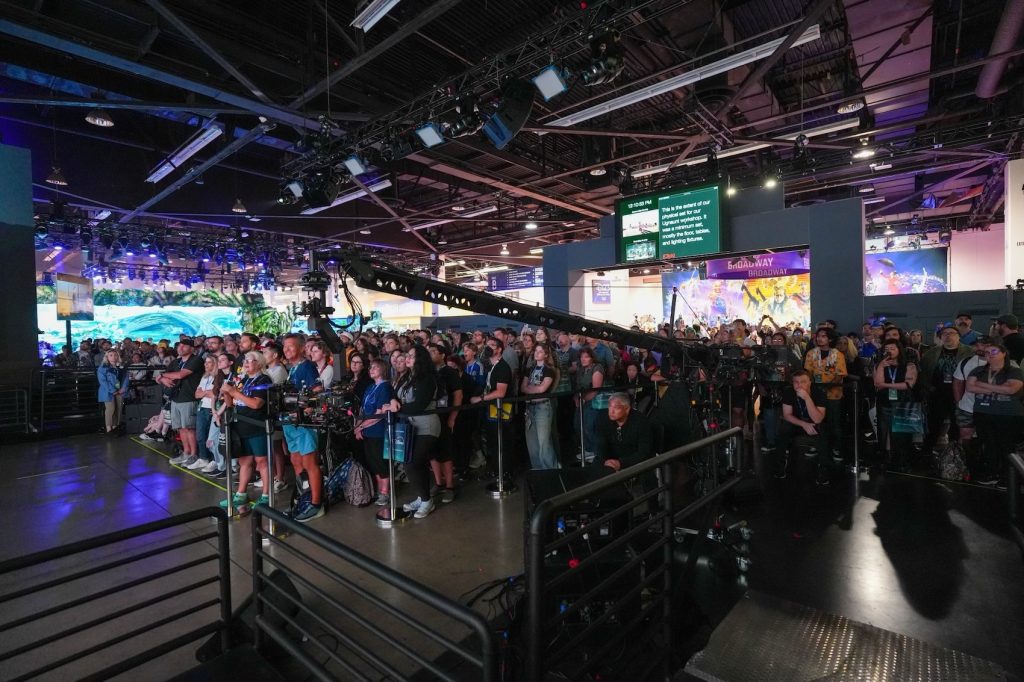
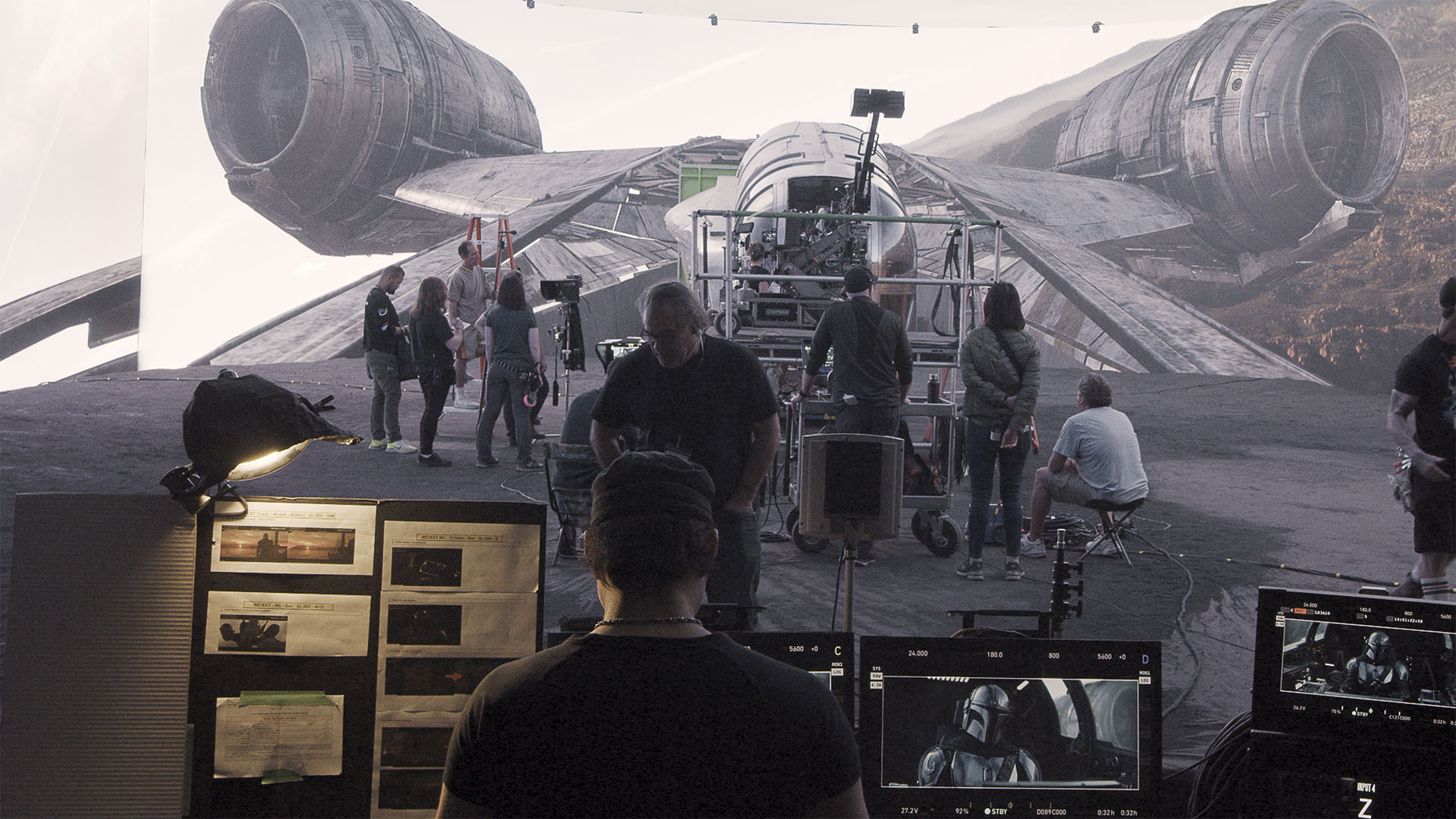
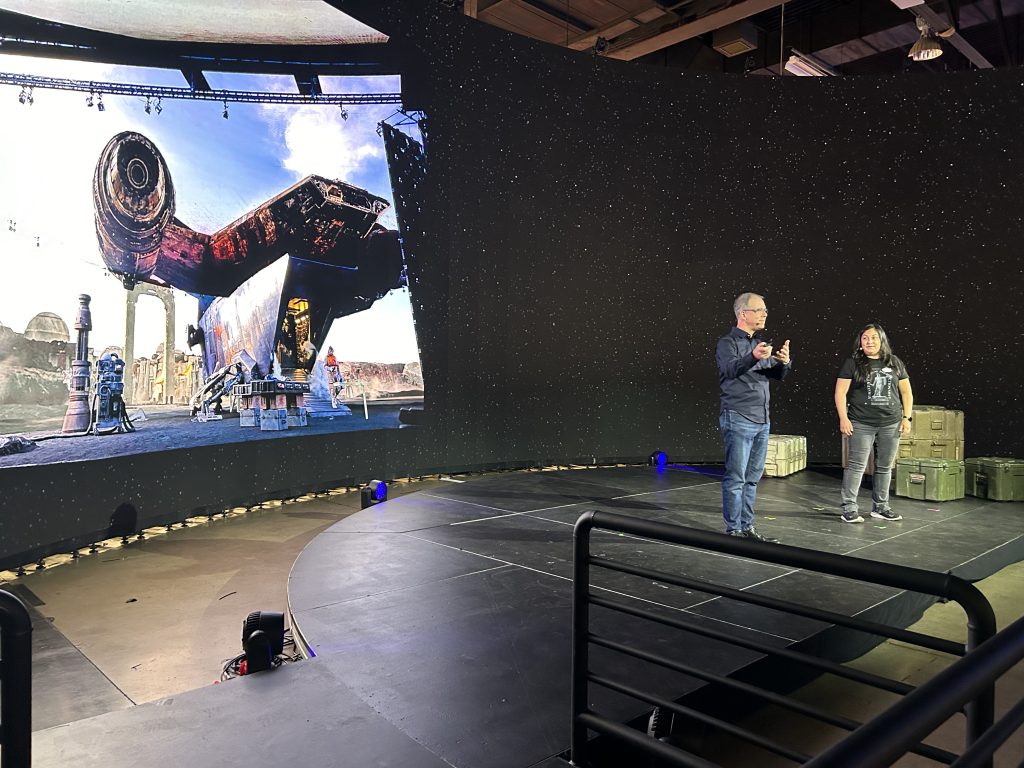
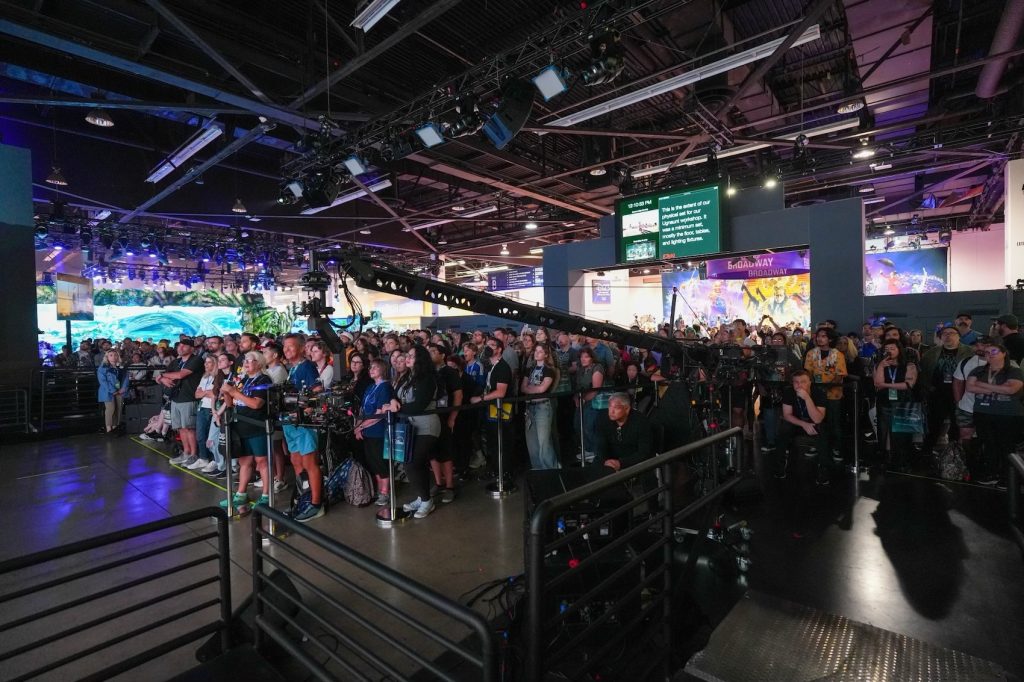
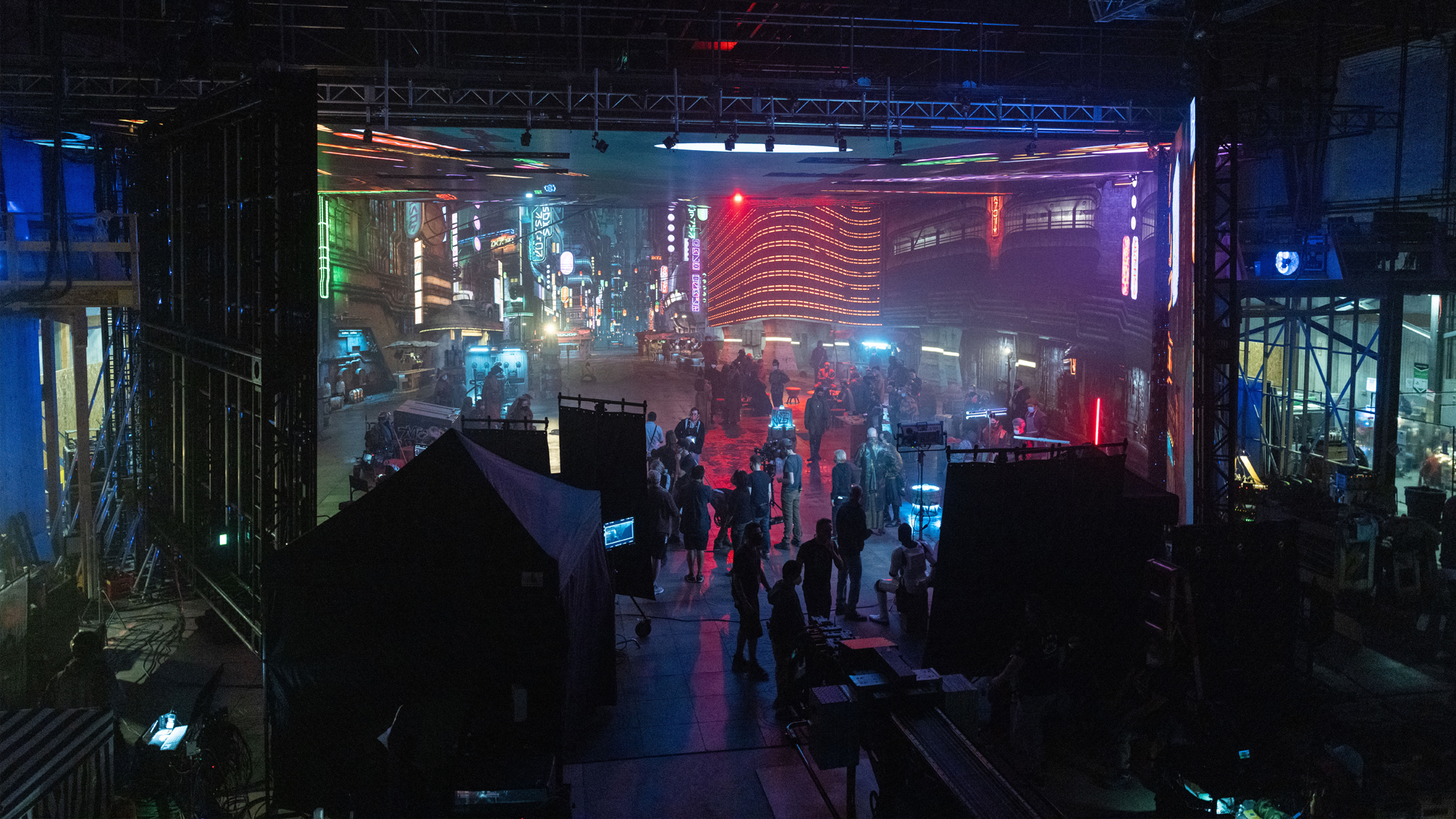
StageCraft uses LED volumes, real-time rendering, camera tracking and virtual environments to let filmmakers capture complex backgrounds in-camera instead of relying only on green screen and post-production. It became famous through The Mandalorian, but its meaning is larger than one series.
The basic model is:
The background is digital. The actors are real. The camera is tracked. The LED wall updates perspective. The light from the wall illuminates the physical set. The shot is partly finished before post-production begins.
This is not just green screen with better marketing. The important difference is that the image is present on set. Actors can see it. Cinematographers can light with it. Reflective costumes reflect it. Directors can frame it. The camera can move in relation to it.
The digital world becomes a location.
One way to think about StageCraft is that it is the future of visual effects. Another way to think about it is that it is a return to the old ILM dream: put the impossible in front of the camera.
In 1977, ILM used motion control to move a camera around miniatures.
In StageCraft, ILM uses real-time rendering to move a world around the camera.
Same problem.
Better screens.
From motion control to world control
This is the cleanest final arc:
The Dykstraflex repeated camera moves so separate physical elements could become one shot. Digital compositing made those layers more flexible. CGI made creatures and bodies possible without physical models. Motion capture brought actor performance into digital characters. OpenEXR and internal tools standardized the image pipeline. StageCraft made the digital environment available during principal photography.
The camera started by chasing a model. The model became a creature. The creature became a performance. The performance became data. The data became a world. The world became a set.
That is the ILM story.
Not “technology replaced craft.” That is too simple and mostly wrong.
The better sentence is: craft kept changing bodies.
Sometimes craft was a plastic model. Sometimes it was a stop-motion armature. Sometimes it was a line of code. Sometimes it was a file format. Sometimes it was Bill Nighy in computer pajamas. Sometimes it was an LED wall pretending to be a planet.
All of these are craft.
The darker side of the miracle
There is one more thing, and it matters.
ILM helped make the impossible image normal. That is a triumph. It is also a problem.
Once visual effects can do almost anything, producers may ask visual-effects artists to do almost everything. The tool that expands imagination also expands what the production feels entitled to demand. More shots. Later changes. Bigger sequences. Digital doubles. Digital environments. Digital fixes. Digital weather. Digital crowds. Digital everything.
This is not only an ILM story. It is an industry story. The modern VFX labor conversation reflects a larger tension: visual effects are central to contemporary filmmaking, but VFX labor has often been less protected and less visible than other film crafts.
This does not cancel the miracle. It explains its cost.
The magic became infrastructure. Infrastructure becomes expectation. Expectation becomes schedule pressure.
Technically powerful. Labor-wise complicated. Artistically useful. Industrially messy.
Normal Hollywood, in other words.
Why ILM matters
ILM matters because it repeatedly changed what filmmakers were allowed to ask for.
Before ILM, a director could ask for a spaceship battle, but the grammar was limited. After Star Wars, the camera could move through fantasy with new aggression.
Before The Abyss and T2, a digital body was a technical curiosity. After them, transformation itself became a character.
Before Jurassic Park, digital animals were a risk. After it, every impossible creature became a production question, not a fantasy.
Before Davy Jones, a fully CG character with actorly nuance was still suspicious. After him, the question became less “can we build the character?” and more “can the performance survive the pipeline?”
Before StageCraft, virtual production was a specialized practice. After The Mandalorian, LED volumes became part of the mainstream production imagination.
This does not mean every ILM-driven change was good in every respect. Of course not. Modern Hollywood also learned that if visual effects can do anything, producers may ask visual-effects artists to do everything.
That is not ideal.
The machine solved the impossible-image problem. Then the industry built new problems around the machine.
Of course it did.
The general rule
Here is the general rule of ILM:
The impossible image starts as a production problem. The production problem becomes a tool. The tool becomes a method. The method becomes an industry habit. The industry habit becomes invisible.
And then someone asks for a new impossible image.
So ILM starts again.
That is the company’s real achievement. Not one shot. Not one dinosaur. Not one pirate. Not one LED wall. The achievement is the repeated conversion of panic into process.
George Lucas wanted a space battle. ILM built a motion-control system.
James Cameron wanted a water alien. ILM built a digital pseudopod.
Spielberg wanted dinosaurs. ILM made a few minutes of CG that changed the market.
Gore Verbinski wanted an octopus-faced pirate who could actually act. ILM built an on-set capture method and a digital performance pipeline.
Jon Favreau wanted a live-action Star Wars show that could travel across planets without traveling across planets. ILM built StageCraft.
ILM’s real product was not spaceships, dinosaurs, pirates or LED walls. Those were the deliverables. The product was a repeatable method for turning a director’s impossible sentence into a production plan.
“Can the camera chase the spaceship?”
“Can the water act?”
“Can the dinosaur breathe?”
“Can the pirate perform?”
“Can the planet be on set?”
The answer was usually yes.
Not immediately. Not cheaply. Not calmly.
But yes.
The story looks like magic.
The mechanism is work.
Sources, image credits and copyright notice
This article is an editorial and historical commentary on Industrial Light & Magic, Lucasfilm, visual effects history and related film technologies. Film stills, behind-the-scenes images, logos and trademarks are used only for identification, criticism, commentary, historical reference and illustration of the works and technologies discussed.
Industrial Light & Magic, ILM, StageCraft, Star Wars, Lucasfilm and related names, marks, images, characters, films and production materials are trademarks and/or copyrighted works of Lucasfilm Ltd., The Walt Disney Company and/or their respective rights holders. ILM states that “Industrial Light & Magic, ILM, The Bulb And Gear Design Logo, StageCraft and TechnoProps” are service marks of Lucasfilm Ltd., with “© & ™ Lucasfilm Ltd. All rights reserved.” Disney’s general Terms of Use state “© Disney 2024. All rights reserved.”
For licensing or clearance of Lucasfilm stills, clips or related materials, see Lucasfilm’s FAQ and Disney Studios Licensing. Lucasfilm directs requests for approval to use photographs or film clips from Star Wars, Indiana Jones, Willow and related Lucasfilm properties to ClipAndStill@Lucasfilm.com. Disney Studios Licensing notes that website use of film clips and stills is considered on a case-by-case basis, and that alterations or modifications to film clips or stills are not permitted without express written consent.
Main research sources
- Lucasfilm – “Company History”
https://www.lucasfilm.com/who-we-are/our-story/
- Lucasfilm – “Lucasfilm Originals: The Dykstraflex”
https://www.lucasfilm.com/news/lucasfilm-originals-the-dykstraflex/
- Industrial Light & Magic – “ILM’s Audacious Start in an Empty Warehouse Began 50 Years Ago”
https://www.ilm.com/ilms-audacious-start-in-an-empty-warehouse-began-50-years-ago/
- American Cinematographer – “Star Wars: Miniature and Mechanical Special Effects”
https://theasc.com/article/star-wars-miniature-effects-dykstra/
- National Science Foundation – “The 1970s psychology experiment behind Star Wars special effects”
https://www.nsf.gov/science-matters/1970s-psychology-experiment-behind-star-wars-special-effects
- Lucasfilm – “Remembering Early ILM with Patricia Rose Duignan”
https://www.lucasfilm.com/news/remembering-early-ilm-with-patricia-rose-duignan/
- Vanity Fair – “Industrial Light & Magic Documentary / Light & Magic”
https://www.vanityfair.com/hollywood/2022/07/industrial-light-and-magic-documentary
- Industrial Light & Magic – “Young Sherlock Holmes”
https://www.ilm.com/vfx/young-sherlock-holmes/
- Guinness World Records – “First use of morphing”
https://www.guinnessworldrecords.com/world-records/first-use-of-morphing
- Lucasfilm – “Willow at 30 with Visual Effects Wizards”
https://www.lucasfilm.com/news/willow-at-30-with-visual-effects-wizards/
- Industrial Light & Magic – “The Abyss”
https://www.ilm.com/vfx/the-abyss/
- befores & afters – “That time James Cameron gave ILM a day to come up with a test for The Abyss”
- Industrial Light & Magic – “Terminator 2: Judgment Day”
https://www.ilm.com/vfx/terminator-2-judgment-day/
- Industrial Light & Magic – “Creating Dinosaurs: Jurassic Park”
https://www.ilm.com/creating-dinosaurs-jurassic-park/
- WIRED – “The Untold Story of Jurassic Park’s CGI”
https://www.wired.com/2014/06/jurassic-park-cgi/
- Industrial Light & Magic – “Pirates of the Caribbean: Dead Man’s Chest”
https://www.ilm.com/vfx/pirates-of-the-caribbean-dead-mans-chest-2/
- befores & afters – “Computer pajamas: the history of ILM’s IMocap”
https://beforesandafters.com/2019/09/10/computer-pajamas-the-history-of-ilms-imocap/
- Pixar – “Our Story”
https://www.pixar.com/our-story
- Industrial Light & Magic – “John & Thomas Knoll Photoshop Archives Interview”
https://www.ilm.com/john-thomas-knoll-photoshop-archives-interview/
- WIRED – “The Star Wars Fan Who Helped Invent Photoshop and Wrote Rogue One”
https://www.wired.com/2016/11/john-knoll-rogue-one-star-wars/
- OpenEXR – “About OpenEXR”
https://openexr.com/en/latest/about.html
- Industrial Light & Magic – “OpenEXR Joins Academy Software Foundation Projects”
https://www.ilm.com/openexr-joins-academy-software-foundation-projects/
- Lucasfilm – “Lucasfilm Originals: The EditDroid”
https://www.lucasfilm.com/news/lucasfilm-originals-the-editdroid/
- Industrial Light & Magic – “StageCraft”
https://www.ilm.com/stagecraft/
- Industrial Light & Magic – “StageCraft Premiere at D23”
https://www.ilm.com/stagecraft-premiere-d23/
- The Walt Disney Company – “Disney to Acquire Lucasfilm”
https://thewaltdisneycompany.com/news/disney-acquire-lucasfilm/
- Variety – “Marvel, Disney VFX Artists Unionize with IATSE”
https://variety.com/2023/artisans/news/marvel-disney-vfx-artists-unionize-iatse-1235733825/
Image credits and copyright information
- “Light & Magic – key art”
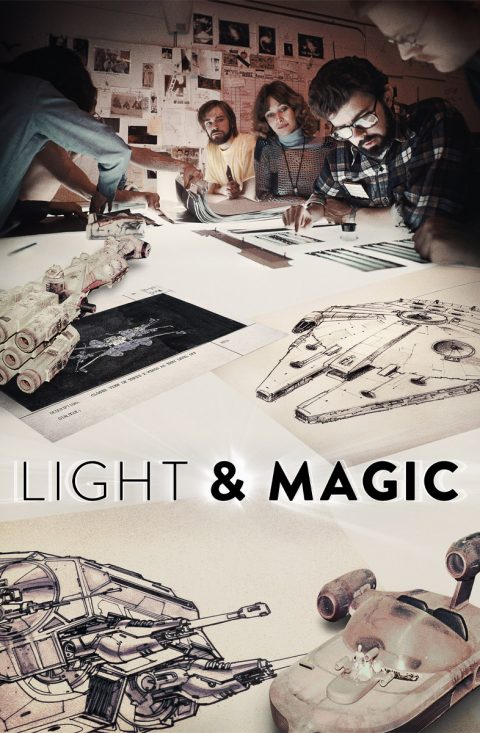
Image source: https://www.lucasfilm.com/app/uploads/light-and-magic-key-art-480×733.jpg Credit: Lucasfilm / Industrial Light & Magic / Disney+. Copyright notice: © & ™ Lucasfilm Ltd. / The Walt Disney Company. All rights reserved. Used here for editorial commentary and historical reference.
- “The Dykstraflex filming a TIE fighter”
Image source: https://www.ilm.com/wp-content/uploads/2023/04/HPTL-StarWars.02.jpg Credit: Industrial Light & Magic / Lucasfilm Ltd. Copyright notice: © & ™ Lucasfilm Ltd. All rights reserved. Used here for editorial commentary and historical reference.
- “ILM crew working with the Dykstraflex and the Millennium Falcon model”
Image source: https://www.lucasfilm.com/app/uploads/gallery-1-58.jpg Credit: Lucasfilm / Industrial Light & Magic. Copyright notice: © & ™ Lucasfilm Ltd. All rights reserved. Used here for editorial commentary and historical reference.
- “John Dykstra using the Dykstraflex camera”
Image source: https://www.lucasfilm.com/app/uploads/gallery-3-31.jpg Credit: Lucasfilm / Industrial Light & Magic. Copyright notice: © & ™ Lucasfilm Ltd. All rights reserved. Used here for editorial commentary and historical reference.
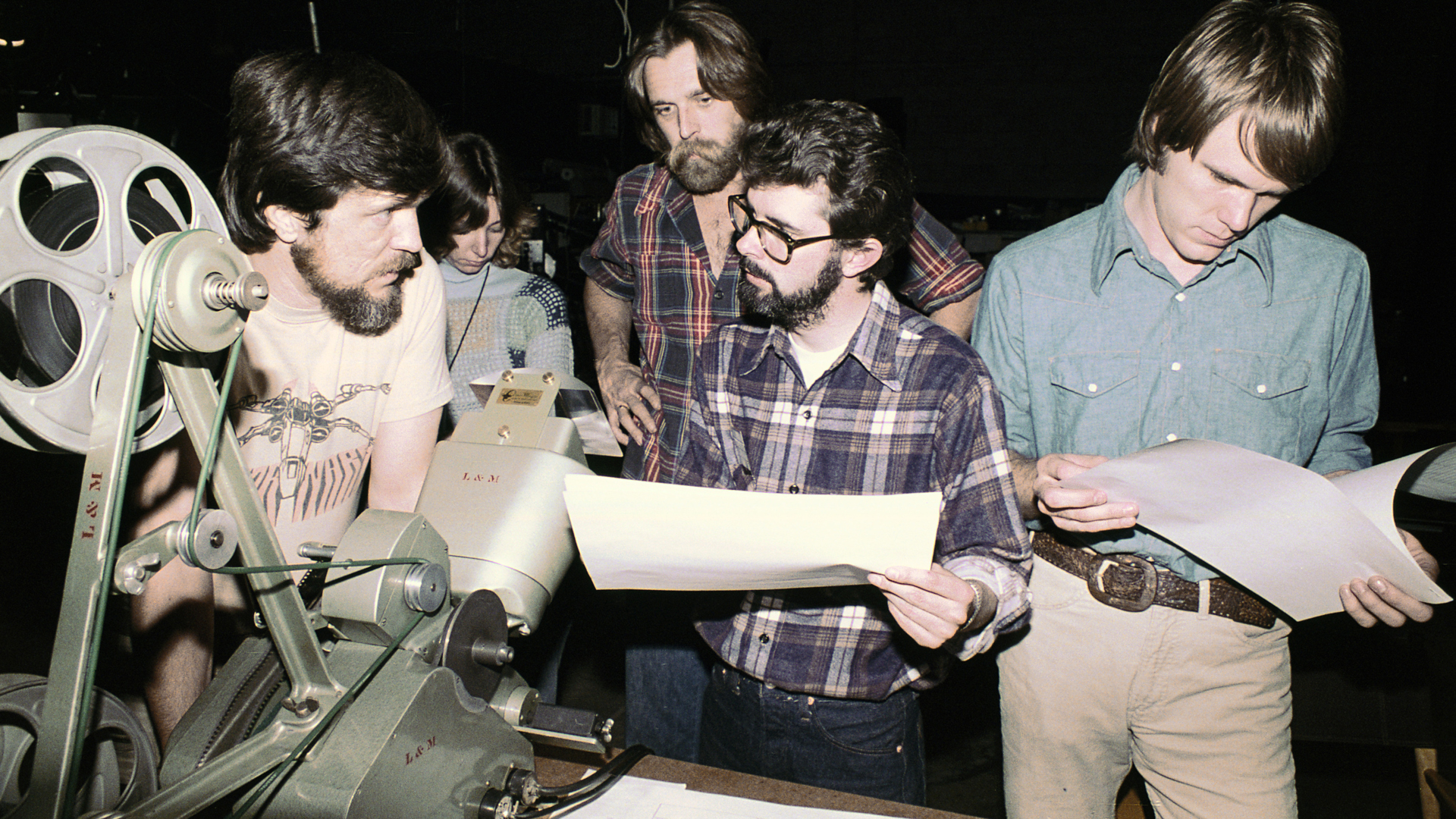
- “Early ILM team reviewing Star Wars visual effects material”
Image source: https://www.ilm.com/wp-content/uploads/2023/04/HPTL-StarWars.jpg Credit: Industrial Light & Magic / Lucasfilm Ltd. Copyright notice: © & ™ Lucasfilm Ltd. All rights reserved. Used here for editorial commentary and historical reference.
- “ILM team with Millennium Falcon model”
Image source: https://www.lucasfilm.com/app/uploads/light-and-magic-12.jpg Credit: Lucasfilm / Industrial Light & Magic / Disney+. Copyright notice: © & ™ Lucasfilm Ltd. / The Walt Disney Company. All rights reserved. Used here for editorial commentary and historical reference.
- “X-wing model work at early ILM”
Image source: https://www.lucasfilm.com/app/uploads/light-and-magic-03.jpg Credit: Lucasfilm / Industrial Light & Magic / Disney+. Copyright notice: © & ™ Lucasfilm Ltd. / The Walt Disney Company. All rights reserved. Used here for editorial commentary and historical reference.
- “TIE fighter models and miniature photography setup”
Image source: https://www.lucasfilm.com/app/uploads/light-and-magic-09.jpg Credit: Lucasfilm / Industrial Light & Magic / Disney+. Copyright notice: © & ™ Lucasfilm Ltd. / The Walt Disney Company. All rights reserved. Used here for editorial commentary and historical reference.
- “AT-AT model work from the original trilogy era”
Image source: https://www.lucasfilm.com/app/uploads/light-and-magic-04.jpg Credit: Lucasfilm / Industrial Light & Magic / Disney+. Copyright notice: © & ™ Lucasfilm Ltd. / The Walt Disney Company. All rights reserved. Used here for editorial commentary and historical reference.
- “Reference filming for the stained-glass character in Young Sherlock Holmes”
Image source: https://www.ilm.com/wp-content/uploads/2023/04/HPTL-YoungSherlock.jpg Credit: Industrial Light & Magic / Lucasfilm Ltd. Copyright notice: © & ™ Lucasfilm Ltd. All rights reserved. Used here for editorial commentary and historical reference.

- “ILM artists working on the pseudopod for The Abyss”
Image source: https://www.ilm.com/wp-content/uploads/2023/04/HPTL-Abyss.jpg Credit: Industrial Light & Magic / Lucasfilm Ltd. / 20th Century Fox or respective film rights holder. Copyright notice: Copyright belongs to the respective rights holders. Used here for editorial commentary and historical reference.
- “The T-1000 liquid-metal effect in Terminator 2”
Image source: https://www.ilm.com/wp-content/uploads/2023/04/HPTL-T2.jpg Credit: Industrial Light & Magic / Lucasfilm Ltd. / Carolco Pictures or respective film rights holder. Copyright notice: Copyright belongs to the respective rights holders. Used here for editorial commentary and historical reference.
- “Jurassic Park – T. rex / museum atrium still”
Image source: https://www.ilm.com/wp-content/uploads/2021/03/JurassicPark-1920w-aspect-ratio-2.7-1.jpg Credit: Industrial Light & Magic / Universal Pictures / Amblin Entertainment. Copyright notice: Copyright belongs to Universal Pictures, Amblin Entertainment and/or respective rights holders. Used here for editorial commentary and historical reference.

- “Davy Jones as digital character performance”
Image source: https://www.ilm.com/wp-content/uploads/2023/04/HPTL-pirates2.jpg Credit: Industrial Light & Magic / Lucasfilm Ltd. / Walt Disney Pictures. Copyright notice: © Disney and/or respective rights holders. ILM marks © & ™ Lucasfilm Ltd. Used here for editorial commentary and historical reference.
- “StageCraft on The Mandalorian-style LED volume”
Image source: https://www.lucasfilm.com/app/uploads/light-and-magic-02.jpg Credit: Lucasfilm / Industrial Light & Magic / Disney+. Copyright notice: © & ™ Lucasfilm Ltd. / The Walt Disney Company. All rights reserved. Used here for editorial commentary and historical reference.
- “ILM StageCraft volume at D23 – LED wall demonstration”
Image source: https://www.ilm.com/wp-content/uploads/2024/08/IMG_3453-1024×768.jpg Credit: Industrial Light & Magic / Lucasfilm Ltd. Copyright notice: © & ™ Lucasfilm Ltd. All rights reserved. Used here for editorial commentary and historical reference.
- “ILM StageCraft volume with audience and crane camera”
Image source: https://www.ilm.com/wp-content/uploads/2024/08/IMG_1322-1-1024×682.jpg Credit: Industrial Light & Magic / Lucasfilm Ltd. Copyright notice: © & ™ Lucasfilm Ltd. All rights reserved. Used here for editorial commentary and historical reference.
- “StageCraft volume during Obi-Wan Kenobi production”
Image source: https://www.ilm.com/wp-content/uploads/2023/04/HPTL-obiwan.jpg Credit: Industrial Light & Magic / Lucasfilm Ltd. / Disney+. Copyright notice: © & ™ Lucasfilm Ltd. / The Walt Disney Company. All rights reserved. Used here for editorial commentary and historical reference.
- “OpenEXR logo”
Image source: https://commons.wikimedia.org/wiki/File:Openexr_logo.svg Credit: OpenEXR / Academy Software Foundation artwork, via Wikimedia Commons. Copyright / license notice: Wikimedia Commons describes this file as a public-domain text/logo image consisting only of simple geometric shapes or text, while also noting that it may be subject to trademark restrictions.
- “OpenEXR official project artwork”
Image source: https://artwork.aswf.io/projects/openexr/ Credit: OpenEXR / Academy Software Foundation. Copyright / license notice: Use according to the Academy Software Foundation / OpenEXR artwork guidelines and applicable trademark rules.
Additional rights note
No affiliation with, sponsorship by or endorsement from Lucasfilm Ltd., Industrial Light & Magic, The Walt Disney Company, Universal Pictures, Amblin Entertainment, Carolco Pictures or any other rights holder is implied. All trademarks and copyrighted works remain the property of their respective owners. For commercial licensing, republication, altered stills, promotional use or uses outside editorial quotation/commentary, contact the appropriate rights holder or Disney Studios Licensing / Lucasfilm Clip & Still.