Well, here is the basic story of Pacific Data Images.
A company starts in Silicon Valley in 1980 with a few people, some computers, a lot of ambition, and no obvious way to become a movie studio. It makes broadcast graphics. It makes commercials. It makes television images that look like the future, or at least like a very good 1980s version of the future. It writes its own software because, in the useful commercial sense, there is no software. It does visual effects. It morphs faces. It makes a Michael Jackson video look impossible. It makes Homer Simpson fall into the third dimension. It makes ants act. It helps make an ogre into one of the most profitable animated characters in film history.
Then, in 2015, it closes.
That is the story. Sort of.
The better way to think about Pacific Data Images – PDI – is not as “the studio that made Antz” or “the studio behind Shrek,” though both of those are true in important ways. The better way to think about it is as a mechanism: a tool-building company that used commercial work to finance technical invention, then used technical invention to enter Hollywood, then became part of the industrial machine that made computer animation normal.
Normal, in this case, means profitable. Also weird.
Carl Rosendahl founded Pacific Data Images in 1980 after graduating from Stanford, and SIGGRAPH later described PDI as one of the pioneering creators of computer animation for film and television. Under Rosendahl, the company produced more than 700 commercials, created visual effects for more than 70 feature films, and, in partnership with DreamWorks SKG, worked on Antz and the Academy Award-winning Shrek.
That is a lot of output. But the output is not the most interesting part.
The interesting part is that PDI’s business model was, for a long time, basically this: advertisers and television clients would pay for short bursts of digital magic, and PDI would use that money to build the machinery for a future that did not quite exist yet.
This is a very good business if the future arrives.
It did.
The company that had tools before it had permission
Suppose you are PDI in the early 1980s.
You are not Disney. You are not a Hollywood studio. You are not Pixar, exactly, though you are in the same broad historical category of “people near computers who suspect that computers might someday make images that people care about.” You are in Silicon Valley. You have engineers and artists. You have clients. You have a market, but the market is not feature animation.
Not yet.
The market is: logos, station IDs, flying type, product shots, commercials, network graphics, television openings, technical demos that are also invoices. The sort of work that looks disposable until you realize that disposable work is what pays for permanent capability.
This is the first important thing about PDI. It did not begin with a grand public mythology about story. It began with production.
A client wants a thing. The thing does not exist. You build the thing. Then another client wants a slightly different thing. You build that too. Eventually you do not just have things. You have a system.
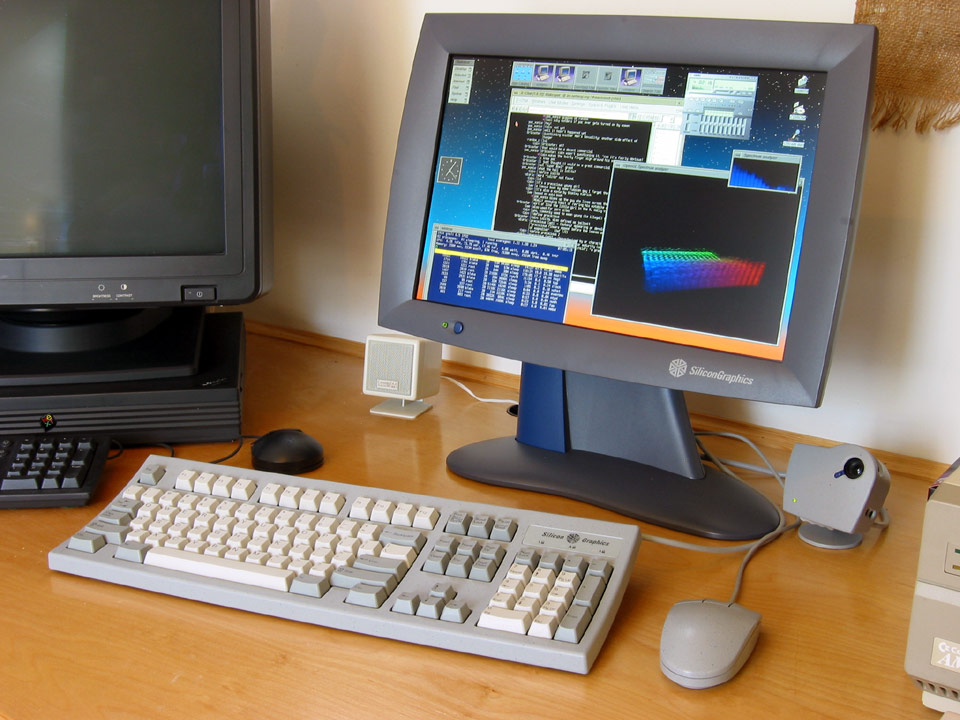
Wired visited PDI in the early 1990s and found a company using Silicon Graphics computers, writing its own software, and often tailoring that software for specific jobs. PDI was not using proprietary tools because proprietary tools sounded impressive in a conference talk. It was using them because otherwise the shot did not get done.
The basic model was: PDI wants to make images. Existing tools are not enough. Clients want results. So PDI builds tools.
The tool is the business. The commercial is the invoice.
Technically, this is a production company. Economically, it is a software company hiding inside a production company. Culturally, it is a group of people discovering that the image on screen is only the visible part of the object.
The invisible part is pipeline.
Pipeline is a boring word. It is also the whole thing.
Good pay, no limelight
PDI’s early business was full of a strange contradiction. The company was doing work that looked like magic, but the magic often belonged to somebody else.
Wired described PDI as the company behind the famous face morphs in Michael Jackson’s Black or White, while also showing how much of PDI’s day-to-day business came from commercials, effects, and behind-the-scenes technical work. Rosendahl wanted PDI to move from being a service provider toward becoming an animation studio that could tell its own stories.
This is a little funny. Also familiar.
The client says: “Please create a digital miracle.”
PDI says: “Sure.”
The client says: “Also please do not tell everyone that you created the miracle.”
PDI says: “Fine, we like money.”
This is how a lot of visual effects history works. The people who change what images can do are frequently paid to disappear. The audience sees the singer, the cereal mascot, the car, the network logo, the movie star. The studio sees the deadline, the render, the custom tool, the client note, the machine room, the thing that broke at 2 a.m.
The public story is: the image is amazing.
The real mechanism is: some people built a system that made the image possible and then sold the image to someone else.
That is not a complaint, exactly. It is a business model. But it creates an incentive. If you spend years making other people’s dreams look more expensive, you might eventually want to tell your own story.
Of course you would.
Everyone wants upside.
Morphing, Elvis, and the first little deepfake panic
The thing that put PDI into the popular imagination before Antz was not an ant.
It was a face becoming another face.
After Michael Jackson’s Black or White video aired, PDI became closely associated with morphing, the digital transformation technique that made one human face flow into another. Cartoon Brew later revisited the sequence as a landmark in the popularization and overuse of morphing as a visual effect.
Wired’s 1993 profile opens with the wonderfully absurd story of a woman who contacted PDI after Black or White and asked the company to fuse a photograph of her mother with a photograph of Elvis Presley to see whether she might be Elvis’s lost child. PDI declined. This was wise. Also disappointing for tabloid science.
The Elvis story is funny because it is ridiculous.
It is important because it is not that ridiculous.
Morphing made audiences feel that a digital image could alter identity smoothly, seductively, and plausibly. Before everyone had the word “deepfake,” before phone apps could swap faces for fun, before synthetic media became a legal, political, and social problem, there was this earlier, softer moment when a music video showed faces melting into other faces and people briefly wondered what else could be done.
The surface story is that PDI made a cool effect for a Michael Jackson video.
The better story is that PDI helped introduce mainstream audiences to a new visual rule: images could become negotiable.
A face was not just a face. It was data with good lighting.
Wired also captured the commercial trap of morphing: once audiences see the trick, the trick starts dying. The effect becomes copied, packaged, sold, overused, and eventually boring.
This is the normal life cycle of a digital miracle.
First it is impossible. Then it is expensive. Then it is everywhere. Then people complain about it.
PDI had to keep moving.
The anti-chrome short
One of the best small stories in PDI’s history is Gas Planet, Eric Darnell’s 1992 computer-animated short about strange long-snouted creatures on an alien world.
The reason it matters is not just that Darnell later co-directed Antz and became a key DreamWorks animation figure. The reason it matters is that Gas Planet was, in its little way, an argument against what early CG looked like.
Early computer graphics loved shiny things. Chrome spheres. Reflective logos. Hard surfaces. Clean edges. Glinting type. Basically, the future as imagined by a machine shop with a marketing budget.
Darnell later told befores & afters that he loved computer animation but was getting bored with the perfection of early CG – the chrome orbs, the glinting typefaces, the coldness of it. He wanted to give Gas Planet a more organic character.
This is a small technical anecdote with a large historical point.
PDI was not merely trying to make computers generate images. It was trying to make computers generate images that did not look like computers wanted to generate them.
That is different.
The basic problem was: CG was precise.
The desired outcome was: character.
If precision produces coldness, then the artist needs a mechanism for controlled imperfection. In Gas Planet, that meant rougher edges, more organic texture, and a willingness to make digital images feel less digital.
Technically, this is a rendering trick.
Aesthetically, it is a philosophy.
The computer can draw a perfect line. Fine. The artist’s job is sometimes to make it worse.
Better, but worse.
Homer enters the machine
In 1995, PDI helped send Homer Simpson into the third dimension in the Treehouse of Horror VI segment usually known as Homer³.
This is one of those moments that looks quaint now because technology has moved on, which is another way of saying it worked. If a technical breakthrough stays amazing forever, the industry probably failed to absorb it. If it becomes dated, it helped create the future.
More than three and a half minutes of computer-generated character animation were created by PDI for the segment, which was described as the first time a traditional 2D character had been recreated in 3D form for television.
The money was not the point. The prestige was the point. Or, more precisely, the future money was the point.
This is a perfectly normal entertainment-industry trade: you do underpaid work for visibility, and the visibility becomes future revenue, unless it does not, in which case you did underpaid work.
Glamorous.
But Homer³ matters because it made the transition from 2D to 3D into the joke itself. Homer does not merely become a CG character. He enters CG as a place. The third dimension is a weird room full of primitives, grids, mathematical references, and computer-science jokes. It is not just an effect. It is a representation of effect-space.
And then there is the practical problem: Homer and Bart are simple 2D designs.
Simple, in 2D, is good.
Simple, in 3D, is a trap.
PDI had to make characters whose designs were built for flatness work as dimensional objects. Bart’s hair, Homer’s eyes, the shape of the head, the timing of the movement – all of it had to remain recognizable while becoming geometrically possible.
The joke is that Homer goes into the computer.
The mechanism is that PDI had to figure out what “Homer” even meant once he had volume.
The bug war was not about bugs
Now we get to Antz.
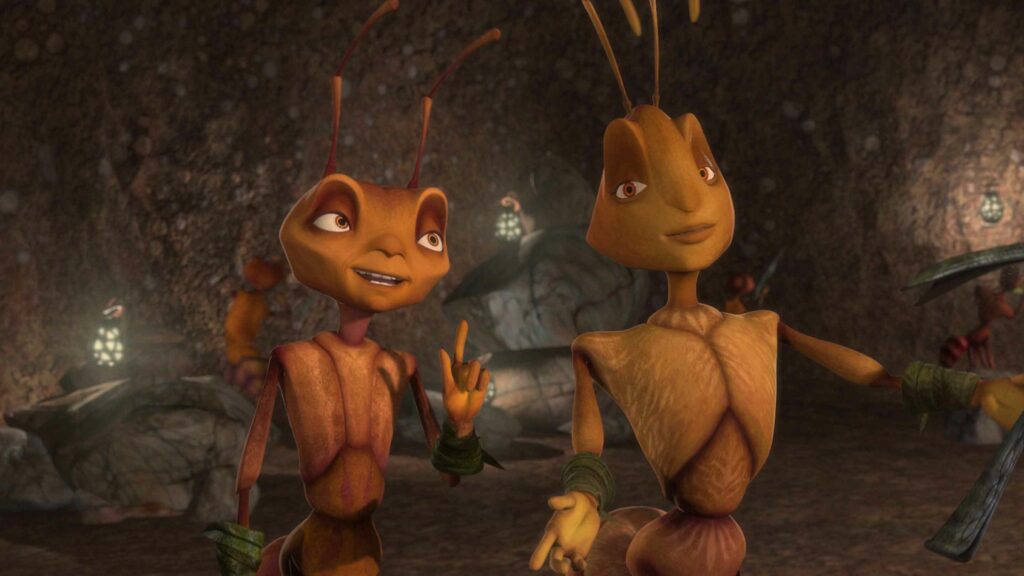
The basic story is that DreamWorks and PDI released Antz in 1998, shortly before Pixar released A Bug’s Life, and everyone noticed that there were suddenly two computer-animated movies about insect societies.
This was awkward.
The better story is that Antz was the moment when full-length CG animation stopped being a one-company story. Toy Story had proved that a computer-animated feature could exist. Antz proved that Pixar would not be alone.
Cartoon Brew describes Antz as a major technological leap for PDI, revisiting the studio’s proprietary animation, lighting, and rendering software, as well as the production challenges around characters, crowds, and large-scale effects.
This is not merely trivia. It is market structure.
If Toy Story is the proof of concept, Antz is the competitive response. A technology is not really an industry until there is competition. Before competition, it is a miracle. After competition, it is a business.
The controversy with A Bug’s Life was fierce. Wired wrote in 1998 that both films shared broad elements – ants, colonies, social outsiders, underground worlds, crowd scenes, facial animation, water simulation – and reported that Steve Jobs had accused Jeffrey Katzenberg of taking Pixar’s bug idea after leaving Disney. DreamWorks denied wrongdoing, and the dispute became part of a larger Pixar/DreamWorks rivalry.
So, was Antz a stolen idea?
That is the flashy question.
The more useful question is: why did the dispute matter so much?
It mattered because the insect films were not just insect films. They were proxy wars. Pixar was tied to Disney. DreamWorks was built partly out of Katzenberg’s break with Disney. PDI was the technical engine DreamWorks could use to compete in CG. The release dates, the allegations, the public sniping, the comparison of ants and bugs – all of that was the theatrical version of a deeper industrial question:
Who would own the next animation format?
This is not a bug story.
It is a platform story.
Also, yes, there are bugs.
Making ants act
The old misunderstanding about computer animation is that the computer does the animation.
This is false in the same way that a word processor writes a novel.
Technically involved. Spiritually unhelpful.
Wired’s production story on Antz is useful because it makes the labor visible. During the 18-month production, 27 PDI animators used Silicon Graphics O2 machines and, as co-director Tim Johnson put it, became “decision-making machines,” because every pixel in every scene had to be placed there. Even a small pile of rocks could cost weeks of someone’s life.
This is a good corrective.
The computer does not eliminate decisions. It multiplies them.
In traditional live-action production, a rock in the background can be a rock. It is there. In CG, the rock has to be modeled, placed, shaded, lit, rendered, reviewed, changed, and sometimes removed because someone notices that the rock is pulling focus from an ant’s emotional problem.
The rock has a pipeline.
The rock has meetings.
This is funny until you have to make the rock.
Antz demanded more than rocks. It demanded crowds, underground scale, facial performance, body language, water, condensation, and the problem of making insects carry adult neurosis. Wired reported that PDI’s crowd-simulation software let the directors include three times as many wide shots of the ant colony interior as originally planned, and that PDI broke new ground with water simulation, including an underground flood, condensation on a bottle, and an ant riding inside a raindrop.
Water is a useful villain in CG history. It is transparent, reflective, deformable, constantly moving, and smug about it. Fire is difficult. Hair is difficult. Humans are difficult. Water is difficult in a way that makes the renderer seem personally attacked.
PDI did it anyway.
The broader point is that Antz was not just a feature film. It was a stress test. Could a company built through commercials, broadcast graphics, shorts, morphing, television work, and VFX scale into feature animation? Could its tools handle continuity, performance, crowds, environments, and story? Could its artists make a digital insect look embarrassed?
The answer was yes.
Financially, the film was not Shrek. But Box Office Mojo lists Antz at about $171.8 million worldwide, which was enough to matter and enough to establish that DreamWorks and PDI had a real CG feature operation.
A proof of concept with mandibles.
EMO and the spreadsheet of acting
The most interesting tools are often the ones audiences never hear about.
One of PDI’s central tools for Antz was EMOtion, often called EMO, part of the studio’s proprietary animation system. Cartoon Brew’s oral history describes PDI’s internal toolset as central to the film’s production, including proprietary animation, lighting, and rendering software.
The important thing is not just that PDI had software.
Everyone serious had software.
The important thing is that the software encoded a way of thinking.
PDI’s tools let animators control performance at a granular level. Facial controls were not just about moving lips. The point was integrated performance: cheeks, eyes, mouth, nose, expression, the whole face working together.
This matters because Antz is a weird performance problem. The characters are ants. But they are also Woody Allen anxieties, Gene Hackman authoritarian intensity, Sharon Stone coolness, Sylvester Stallone physical confidence, and a whole social satire about individuality inside a militarized colony.
If the faces cannot act, the film is just insects talking.
The technology has to disappear into performance.
That is the whole trick.
The Academy later recognized this kind of work directly. In 2003, Dick Walsh received a Technical Achievement Award for the PDI/DreamWorks Facial Animation System, which the Academy described as a system used to create and control natural, expressive, highly nuanced facial animation across a wide range of CG characters.
This is a nice sentence because it says the quiet part clearly: the face is not decoration. The face is the interface between geometry and acting.
The old objection to computer animation was that computers were cold. The PDI answer was not to deny that. The answer was to build systems that let artists add warmth, asymmetry, timing, expression, and body language.
In other words: the answer to cold software was better software and better artists using it.
Obviously.
DreamWorks bought the pipeline
In 1996, DreamWorks acquired a 40% interest in PDI as part of an exclusive deal to produce a series of animated films. In 2000, DreamWorks agreed to acquire the rest of the company, with PDI continuing as a stand-alone business unit under the name PDI/DreamWorks.
The surface story is that DreamWorks bought an effects and animation company.
The better way to think about it is that DreamWorks bought a functioning method.
The SEC filings are unusually helpful here because corporate documents are boring in a revealing way. A DreamWorks Animation filing describes PDI LLC as a joint venture formed in 1997 between PDI and DreamWorks Studios for the principal purpose of “developing and enhancing the production processes” used to create CG animated characters and films.
That sentence is the whole deal.
DreamWorks did not merely need artists. It needed production processes. It needed a way to make CG feature animation repeatedly, not as a miracle every four years but as a business.
PDI had spent years turning client problems into internal systems. DreamWorks had capital, distribution, marketing, celebrity voice strategy, and Jeffrey Katzenberg’s desire to compete with Disney and Pixar. PDI had the machinery.
The basic model is: DreamWorks wants a CG animation business. PDI has a CG production system. DreamWorks buys PDI. The system becomes strategy.
This is not romantic.
It is very important.
Hollywood often talks as if films are made from vision. They are, partly. But feature animation is also made from asset management, lighting tools, character rigs, render farms, file systems, review processes, production scheduling, proprietary software, and a culture of people who know what breaks when the shot gets complicated.
Vision is good.
A working pipeline is better.
Ideally you have both.
Shrek, or the moment pixels became an attitude
Then came Shrek.
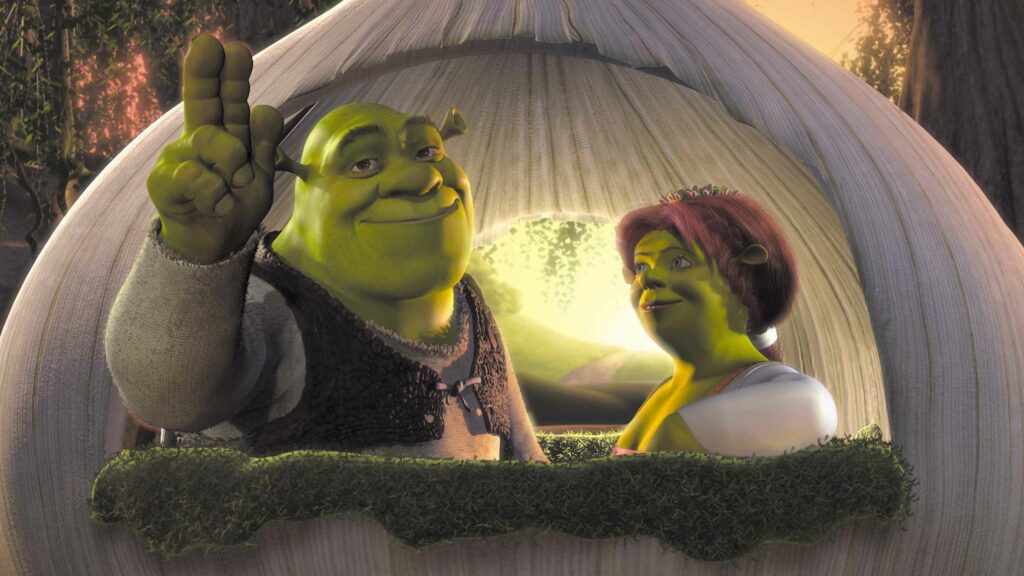
There is a simple version of Shrek’s importance: it made a lot of money, won the first Academy Award for Best Animated Feature, and turned DreamWorks Animation into a cultural force. The Academy lists Shrek as the winner of Animated Feature Film at the 74th Academy Awards, and Box Office Mojo lists the film with a $60 million budget and a worldwide gross of roughly $484 million.
That is the simple version.
The more interesting version is that Shrek made CG animation feel like an attitude, not just a technology.
Pixar’s early public identity was warmth, craft, story, emotional sincerity, toys with existential problems. DreamWorks’ emerging identity was faster, louder, more referential, more sarcastic, more celebrity-driven, and more willing to poke Disney directly in the ribs.
This was not just a difference in jokes.
It was a difference in market positioning.
Pixar says: “What if objects had souls?”
DreamWorks says: “What if fairy tales had lawyers, agents, and bad manners?”
Both are valid.
One is sweeter. One is ruder.
Shrek did not prove that CG animation could exist. Toy Story had done that. It did not prove that another studio could make a CG feature. Antz had done that. What Shrek proved was that CG could become the dominant language of mainstream animated comedy.
Not a novelty. Not a technical category. A repeatable Hollywood product with a house voice.
This is where PDI’s history becomes invisible again. Audiences did not go to Shrek because of a proprietary animation system. They went because the ogre was funny, the donkey was loud, the princess had a twist, and the movie made fun of the old fairy-tale machine while using many of its pleasures.
But under that was the machine: character animation, facial systems, lighting, rendering, tools built through years of less glamorous work.
The ogre was a cultural event.
The pipeline was doing a lot of work.
Light, or why invisible tools win awards late
One of the best examples of PDI’s hidden value is the Light system, the lighting tool created at PDI/DreamWorks.
In 2013, the Academy gave Lawrence Kesteloot, Drew Olbrich, and Daniel Wexler a Technical Achievement Award for the creation of Light, noting that the system had remained in continuous use for more than 15 years because of its interactive responsiveness, final-quality interactive render preview, scalable architecture, and user-configurable spreadsheet interface.
This is a very PDI achievement.
It is not a character. It is not a franchise. It is not a joke in a trailer. It is a tool that lets artists make better decisions faster.
Which means it is a business advantage disguised as software.
This is a boring technical distinction until you imagine production without it.
If every lighting change requires waiting, artists make fewer changes. If artists make fewer changes, the image settles earlier. If the image settles earlier, it may be less good. If the tool responds quickly, the artist can explore. Exploration becomes quality. Quality becomes brand. Brand becomes box office. Eventually someone calls it magic.
It was not magic.
It was latency.
This is a general rule of digital production: the tool changes the art by changing the number of attempts the artist can afford. Slow tools produce conservative decisions. Fast tools produce iteration. Iteration produces taste. Taste, in a feature pipeline, is expensive unless the software makes it cheaper.
PDI understood this early because PDI had lived on deadlines.
Commercials teach you that waiting is a cost.
The DreamWorks machine
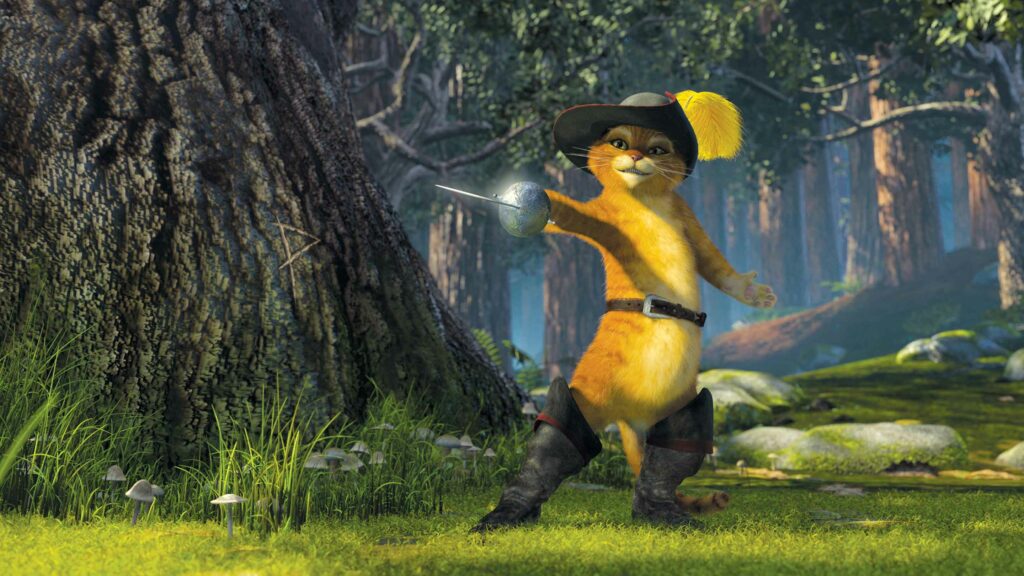
After Shrek, DreamWorks increasingly embraced CG as its central animation language. By 2001, DreamWorks’ animation operation included separate production pipelines: Aardman in Bristol for Chicken Run, PDI/DreamWorks in Palo Alto for Shrek and Antz, and traditional animation in Glendale for films like The Road to El Dorado and The Prince of Egypt.
This is the natural outcome of success. A scrappy tool-building culture becomes an asset inside a larger machine. The machine wants consistency. The artists want flexibility. The executives want release dates. The software wants everyone to stop doing weird things to the file structure.
The basic model changes.
In the old PDI model, the company says: “We do not know how to do this, but we can probably figure it out.”
In the DreamWorks machine model, the company says: “We know how to do this, and now we need to do it on schedule, at scale, across multiple shows, without every film becoming an R\&D crisis.”
Both models are useful.
The first invents. The second industrializes.
The tension is that invention is inefficient and industrialization is not always fun.
That tension is the history of CG animation in miniature.
PDI’s early culture came from figuring things out because there was no standard method. DreamWorks’ later production logic came from making sure the standard method could deliver movies.
If you are lucky, the standard method still has room for discovery.
If you are unlucky, discovery becomes a risk line item.
That is not a moral judgment.
It is a production problem.
The strange career of being early
PDI’s career contains a recurring pattern: it arrives early to a problem, solves enough of it to make the next stage possible, and then the industry absorbs the solution until the original weirdness disappears.
Morphing becomes a software feature.
CG shorts become festival history.
3D television experiments become nostalgic clips.
Crowd simulation becomes standard.
Facial rigs become expected.
Interactive lighting becomes workflow.
Feature CG becomes the default commercial language of American animation.
In each case, the miracle becomes infrastructure.
This is how technological pioneers get erased. Not maliciously. Just functionally. Their work becomes normal, and normal things are hard to remember as inventions.
Nobody claps for indoor plumbing every morning.
They should, but they don’t.
PDI helped build indoor plumbing for CG animation.
A glamorous sentence. Somehow.
The closure
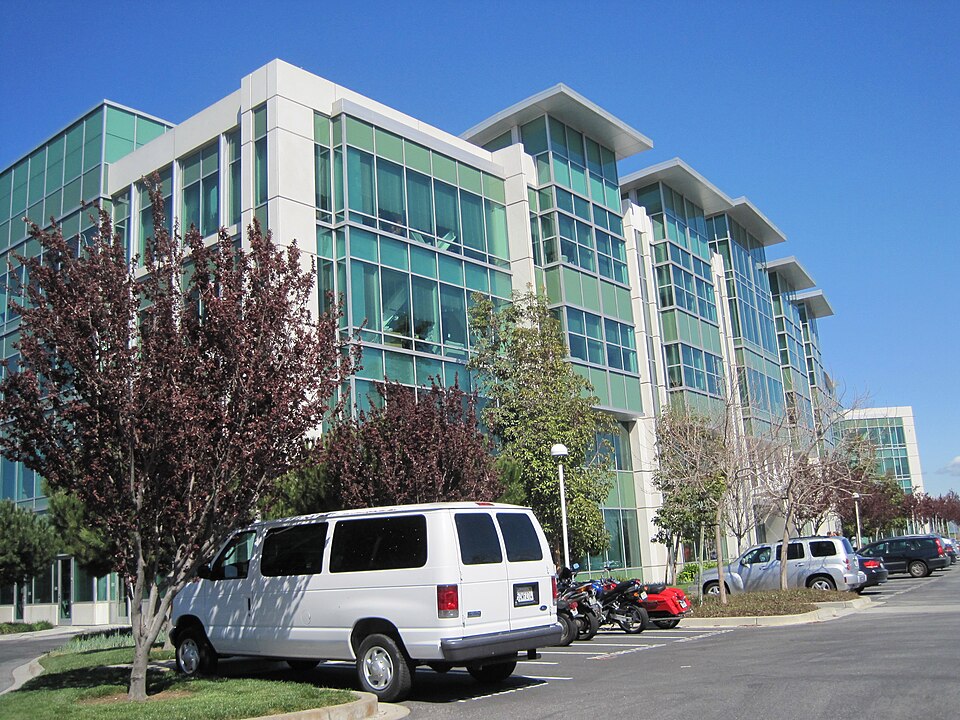
In January 2015, DreamWorks Animation shut down PDI/DreamWorks in Redwood City as part of a larger restructuring. Deadline reported that half of PDI’s roughly 450 workers would lose their jobs, while others would be offered positions at DreamWorks Animation’s Glendale campus.
That is the end of the corporate story.
The symbolic story is larger.
PDI began as a Silicon Valley computer graphics company. It grew through broadcast graphics, commercials, VFX, shorts, morphing, music videos, television experiments, proprietary software, Antz, Shrek, and a long line of DreamWorks features. It was absorbed into a corporate animation system and then closed when the economics of that system changed.
The closure does not mean innovation stopped. That would be too grand and also false. DreamWorks continued. Pixar continued. ILM, Wētā FX, Sony Pictures Imageworks, and many other studios continued pushing tools and images. Animation did not end because one facility closed.
But one lineage ended.
The lineage was: small technical company, self-built tools, commercial survival, strange experiments, Hollywood entry, feature-scale transformation, corporate absorption, closure.
That is a very clean arc.
Too clean, probably. History is messier. But as a narrative mechanism, it works.
PDI starts as a place where people build the tools because the tools do not exist. It ends as a place whose methods have become part of a larger world in which tools do exist, pipelines are mature, and the problem is no longer proving CG can make movies.
The problem is making the business work.
Technically, PDI won.
Economically, the facility closed.
Both things can be true.
This is awkward. Also normal.
What PDI actually changed
So what is PDI’s legacy?
One answer is a list of credits: Black or White, Gas Planet, Homer³, Antz, Shrek, Shrek 2, Madagascar, Megamind, Penguins of Madagascar, and a long DreamWorks filmography.
That answer is fine.
Another answer is awards: Academy recognition for PDI-related tools and systems, including facial animation and Light. That answer is also fine.
But the better answer is structural.
PDI helped change computer animation from a set of demonstrations into a production discipline. It helped prove that digital characters could perform, that digital crowds could stage scale, that digital water could behave like a physical phenomenon, that digital lighting could be interactive enough for artists to shape, and that a company born in commercial graphics could become a feature-animation engine.
The point is not that PDI invented everything.
It did not.
Pixar, ILM, Alias, Wavefront, Rhythm & Hues, Blue Sky, Wētā, Sony, Disney, and many others were also building the language.
The point is that PDI occupied a particular bridge position. It connected Silicon Valley tool-building with Hollywood feature production. It connected commercial work with artistic ambition. It connected morphing and broadcast graphics with ogres and global box office.
This is not the same as being famous.
Famous is what happens to Shrek.
Important is what happens underneath Shrek.
The useful way to remember PDI
Here is the basic model.
PDI wants to make computer images. Clients want impossible-looking things on deadlines. PDI builds tools. The tools make better images. Better images bring better clients. Better clients finance better tools. The tools eventually become good enough for feature animation.
DreamWorks wants to compete with Disney and Pixar. DreamWorks buys into PDI. PDI helps make Antz. PDI/DreamWorks helps make Shrek. Shrek becomes a cultural monster. The machinery that made it possible becomes less visible as the character becomes more famous. Then the studio closes.
That is the trade.
If you look at PDI as a studio, the story is bittersweet: a pioneer rises, peaks, gets absorbed, and disappears.
If you look at PDI as a mechanism, the story is stranger and maybe more impressive: the company succeeded so thoroughly that much of what made it special became ordinary.
Computer animation stopped being astonishing every time.
This is sad for pioneers. It is good for the medium.
The first generation of CG studios had to convince people that computers could make images. The next generation had to convince people that computers could make characters. Then they had to convince people that computer characters could carry movies. Then they had to convince people that those movies could be released regularly, globally, profitably, and with enough emotional and visual polish that nobody in the audience sat there thinking about the software.
PDI helped with all of that.
The final joke is that the company spent decades trying to make computers stop looking cold, mechanical, and technical. It helped build a world in which computer animation could look warm, expressive, funny, emotional, stupid, beautiful, ugly, sarcastic, commercial, and completely normal.
Then everyone stopped being amazed by the computer.
That was the victory.
A weird one.
But still.
Sources and image credits
Text sources
This article was prepared using the following sources:
- ACM SIGGRAPH Blog – “The Pioneering Legacy of PDI”
https://blog.siggraph.org/2020/10/the-pioneering-legacy-of-pdi.html/ - Wired – “Beyond the Valley of the Morphs”
https://www.wired.com/1993/01/morphs/ - Cartoon Brew – “An Oral History of Morphing in Michael Jackson’s ‘Black or White’”
https://www.cartoonbrew.com/music-videos/oral-history-morphing-michael-jacksons-black-white-144015.html - befores & afters – “How this stylized hand-drawn-esque CG animated short was made…in 1992”
https://beforesandafters.com/2019/11/27/how-this-stylized-hand-drawn-esque-cg-animated-short-was-made-in-1992/ - Pacific Data Images / The Simpsons 1995 Halloween Special – “Homer³” production information
https://cs.appstate.edu/sjg/math/pacifichomer3d1.html - Cartoon Brew – “‘Antz’ Hits 20: Re-Visiting PDI’s Tech From 20 Years Ago”
https://www.cartoonbrew.com/feature-film/antz-hits-20-re-visiting-pdis-tech-from-20-years-ago-164870.html - Wired – “Making Antz No Picnic”
https://www.wired.com/1998/09/making-antz-no-picnic/ - Box Office Mojo – Antz
https://www.boxofficemojo.com/release/rl2051180033/ - Los Angeles Times – “DreamWorks SKG Agrees to Buy Pacific Data Images”
https://www.latimes.com/archives/la-xpm-2000-feb-15-me-64440-story.html - U.S. Securities and Exchange Commission – DreamWorks Animation filing, 424(B)(4)
https://www.sec.gov/Archives/edgar/data/1297401/000095012304012650/d98977b4e424b4.htm - Academy of Motion Picture Arts and Sciences – 74th Academy Awards, 2002
https://www.oscars.org/oscars/ceremonies/2002 - Box Office Mojo – Shrek
https://www.boxofficemojo.com/release/rl7439873/ - Academy of Motion Picture Arts and Sciences – Scientific & Technical Awards, 2003; PDI/DreamWorks Facial Animation System
https://www.oscars.org/sci-tech/ceremonies/2003 - Academy of Motion Picture Arts and Sciences – Scientific & Technical Awards, 2013; Light system
https://www.oscars.org/sci-tech/ceremonies/2013 - Linux Journal – “DreamWorks Feature Linux and Animation”
https://www.linuxjournal.com/article/4803 - SFGATE – “DreamWorks Animation to cut 500 jobs, PDI gets hit hard”
https://www.sfgate.com/news/article/DreamWorks-Animation-to-cut-500-jobs-PDI-gets-6033883.php - DreamWorks official site – Antz
https://www.dreamworks.com/movies/antz - DreamWorks official site – Shrek
https://www.dreamworks.com/movies/shrek - DreamWorks official site – Shrek 2
https://www.dreamworks.com/movies/shrek-2 - DreamWorks official site – Madagascar
https://www.dreamworks.com/movies/madagascar
Image credits and copyright information
- Pacific Data Images / PDI logo
Source: Wikimedia Commons
Link: https://commons.wikimedia.org/wiki/File:Pacific_Data_Images_PDI_logo.svg
Copyright / license: Public domain according to Wikimedia Commons because the file consists only of simple geometric shapes or text. Trademark rights may still apply. Use only for informational identification of PDI, not as your own branding. - Former PDI/DreamWorks headquarters, Redwood City – rear view
Source: Wikimedia Commons
Link: https://commons.wikimedia.org/wiki/File:PDI-Dreamworks_HQ_rear_3.JPG
Credit line: Photo by BrokenSphere, via Wikimedia Commons.
Copyright / license: CC BY-SA 3.0. Attribute the author, link the source and license, and indicate changes if any. - Former PDI/DreamWorks headquarters, Redwood City – exterior view
Source: Wikimedia Commons
Link: https://commons.wikimedia.org/wiki/File:PDI-Dreamworks_HQ_1.JPG
Credit line: Photo by BrokenSphere, via Wikimedia Commons.
Copyright / license: CC BY-SA 3.0. Attribute the author, link the source and license, and indicate changes if any. - DreamWorks Animation / PDI office, Redwood City
Source: Wikimedia Commons
Link: https://commons.wikimedia.org/wiki/File:Dreamworksanimation.jpg
Credit line: Photo by Coolcaesar, via Wikimedia Commons.
Copyright / license: CC BY-SA 3.0. Attribute the author, link the source and license, and indicate changes if any. - Stanford University campus
Source: Wikimedia Commons
Link: https://commons.wikimedia.org/wiki/File:View_of_Stanford_University_campus.JPG
Credit line: Photo by Oleg Alexandrov, via Wikimedia Commons.
Copyright / license: CC BY-SA 3.0. Use as contextual illustration for Stanford / Silicon Valley background. - Silicon Graphics O2 Plus workstation
Source: Wikimedia Commons
Link: https://commons.wikimedia.org/wiki/File:Silicon_Graphics_O2_Plus.jpg
Copyright / license: Public domain according to Wikimedia Commons. Use as contextual illustration of professional CG workstation hardware from the era. - SGI O2 front view
Source: Wikimedia Commons
Link: https://commons.wikimedia.org/wiki/File:SGI_O2_front.jpg
Credit line: Photo by Thomas Kaiser, via Wikimedia Commons.
Copyright / license: CC BY-SA 3.0 / GFDL. Use one of the available licenses and comply with its attribution requirements. - SGI 1600SW display with O2 workstation
Source: Wikimedia Commons
Link: https://commons.wikimedia.org/wiki/File:SGI_1600SW_display_of_my_O2_workstation.jpg
Credit line: Photo by Blake Patterson, via Wikimedia Commons.
Copyright / license: CC BY 2.0. Attribute the author, source, and license. - SGI Onyx graphics workstation
Source: Wikimedia Commons
Link: https://commons.wikimedia.org/wiki/File:SGI-onyx.jpg
Credit line: Photo by Dave Fischer / Retro-Computing Society of Rhode Island, via Wikimedia Commons.
Copyright / license: Check the file page for the exact selected license before publication; Wikimedia lists it under free reuse terms. - Jeffrey Katzenberg portrait
Source: Wikimedia Commons
Link: https://commons.wikimedia.org/wiki/File:Jeffrey_Katzenberg_(14513937721).jpg
Credit line: Photo by Gage Skidmore, via Wikimedia Commons.
Copyright / license: CC BY-SA 2.0. Attribute the author, source, and license. - Jeffrey Katzenberg and Barack Obama at DreamWorks Animation, 2013
Source: Wikimedia Commons
Link: https://commons.wikimedia.org/wiki/File:Jeffrey_Katzenberg,_Barack_Obama,_DreamWorks_Animation,_2013.jpg
Credit line: Official White House Photo by Pete Souza, via Wikimedia Commons.
Copyright / license: Public domain as a work of the U.S. federal government. - Steve Jobs, Macworld 2005
Source: Wikimedia Commons
Link: https://commons.wikimedia.org/wiki/File:Stevejobs_Macworld2005-cropped.jpg
Credit line: Photo by Matthew Yohe / Wikimedia Commons.
Copyright / license: CC BY 2.0. Use only as contextual illustration for Pixar / Steve Jobs / Antz vs. A Bug’s Life discussion. - PBS print, 1989
Source: Wikimedia Commons
Link: https://commons.wikimedia.org/wiki/File:PBS_print_1989.png
Copyright / license: Public domain according to Wikimedia Commons. Use as contextual illustration for the broadcast graphics period. Verify the file page before publication. - Frame from Michael Jackson – “Black or White”
Source: Official Michael Jackson YouTube channel
Link: https://www.youtube.com/watch?v=F2AitTPI5U0
Copyright / license: Copyrighted material. Use only as a quotation for critical or technical analysis of the morphing sequence. Do not use as decorative imagery or hero image. Suggested credit: “Frame from Michael Jackson’s Black or White music video, used as quotation for critical and technical analysis of digital morphing.” - Frame from Antz – crowd / colony scene
Source: DreamWorks official Antz page
Link: https://www.dreamworks.com/movies/antz
Copyright / license: Copyrighted material © DreamWorks Animation / PDI. Use only as a quotation for analysis of crowd simulation, CG staging, or feature animation production. Suggested credit: “Frame from Antz (1998), © DreamWorks Animation / PDI, used as quotation for technical and critical analysis.” - Frame from Antz – water / flood / raindrop scene
Source: DreamWorks official Antz page
Link: https://www.dreamworks.com/movies/antz
Copyright / license: Copyrighted material © DreamWorks Animation / PDI. Use only as a quotation directly next to discussion of water simulation or early CG effects. Suggested credit: “Frame from Antz (1998), © DreamWorks Animation / PDI, used as quotation for analysis of early CG water simulation.” - Frame from Shrek
Source: DreamWorks official Shrek page
Link: https://www.dreamworks.com/movies/shrek
Copyright / license: Copyrighted material © DreamWorks Animation. Use only as a quotation for analysis of PDI/DreamWorks’ influence on mainstream CG animation. Suggested credit: “Frame from Shrek (2001), © DreamWorks Animation, used as quotation for critical analysis.” - Frame from Shrek 2
Source: DreamWorks official Shrek 2 page
Link: https://www.dreamworks.com/movies/shrek-2
Copyright / license: Copyrighted material © DreamWorks Animation. Use only as a quotation for analysis of lighting, rendering, or visual development in DreamWorks CG animation. Suggested credit: “Frame from Shrek 2 (2004), © DreamWorks Animation, used as quotation for critical and technical analysis.” - Frame from Homer³ / The Simpsons: Treehouse of Horror VI
Source reference: Pacific Data Images / The Simpsons 1995 Halloween Special production page
Link: https://cs.appstate.edu/sjg/math/pacifichomer3d1.html
Copyright / license: Copyrighted material. Use only as a quotation for analysis of the 2D-to-3D translation of Homer Simpson. Suggested credit: “Frame from The Simpsons: Treehouse of Horror VI, segment Homer³, used as quotation for analysis of 2D-to-3D character translation.”
General reuse note
Images from Wikimedia Commons were selected because their file pages list public domain or free-license reuse terms. Some licenses require attribution, license identification, source linking, and indication of changes; some may also require ShareAlike if modified. Wikimedia Commons recommends checking the individual file page before reuse and notes that non-copyright restrictions, such as trademarks or personality rights, may still apply.
Film frames, music-video frames, and television frames are copyrighted materials. In this article they should be used only as quotations for critical, historical, or technical analysis, in the smallest useful amount, and not as decorative images.